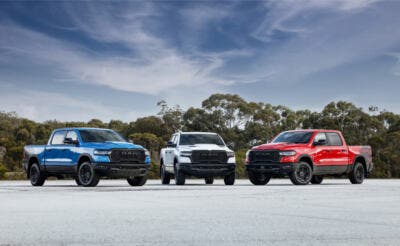
UBS has downgraded Stellantis from Buy to Neutral and cut its price target from €9.50 to €5.80, arguing that the automaker’s North American recovery has yet to deliver the financial improvement investors expected. Sales and revenue have started to recover, but weak profitability and elevated dealer inventories continue to cloud the turnaround.
UBS downgrades Stellantis as U.S. recovery fails to lift profits
Patrick Hummel, the UBS analyst covering Stellantis, highlighted the gap between commercial progress and earnings. North American revenue rose 32% in the second quarter of 2026, while regional sales increased 6%. However, Stellantis posted a group adjusted operating margin of only 1.8%, showing that stronger volume has not yet produced a comparable improvement in returns.
Inventory remains a central concern. UBS believes Stellantis may need to reduce third-quarter production or offer stronger incentives to clear vehicles from dealer lots. Lower output would limit shipments, while heavier discounts could place additional pressure on pricing and margins. The bank also appears cautious about demand for some recent launches, adding uncertainty to the pace of the recovery.
The distinction between shipments and retail demand matters. Stellantis recorded a 38% increase in North American consolidated shipments during the quarter, but sales grew by only 6%. Part of the increase therefore reflected dealers rebuilding inventory rather than a matching rise in customer purchases. That gap raises the risk of another correction if vehicles remain on dealer lots longer than expected.
UBS consequently lowered its forecasts for adjusted operating income. The bank now expects €3.0 billion in 2026, equal to a 1.9% margin, followed by €4.7 billion and a 2.9% margin in 2027. Stellantis has nevertheless reaffirmed its full-year 2026 guidance, which calls for mid-single-digit revenue growth and a low-single-digit adjusted operating margin. The company expects performance to improve more visibly in the fourth quarter after the traditional summer production slowdown.
Pressure also extends beyond North America. Intense competition and weaker pricing in Europe, difficulties in other international markets, tariffs and the possibility of higher raw-material costs could all limit progress. Enlarged Europe posted a negative 0.6% adjusted operating margin in the second quarter, underlining the scale of the challenge outside the United States.
By moving to Neutral rather than Sell, UBS still leaves room for a North American recovery, but the sharp price-target reduction shows how much confidence has weakened. Stellantis must now prove that it can rebuild market share without relying on incentives that undermine earnings. The next phase will depend less on how many vehicles reach dealerships and more on the actual profit generated by each sale.