

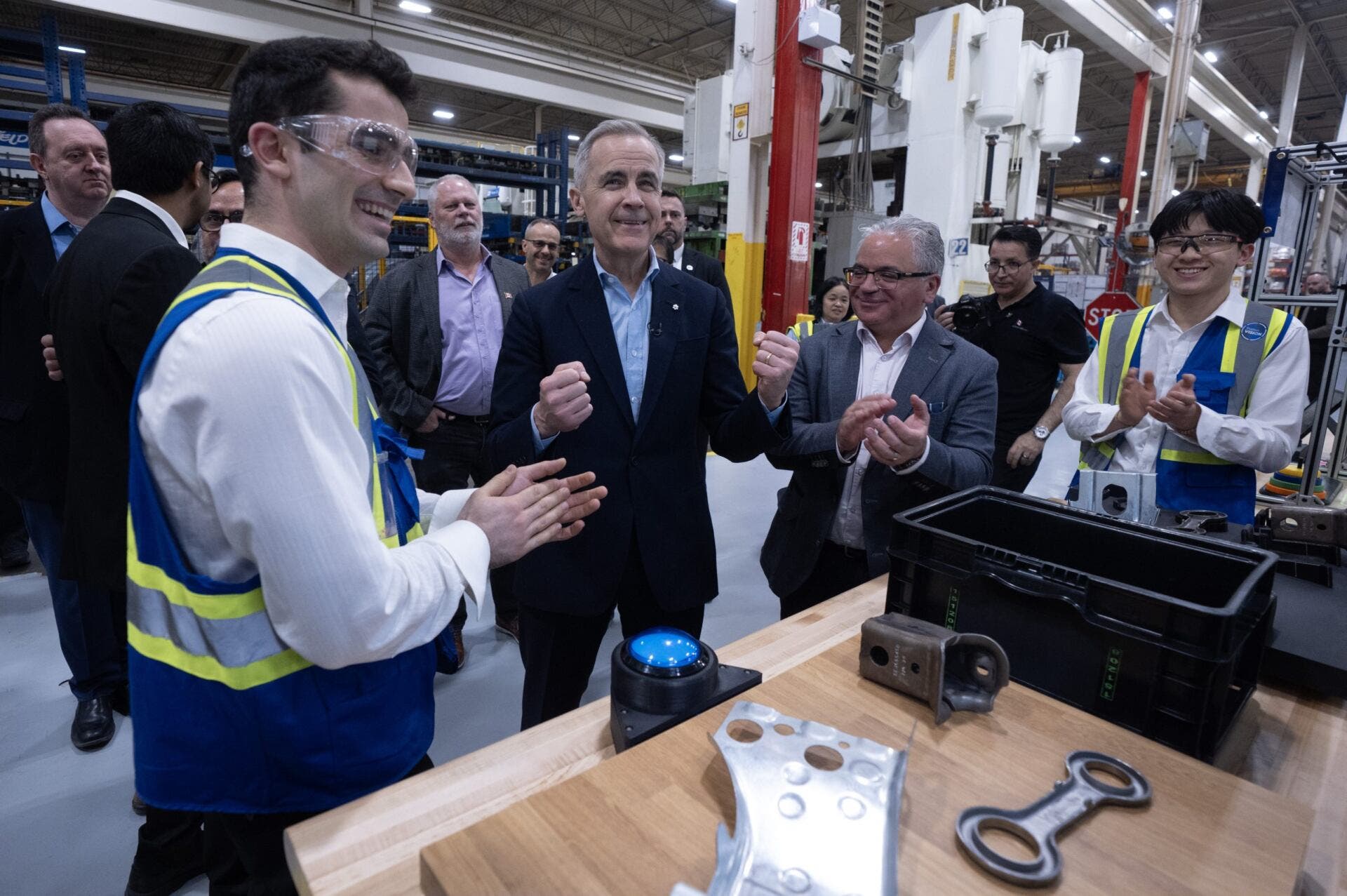
Prime Minister Mark Carney stood in a Toronto auto plant Thursday, announcing a rescue plan for Canada’s automotive industry. The factory he chose for this moment of national automotive pride likely builds cars that nobody in Canada will buy, destined instead for a neighbor that just slapped a 25% tariff on them.
The math is brutal. Roughly 90% of Canadian-made vehicles cross into the United States. When President Donald Trump imposed his tariffs last year, he didn’t just raise prices. He essentially weaponized an entire trade relationship. Thousands of Canadian autoworkers have already lost their jobs as General Motors and Stellantis scaled back production, discovering that integrated supply chains work beautifully until someone decides they don’t want to integrate anymore.
Carney’s response reveals the peculiar dance Canada now performs. He’s reintroducing EV rebates just as Trump eliminated them south of the border. He’s offering credits to automakers like GM and Toyota to offset tariff costs, essentially paying companies to keep doing what the free trade agreement was supposed to guarantee they’d do anyway. The USMCA, that shining monument to tariff-free North America, faces review this year. But as Carney noted with admirable understatement, “their approach has changed”.
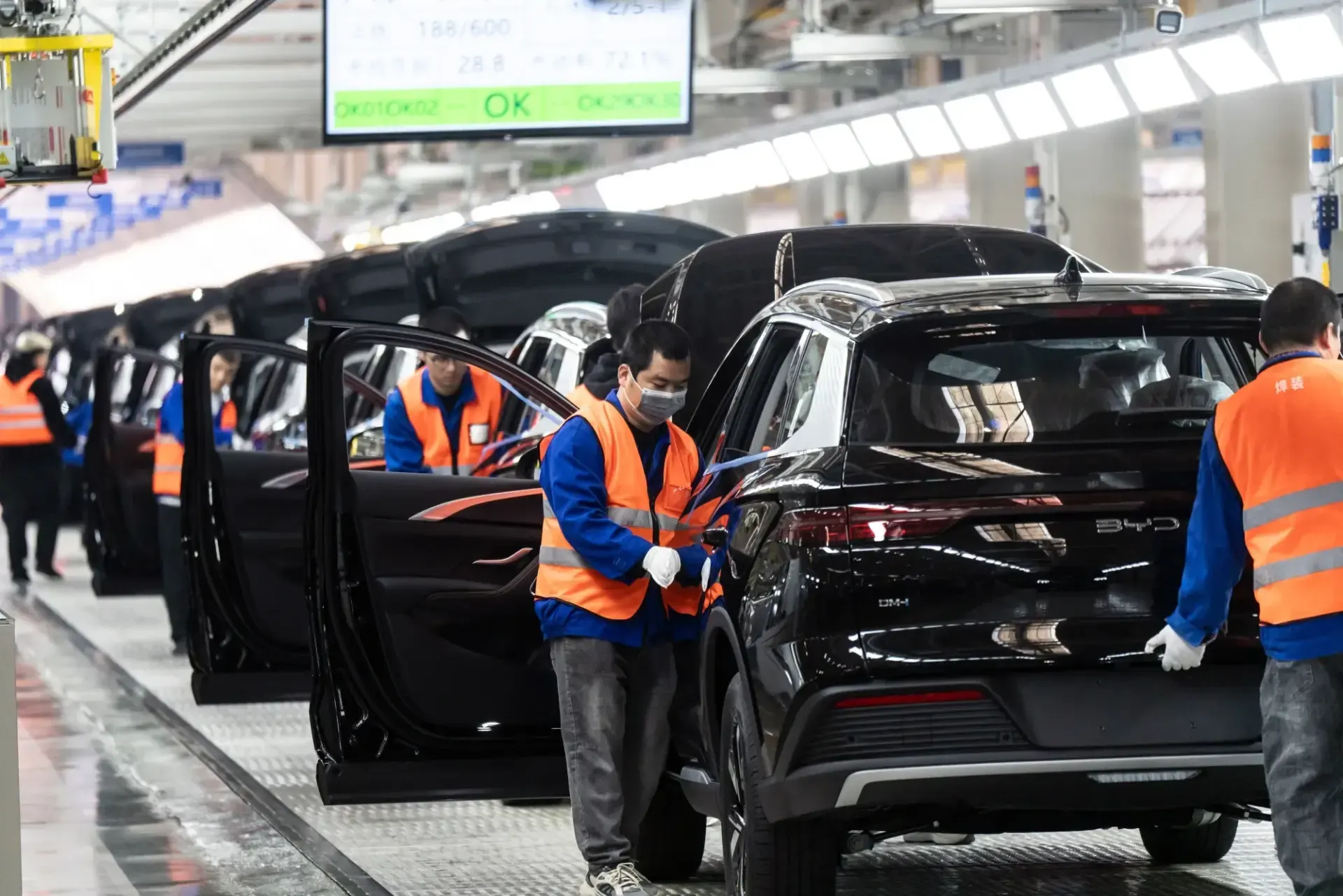
So Canada is diversifying. An agreement with China will ease tariffs on Chinese EVs, the very vehicles Canada and the US had jointly blocked in 2024. Another deal with South Korea aims to boost Korean production on Canadian soil. Both moves conveniently undermine American automakers.
The environmental targets remain ambitious, 90% EV sales by 2040, stricter emissions standards, yet Carney scrapped Trudeau’s 2023 EV sales mandate, which automakers had complained was too expensive. Environmental groups immediately protested, though one suspects they’ve grown accustomed to watching climate policy bend to economic reality.
What emerges is a portrait of pragmatic desperation. Canada isn’t abandoning the American market. It’s simply preparing for the possibility that the American market has already abandoned it. The new strategy focuses, as Carney diplomatically phrased it, on “preparing for all possibilities”. Translation: when your biggest customer becomes your biggest liability, you learn to make other friends fast.