

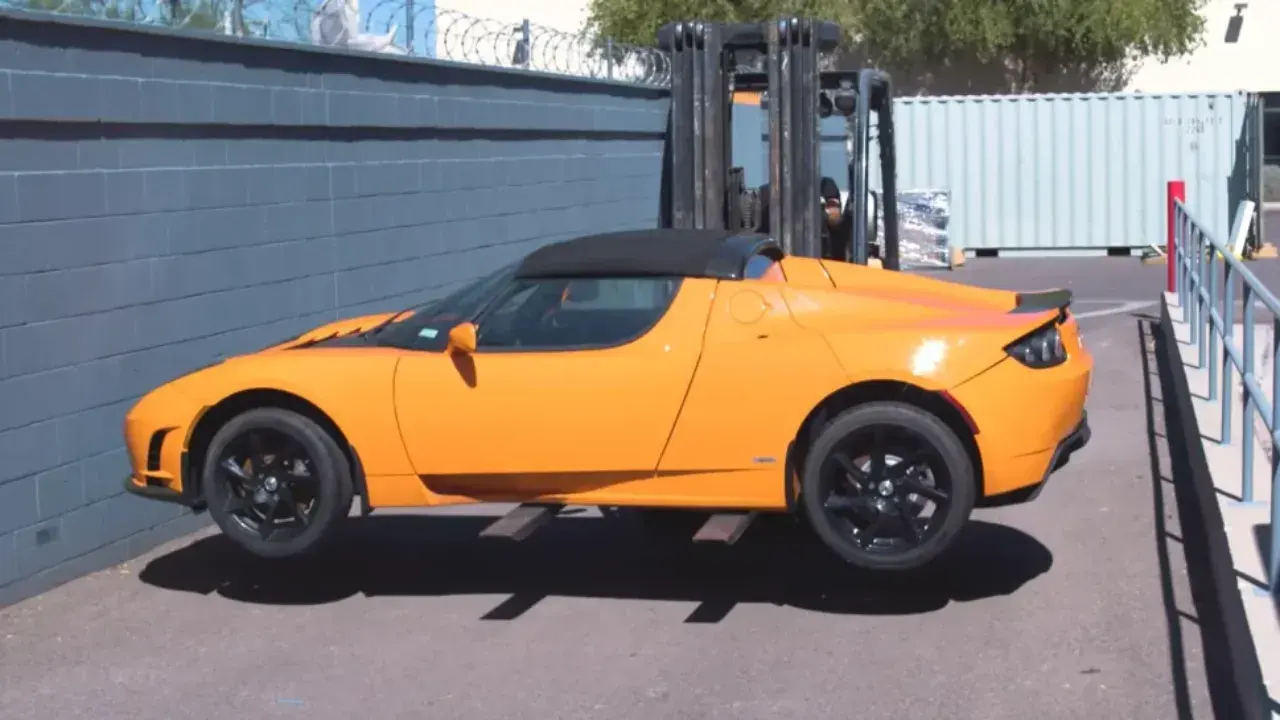
Forget the romanticized clichés of dusty barn finds and forgotten country garages filled with rusted classics. This is a story of corporate espionage, financial ruin, and three pristine, mummified 2010 Tesla Roadsters discovered sealed inside shipping containers in a Chinese port.
Back in 2010, a local Chinese automaker, likely a soaring startup’s overambitious R&D department, bought these first-generation electric sports cars straight from the factory. The mission was simple: strip them down, copy Elon Musk’s homework, and beat Tesla at its own game. Instead, the company went bankrupt before they could even unscrew a bolt, leaving the containers to vanish from radar for over a decade.
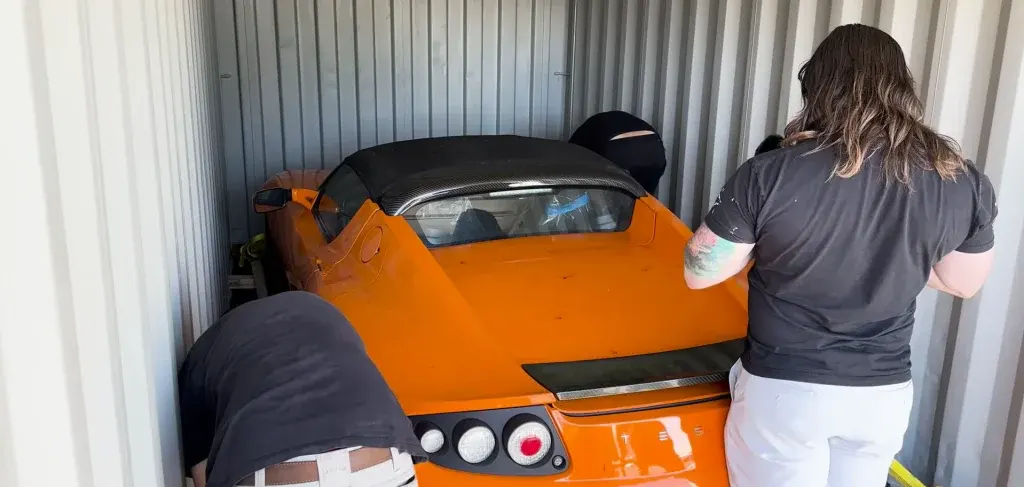
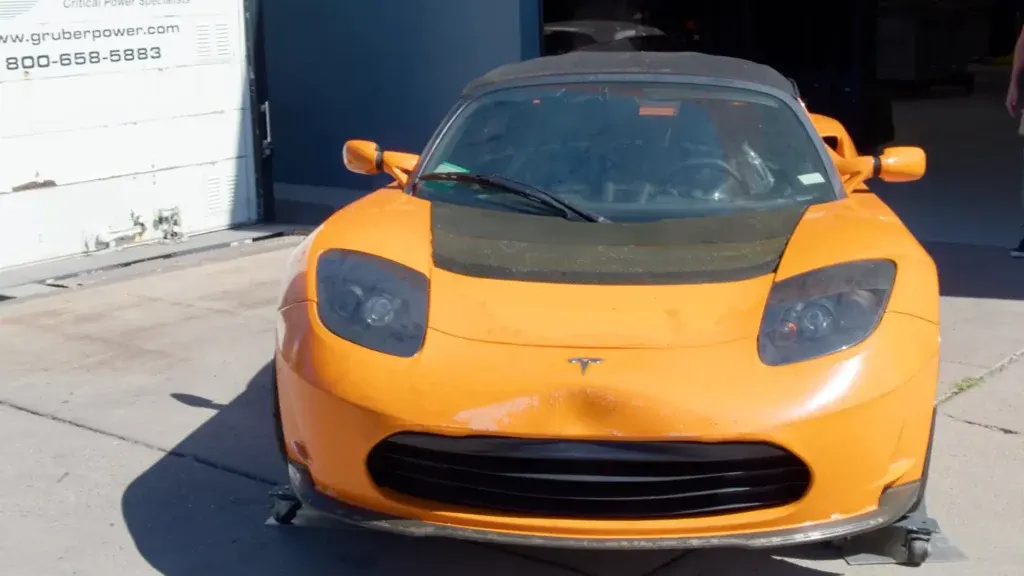
When Gruber Motor Company cracked the seals in 2023, they found an automotive time capsule. Nestled inside were two Flame Orange Sport models and one brilliant red standard Roadster. They were practically untouched, complete with their original chocks, shipping straps, and inflated protective airbags. The trunk accessories, charging cables, cases, and adapters, lay pristine in their original, unopened packaging. With odometer readings showing under 300 kilometers, they looked ready to roll off a showroom floor.
But nature and physics always win, especially when human error is involved. While the carbon fiber trim merely suffered some slight yellowing and the interiors showed minor moisture damage, the real disaster was invisible. Whoever packed the cars left the battery service plugs connected. For thirteen grueling years, the lithium-ion packs slowly, relentlessly bled to death. Today, the original battery cells are completely irrecoverable, turning these high-tech marvels into beautiful, heavy bricked paperweights.
The plot thickens with the discovery of a fourth “ghost” Roadster. Inside the containers lay crates stuffed with spare body panels, interior trims, and mechanical bits, but with no chassis or battery pack in sight. It is a clear sign that the reverse-engineering team had indeed started dissection before their funding evaporated.
Despite being utterly undriveable without a massive, wallet-draining battery overhaul, the trio sparked an instant bidding war. Software billionaire Dan O’Dowd eventually took the bait, shelling out nearly $1 million. For that astronomical sum, he didn’t buy working sports cars; he bought a monument to the era when Tesla was already worth stealing.