
On a long straight at Texas Motor Speedway, five performance icons line up for a standing-start sprint: Ferrari F8 Tributo, Ford GT, Porsche Taycan, Dodge Challenger SRT Hellcat Redeye and Aston Martin DBS Superleggera. On paper, it looks like a classic showdown between high-performance combustion engines and an electric sports car ready to make its mark. Behind them, a simple camera car prepares to capture the action. Yet that very vehicle steals the spotlight.
Hummer EV dominates launch against Ferrari, Ford GT and Porsche Taycan
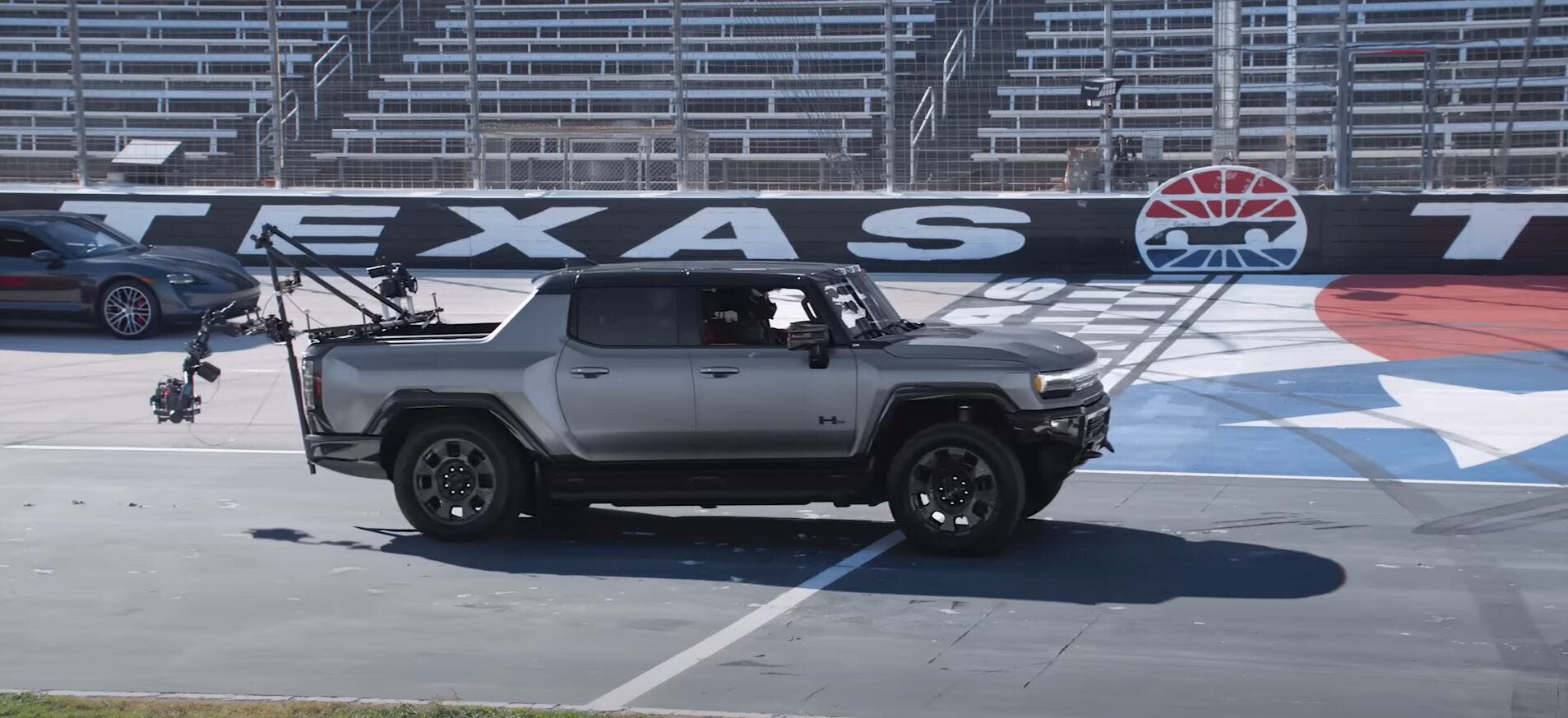
What was meant to remain in the background turns out to be a 2026 GMC Hummer EV Carbon Fiber Edition, a massive electric pickup weighing over four tons, made even heavier by four occupants and filming equipment in the bed. When the lights go out and the supercars launch as expected, the electric giant gains ground, pulling ahead in the first meters and surprisingly leaving the pack behind.
To make the scene even more dramatic, GMC started the Hummer with a slight disadvantage, placing it one car length behind. Despite that, the pickup quickly catches up and clearly overtakes the sports cars within seconds. Even a vehicle weighing more than four tons, designed for a completely different purpose, can accelerate like a supercar thanks to electric technology.
The secret lies in the specifications. In Carbon Fiber Edition form, the Hummer EV produces 1,160 hp from three electric motors. Using “Watts to Freedom,” a dedicated launch control mode, it accelerates from 0 to 60 mph (0–97 km/h) in about 2.8 seconds. Figures like these place it close to many combustion supercars despite nearly double the weight. In the first meters, instant torque and all-wheel drive make the difference.
Even so, pure data still favor the supercars in terms of power-to-weight ratio. A Ferrari F8 Tributo produces around 710 hp for just over 1.4 tons, while the Hummer must move more than 4.1 tons. The same applies to the Ford GT, Taycan, Hellcat Redeye and DBS Superleggera. However, in a very short sprint from 0 to 62 mph (0–100 km/h), the immediate response of electric motors and traction management allow the pickup to jump ahead before the sports cars can fully deploy their potential.
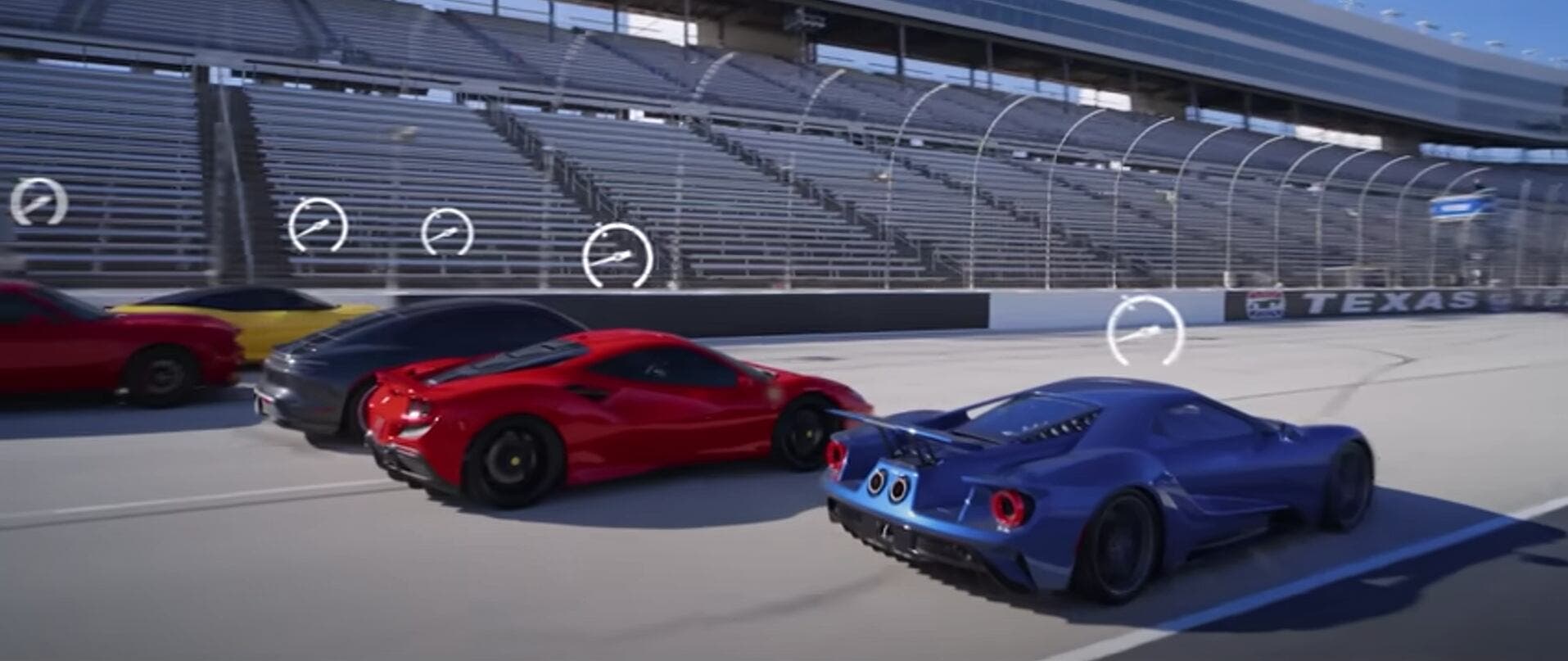
Here lies the key difference between electric and combustion power. A combustion engine must build revs, shift gears and manage traction, often only through the rear wheels. An electric system delivers peak torque almost instantly and distributes power across multiple axles without interruption. On one side stand refined, powerful engines, on the other a massive weight launched forward with surprising force.
This demonstration does not aim to turn the Hummer into a track car. At higher speeds, aerodynamics and weight restore the advantage to the sports cars, and over a full lap Ferrari, Ford GT or a high-performance Taycan would regain the lead. The Porsche Taycan Turbo GT, for example, can sprint from 0 to 62 mph in about 2.2 seconds.
What this moment truly shows is how electric technology is reshaping performance benchmarks. Seeing a four-ton pickup, loaded with people and equipment, leave a Ferrari behind off the line would have seemed unreal just a few years ago. Today, it stands as clear proof of how technology can overturn established rules, fueling debate among enthusiasts and redefining the very concept of acceleration.