

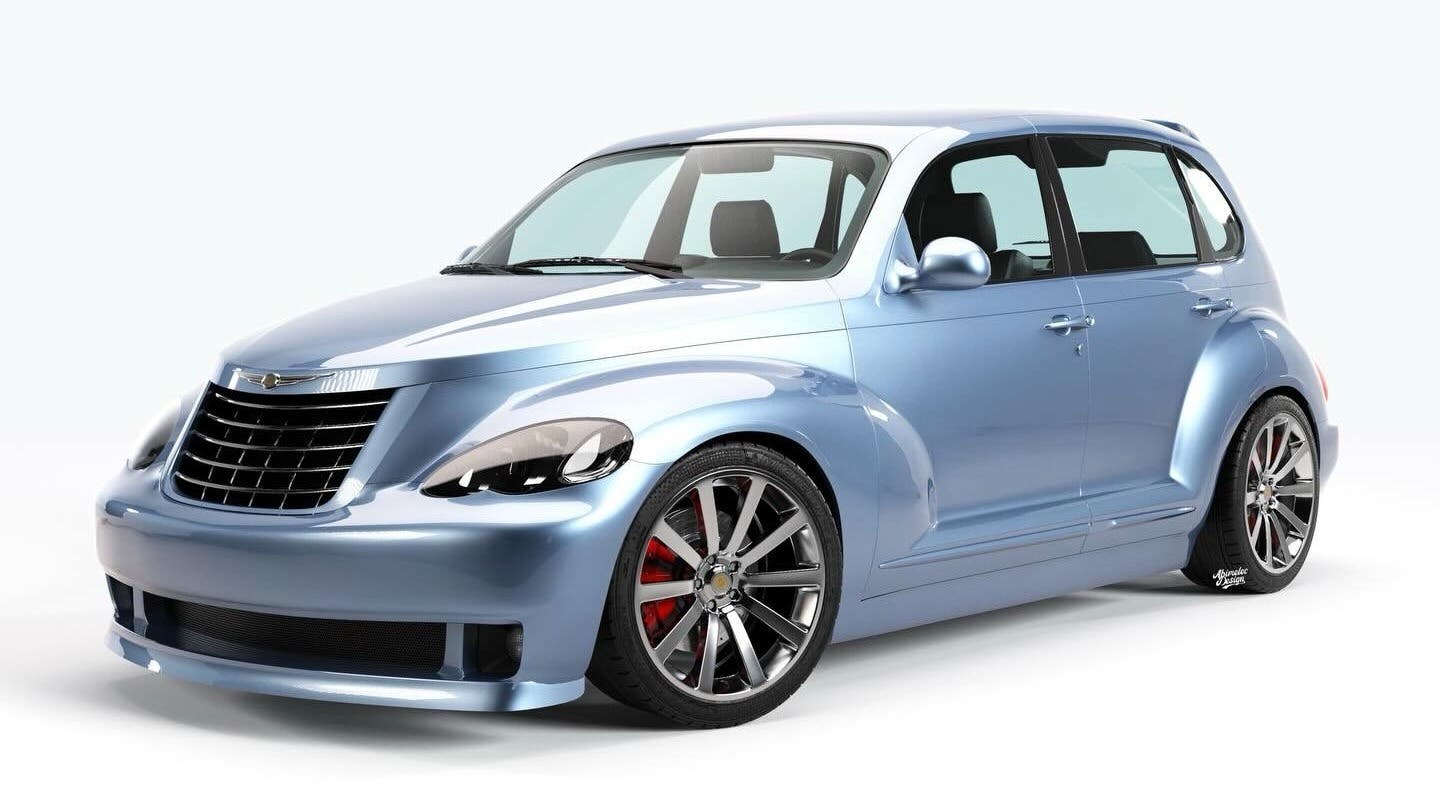
Sometimes a simple online render can completely change how we see a car. That is exactly what happened with the Chrysler PT Cruiser, now at the center of an extreme reinterpretation by Abimelec Design. In the early 2000s the model embraced retro styling and turned into an unusual and divisive compact MPV. Today it comes back in a form no one would have ever expected.
Chrysler PT Cruiser SRT-6: the extreme rear-wheel-drive restomod no one expected
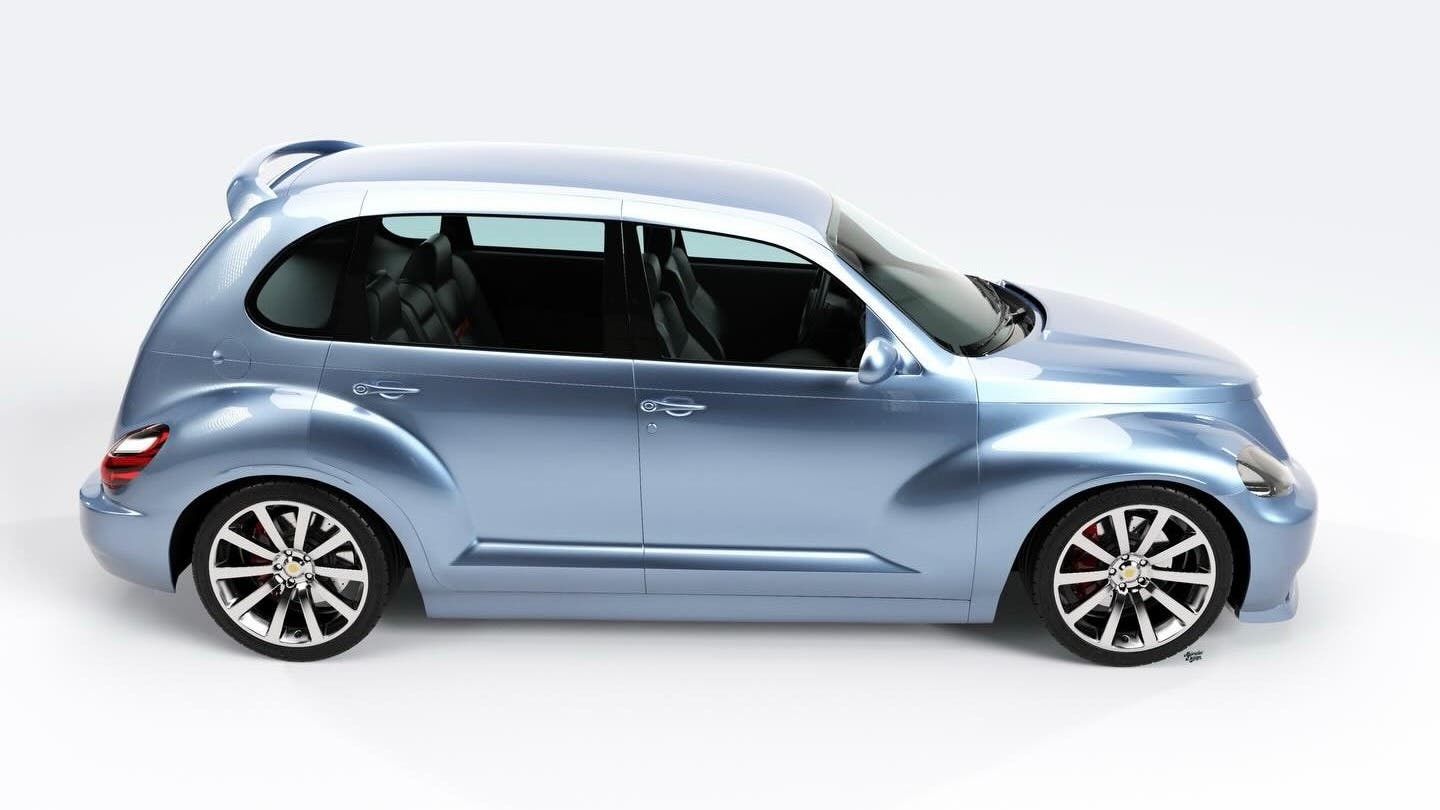
The designer did not aim for a mildly sportier version. He pushed the idea to the limit and injected the SRT-6 DNA directly into the PT Cruiser. The result is a radically different PT Cruiser, a project that breaks every rule and completely rewrites the personality of the original car.
Under the hood of this digital vision sits the supercharged 3.2-liter AMG-derived V6 from the rare Chrysler Crossfire SRT-6. The engine delivers around 330 horsepower, enough to launch the car from 0 to 60 mph in just over four seconds and reach a top speed electronically limited to 250 km/h. These figures stand light-years away from those of the standard PT Cruiser.
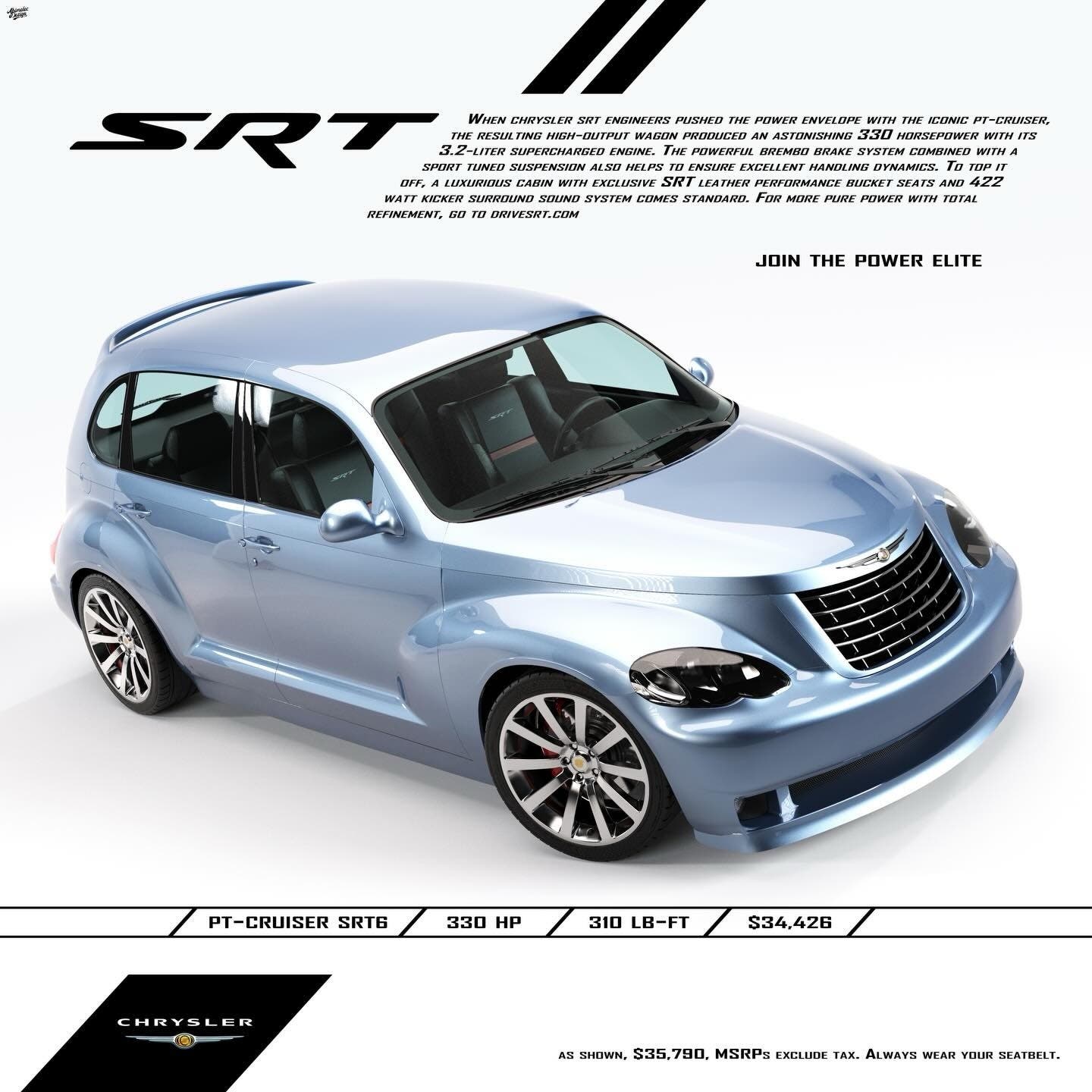
The real twist, however, comes from the switch to rear-wheel drive. The Crossfire was the only Chrysler of that era to use this layout, while the PT Cruiser always relied on front-wheel drive. This change alone would have transformed the car from an eccentric urban vehicle into a truly unconventional sports car, possibly one of the wildest ideas ever linked to the Chrysler name. Even so, it likely would not have won over the mass market.
From a styling perspective, the render blends nostalgic cues from the original model with a strong muscular attitude. The front end takes inspiration from the Chrysler 300C. Deeper side skirts, enlarged air intakes to feed the supercharger, twin exhaust tips and large multi-spoke wheels complete the look. A small roof spoiler and a hood bulge add even more character to an already extreme design.
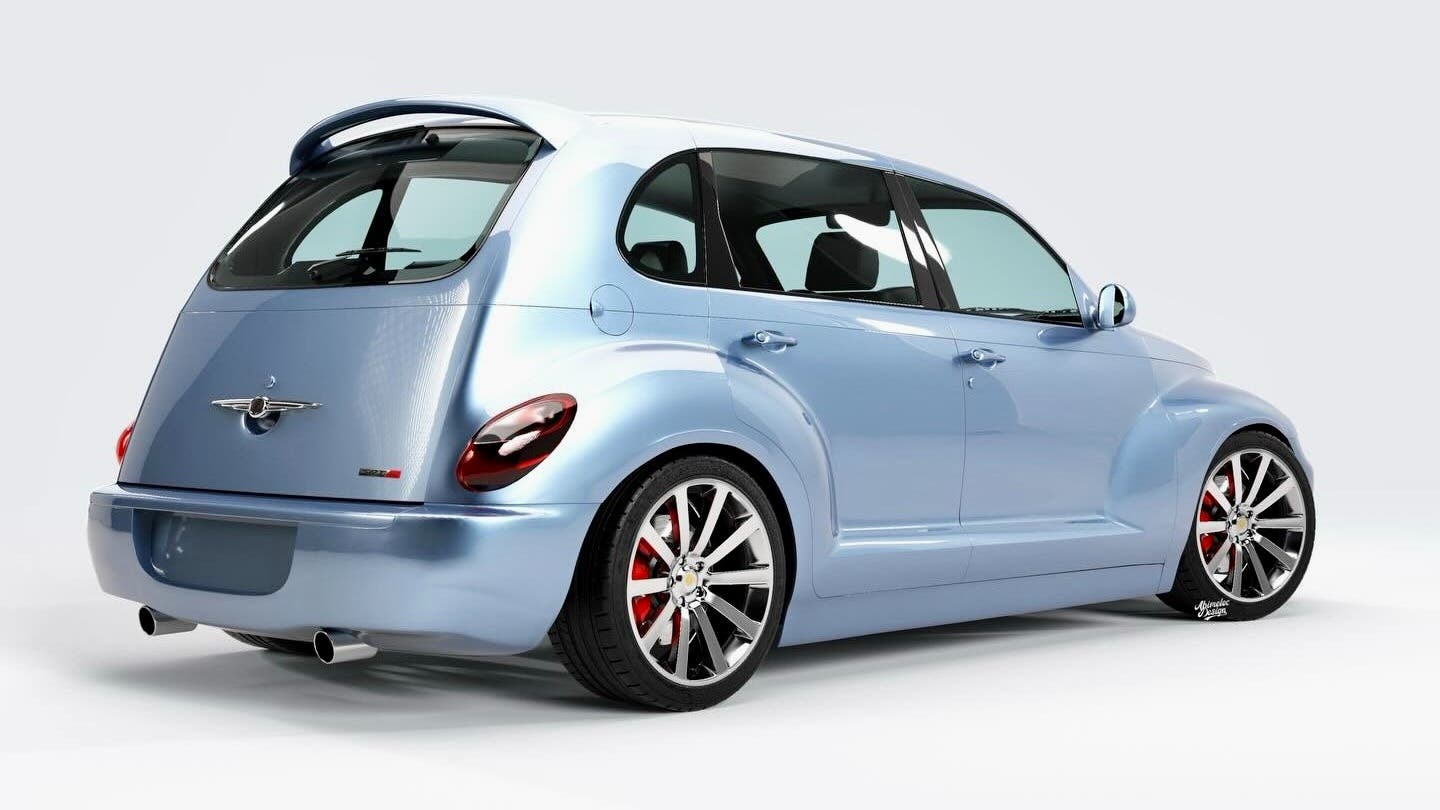
Looking at the images of this project, it almost feels like Chrysler missed a huge opportunity by never handing such a variant to the SRT engineers at the time. It might not have become a commercial success, but it surely would have earned a place among the most fascinating automotive follies ever built. Or maybe not.