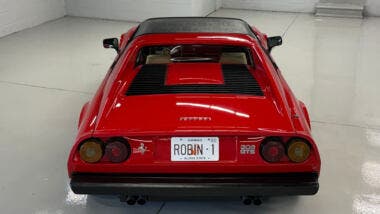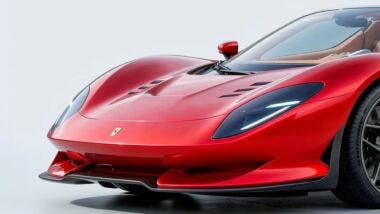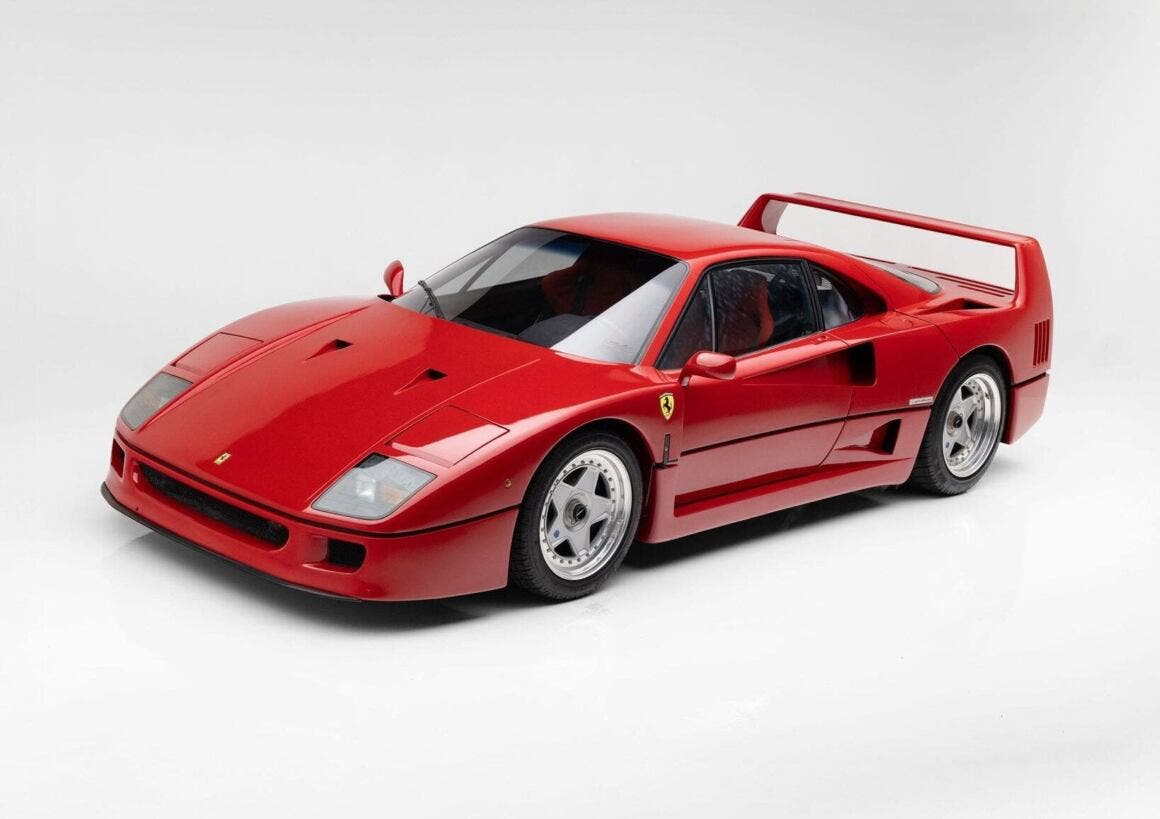
In Ferrari’s genealogy, one line of models has represented the absolute peak of Maranello production for the past forty years. These are the so-called Big Six, limited-series flagship supercars built to bring the highest level of available technology from each era to the road. The story began in 1984 with the GTO and continued with the F40, F50, Enzo, LaFerrari, and now the F80. Among those six, three share a particularly recognizable design and functional element, the full-width rear wing. That detail links the F40, F50, and F80 through a common thread of racing inspiration and visual drama.
These 3 Ferraris connect the Big Six family through one iconic design element
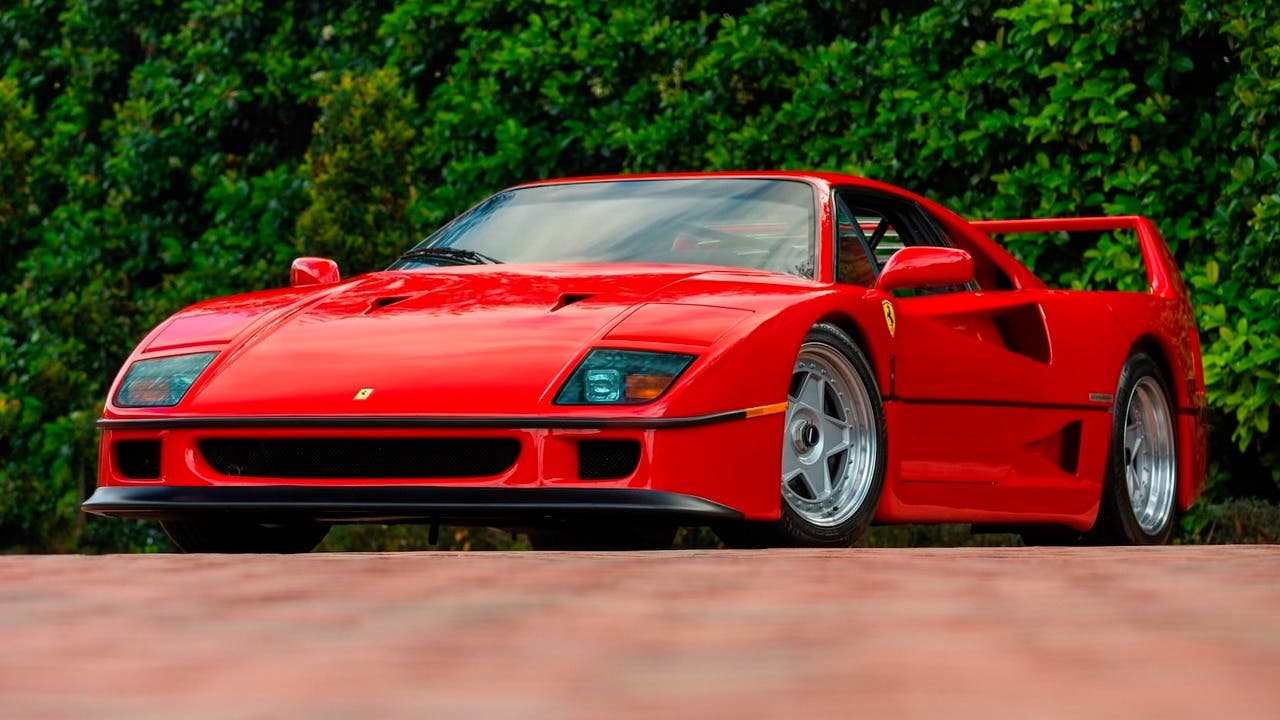
Ferrari introduced the F40 in 1987, with styling by Pininfarina, and made it the first road-going Ferrari to integrate a large rear wing into the bodywork. It did so with such natural ease that the wing became an organic part of the shape rather than a purely functional add-on. Beyond its visual balance, which nearly forty years later still stands as a benchmark for purity and formal coherence, the F40 also delivered brutal numbers. Its 2.9-liter twin-turbo V8 produced 478 horsepower, moved just 2,425 pounds of mass, pushed the car past 201 mph, and recorded a 1:29.60 lap at Fiorano.
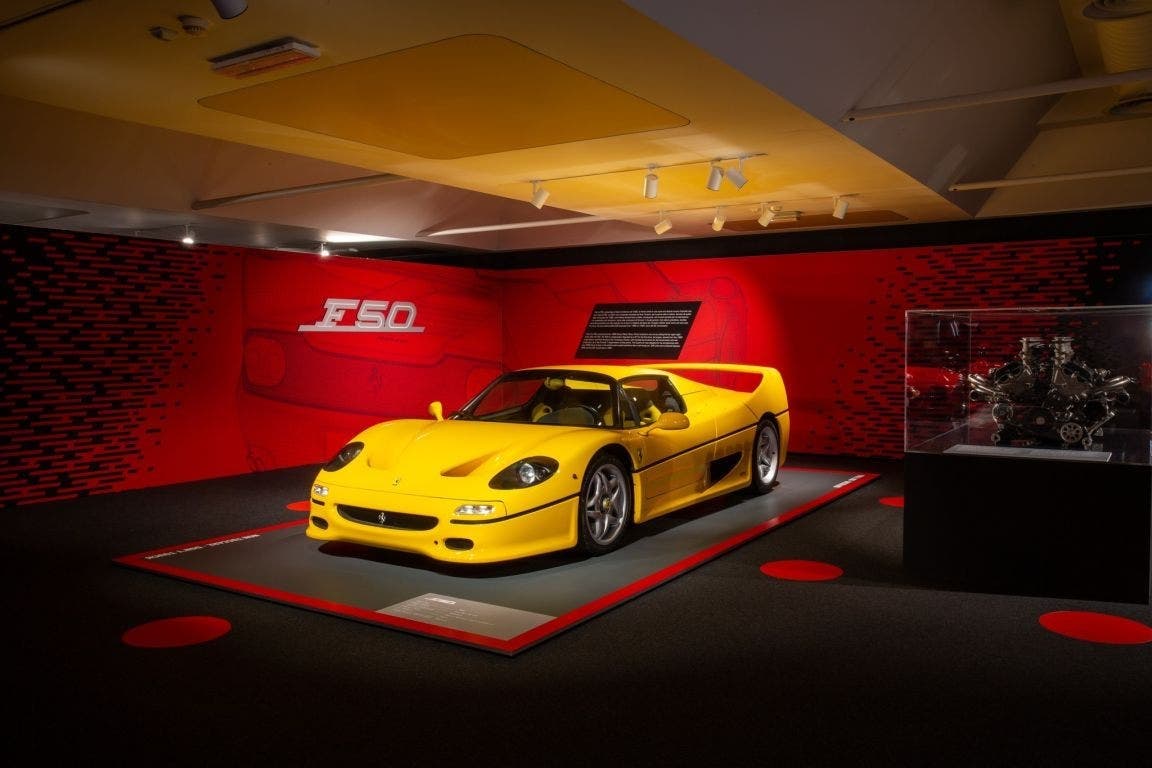
The F50 arrived eight years later with a very different philosophy. If the F40 felt like a race car adapted for road use, the F50 came to get as close as possible to a Formula 1 car with a license plate. At the center of that project sat a naturally aspirated 4.7-liter V12 derived from the engine used in the 640 F1. Ferrari tuned it to 520 horsepower and mounted it as a stressed member inside a carbon-fiber monocoque with pushrod suspension, creating a structure that differed from a race car only because it carried a plate. The fixed full-width rear wing helped define its character, and at Fiorano the F50 lapped in 1:27.00, taking a significant step beyond the mark set by the F40.
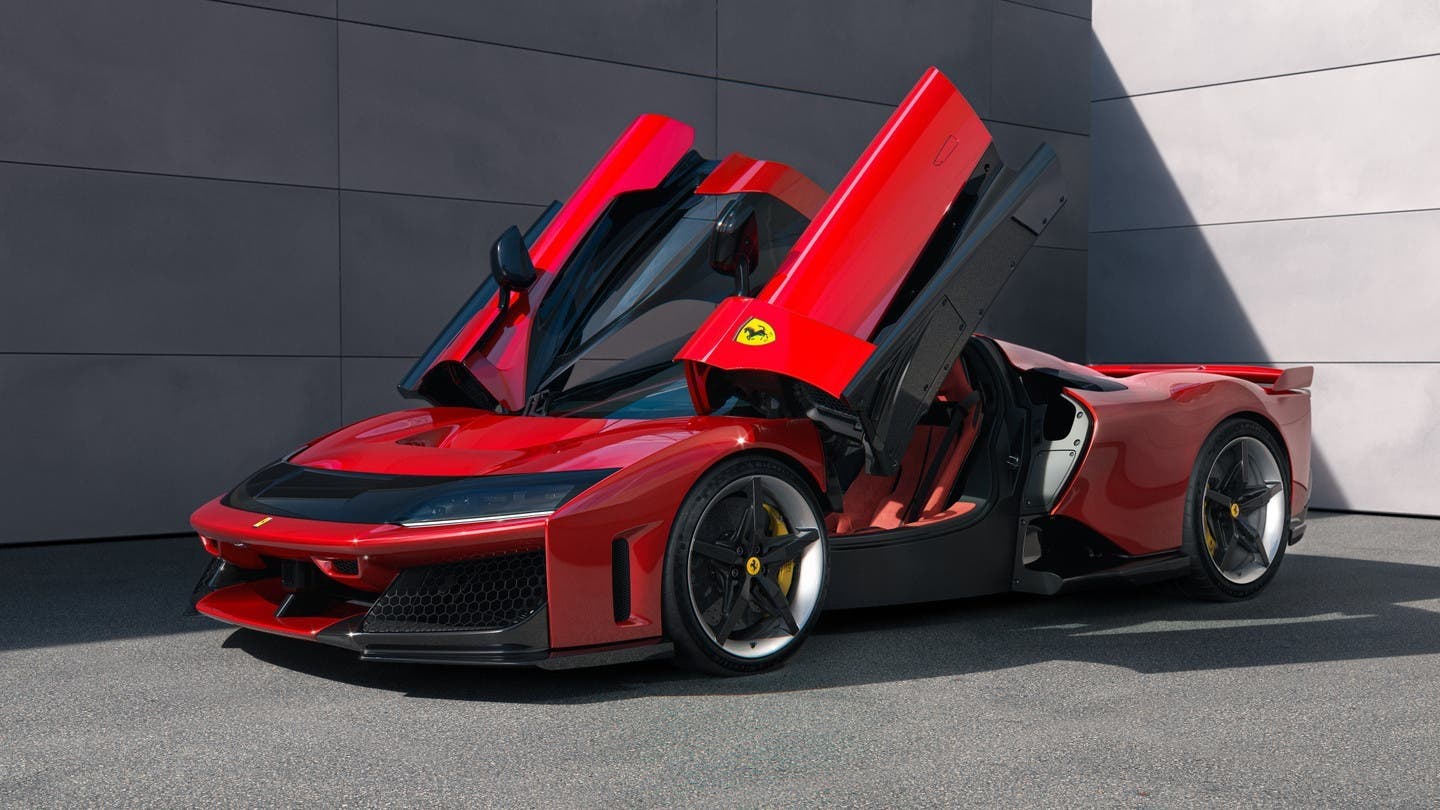
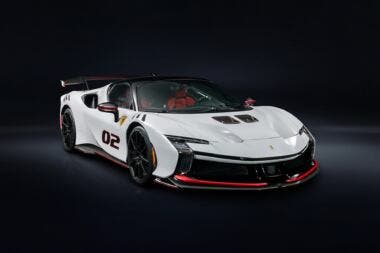
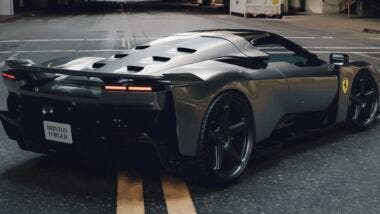
With the F80, the newest member of the family, the generational leap already shows in the way Ferrari conceived the rear wing. It is no longer fixed, but active, able to deploy and change position according to dynamic conditions. The design looks far more extreme and technical than that of its predecessors, closer to an endurance hypercar than to a traditional supercar, with a clear connection to the Le Mans-winning 499P.
Beneath the bodywork sits a 3.0-liter twin-turbo hybrid V6 backed by an electric system that raises total output to 1,200 horsepower. Those numbers translate into a 0-62 mph time of 2.1 seconds, a 0-124 mph run of 5.75 seconds, and a top speed above 217 mph. Its 1:15.30 lap at Fiorano tells the story of the distance Ferrari has covered since the earlier generations.
These are three cars separated by nearly four decades of technical evolution, yet united by that full-width wing, which in each era marked the most visible point where racing technology and road-car production met.