

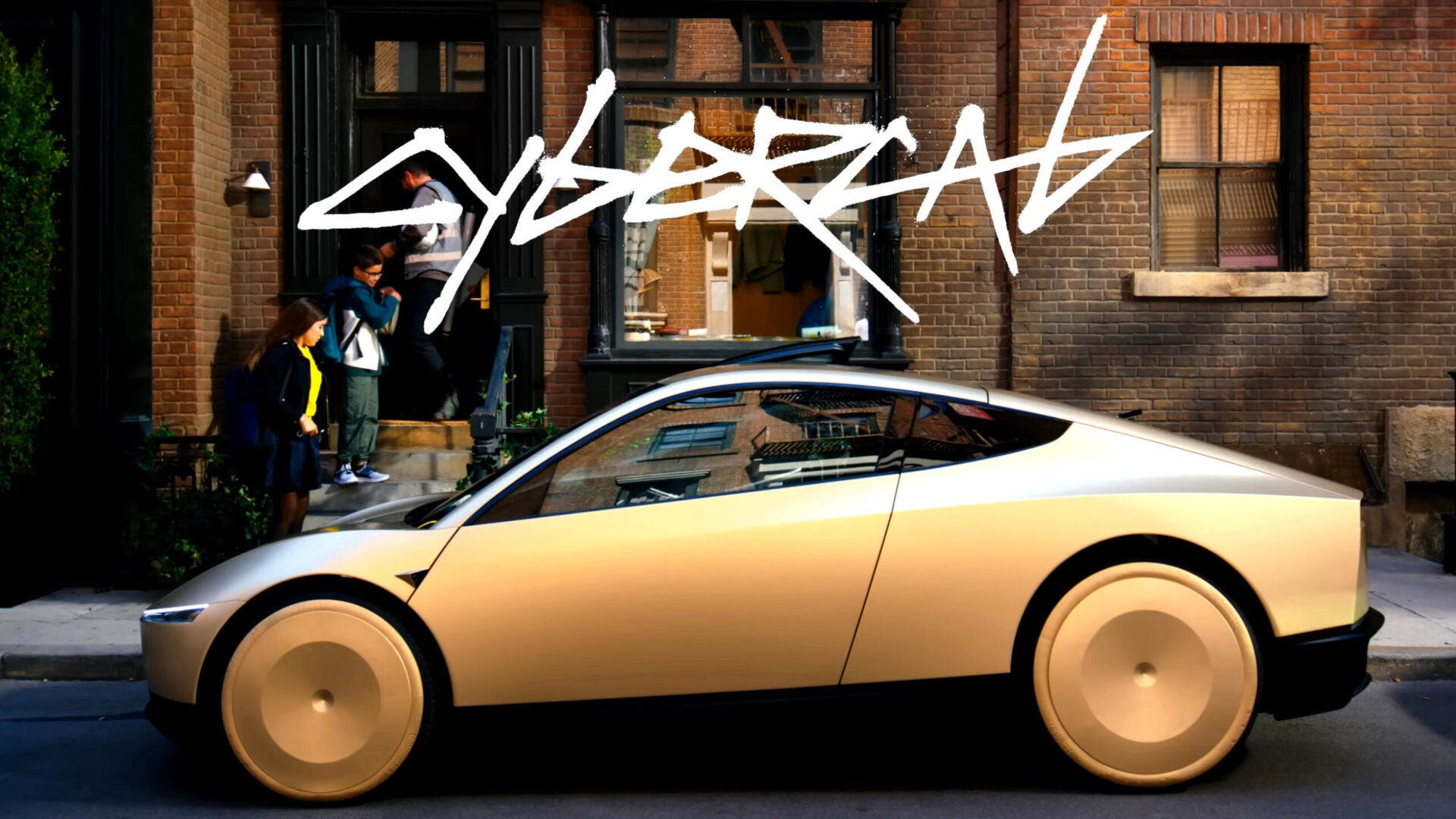
Just weeks before the start of Cybercab mass production, scheduled for April 2026 at the Texas Gigafactory, Tesla finds itself without the rights to the name of the vehicle it is about to launch. Controlling the situation is UNIBEV, a French company specialized in alcoholic seltzers, which moved first and registered the trademark before Tesla.
Tesla risks losing Cybercab name ahead of 2026 launch
On February 11, Tesla obtained a 30-day extension from the United States Patent and Trademark Office to decide whether to formally oppose UNIBEV’s filing. The new deadline falls on March 14, a date that could determine the outcome. The issue is that less than two months remain before production begins, and the trademark still belongs to another company.
The situation stems from a major oversight. During the “We, Robot” event on October 10, 2024, Elon Musk presented the Cybercab on stage and publicly used the name, yet Tesla had not filed any trademark application. UNIBEV seized the opportunity and filed for “Cybercab” in the vehicle category on October 28, 2024. Tesla filed only in November, too late. Since UNIBEV filed first, it secured priority and Tesla’s application was suspended on November 14, 2025.
This is not the first time UNIBEV has capitalized on Tesla’s trademark missteps. The French company already holds three US registrations for “TESLAQUILA,” the same name Tesla wanted for its tequila, and also controls “Cybertaxi.”
Experts identify three possible reasons behind Tesla’s extension request. Negotiations with UNIBEV may be underway, Tesla may be gathering evidence for a formal opposition, or the company may be deliberately slowing the process to pressure UNIBEV into a more favorable agreement. Sources close to the matter indicate that negotiations are indeed ongoing, though without resolution so far.
Meanwhile, Musk has explored alternative names. During the Q4 2025 earnings call on January 29, he introduced “Cybercar” and “Cybervehicle” as possible substitutes. Tesla’s legal team filed applications for both names only 37 seconds apart. Musk explained the potential change by noting that terms such as “Taxi” or “Cab” could create regulatory issues in some US states, though observers suggest this is not the real reason. Some analysts view it as a strategy to divert attention from the dispute and signal to UNIBEV that the name remains negotiable, potentially weakening its bargaining power.
The problem is that the alternatives convince few observers. “Cybercar” resembles “Cybercab” too closely and could trigger further disputes. “Cybervehicle” sounds long, generic and commercially weak. The name “Robotaxi” had already been rejected by the USPTO in May 2025 as too generic and widely used.
Most likely, Tesla will end up paying UNIBEV to secure the trademark. The remaining questions concern how much the French company will demand and whether Tesla’s legal team has learned the lesson that trademarks must be filed before a CEO steps on stage to announce product names. The rapid filings made immediately after the earnings call suggest the company may have taken note.