

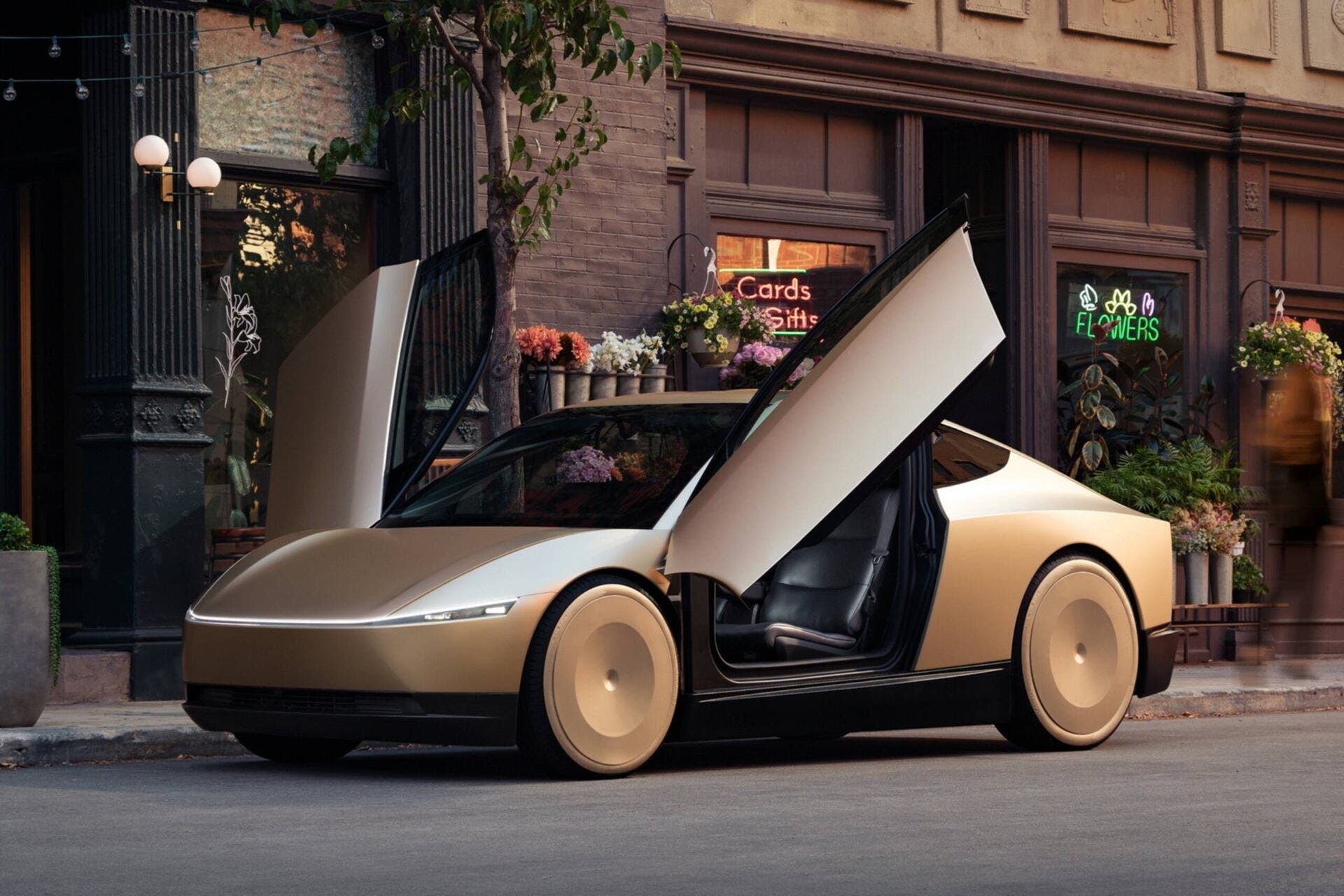
With Tesla, ambitious promises never fall short, and the Cybercab once again proves it. Elon Musk plans to start production of the new robotaxi as early as April, aiming to reshape not only urban mobility but also the way cars get built. The company is betting on a completely new manufacturing process designed to cut both costs and assembly time.
Over the past few months, several prototypes have appeared on public roads and drawn significant attention. Although Tesla originally unveiled the model without a steering wheel or pedals, the vehicles currently under testing still feature both. This detail suggests that fully autonomous driving remains far from ready for large-scale real-world use. Even so, Musk insists that production will accelerate sharply after an initial slow phase, a familiar promise already heard during the Cybertruck rollout.
Tesla bets big on Cybercab as Musk targets millions of units per year
Musk addressed the topic directly on social media, explaining his perspective. “Initial production always moves very slowly and follows an S-curve,” he wrote. “The speed of growth decreases as the number of new parts and processes increases. With Cybercab and Optimus, almost everything is new, so early production will be extremely slow, but it will become impressive over time.”
Last year, Musk also mentioned a target of at least two million Cybercabs per year, with the potential to reach four million in the long run. Those figures stand out, especially considering that Tesla sold just over 1.5 million vehicles worldwide in 2023. In practical terms, this single model would need to match the output of Tesla’s entire current lineup.
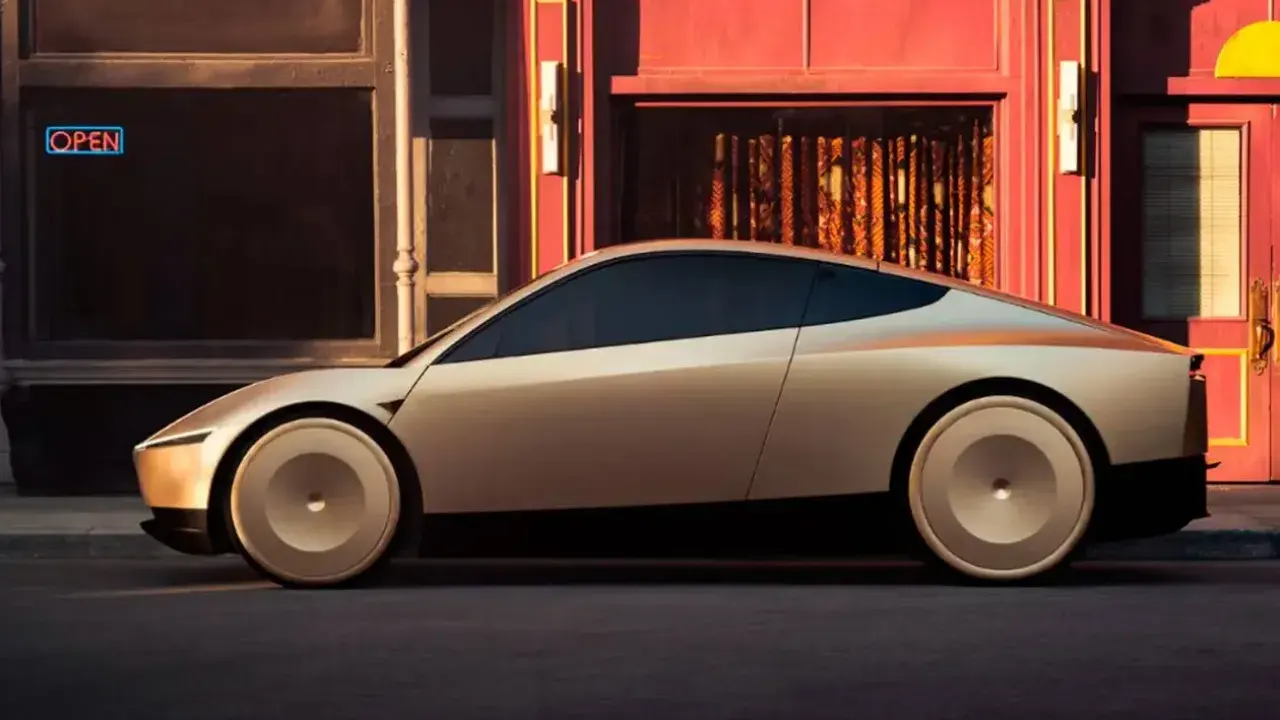
The Cybercab, however, does not follow the traditional car concept. It serves as a compact two-seat vehicle designed for urban mobility and autonomous transport services. At launch, Tesla spoke of a price around $30,000, a figure that depended heavily on U.S. federal incentives that no longer exist today.
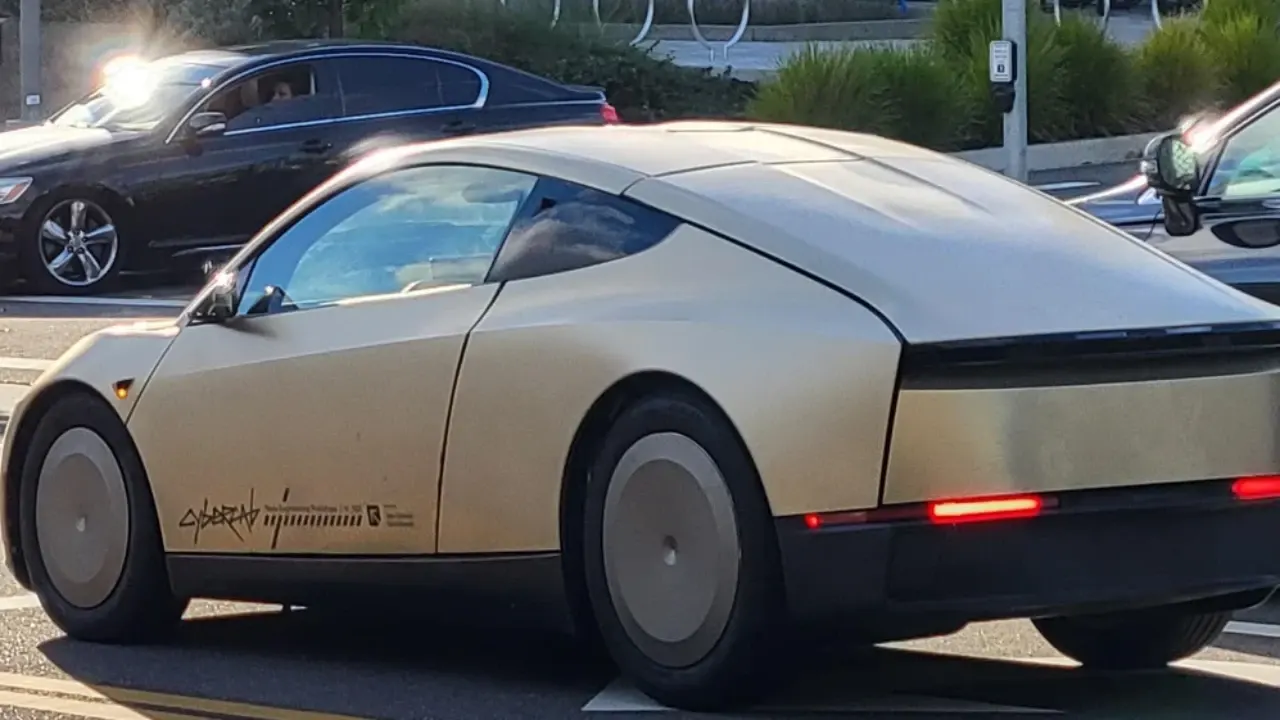
To make the project viable, Tesla relies on a new production architecture that uses fewer components and simplified assembly steps. The company aims to increase efficiency and lower costs through this approach. Still, the fact that current prototypes rely on conventional controls confirms that the technology cannot yet eliminate human input entirely.
The plan grows even more ambitious when considering Musk’s long-term goal of producing 20 million vehicles per year by 2030, a target that would surpass every major global automaker and currently appears highly optimistic.
Tesla should roll out the first Cybercabs in the coming months, starting with limited volumes before ramping up production. Whether real market demand will match Musk’s bold expectations remains to be seen, especially after the mixed reception of projects like the Cybertruck.