

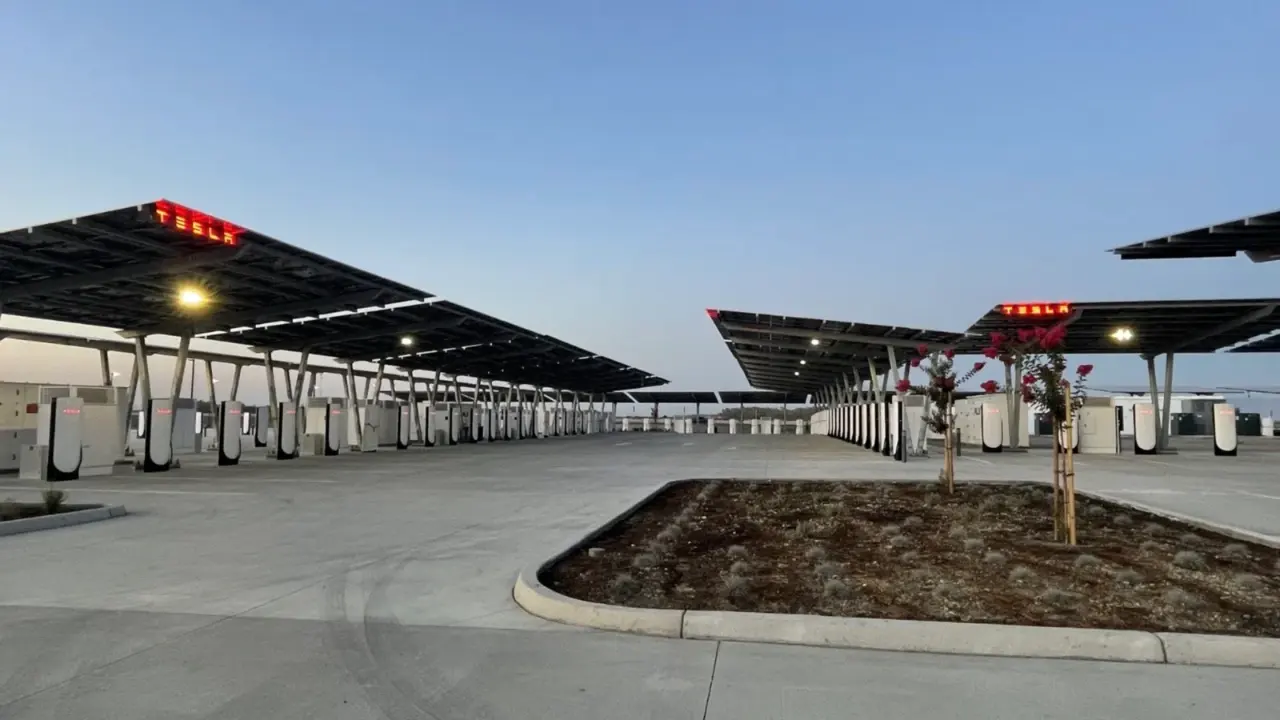
The energy demands of the modern world are colossal. But if Tesla’s largest Supercharger station is any indicator, the solution is not more grid strain, but sheer solar firepower combined with massive battery backup.
Tesla recently announced the full opening of its newest charging behemoth in Lost Hills, California. With an astonishing 164 stalls, it dwarfs the previous record holder (a 120-stall site in Barstow) and immediately sets a new global benchmark. The entire facility is powered by 11 megawatts of solar panels, which perform the dual service of generating clean energy and providing much-needed shade for charging drivers. This solar array, in turn, feeds 10 Megapack batteries, storing a staggering 39 megawatt-hours of energy.
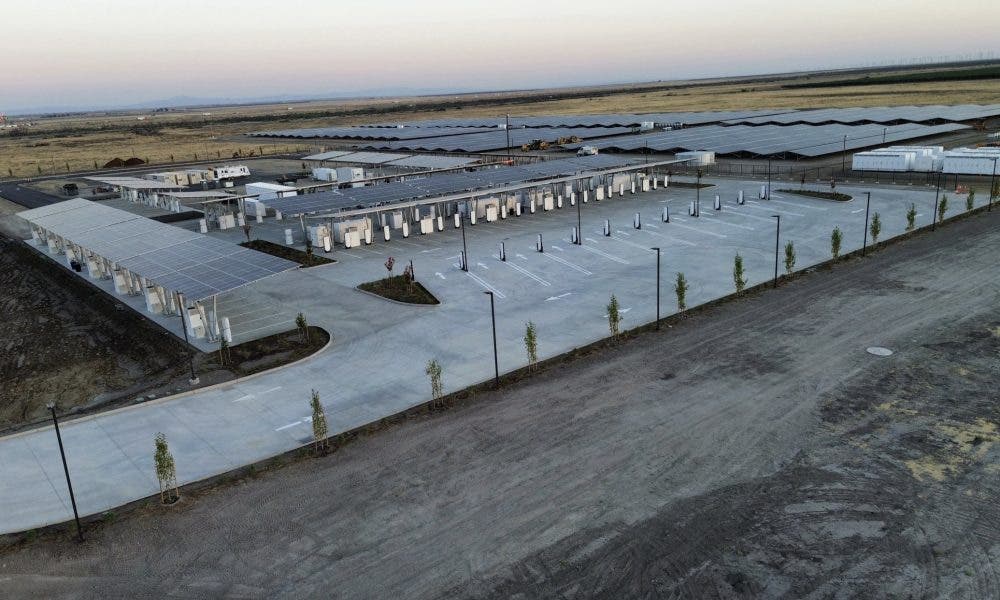
As Max de Zegher, a Tesla Charging Director, proudly stated: “Yes, the world’s largest Supercharger is powered by the sun”. This massive installation is a potent demonstration of Tesla’s relentless vertical integration. The company doesn’t just make EVs. It builds the charging stations and the energy systems that power them. This converged approach is proving to be the ultimate cheat code against the crippling bureaucracy of traditional utility companies.
De Zegher noted that the combination of on-site solar and Megapack storage allowed Tesla to bypass the months, or even years, required for utility companies to perform necessary grid upgrades. Facing a predicted severe charging deficit on the critical San Francisco-Los Angeles corridor by the 2025 holiday season, the company took control. They went from breaking ground to activating the first 84 stalls in just eight months. In total, the entire site was operational in about a year, proving that controlling the energy storage element gives Tesla total command over its deployment timeline.
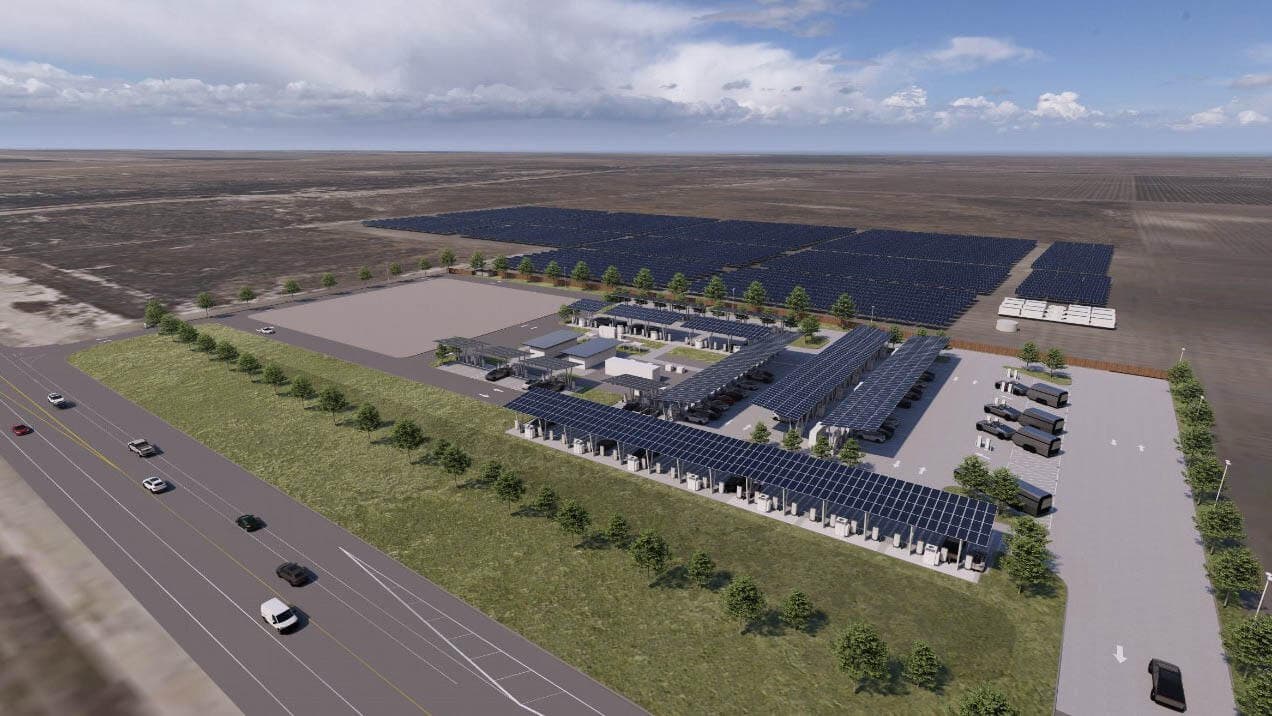
The marriage of solar power and stationary batteries is critical because, while renewable energy is clean, it’s notoriously intermittent. The Megapacks store power when the sun shines, ensuring drivers are never left waiting.