

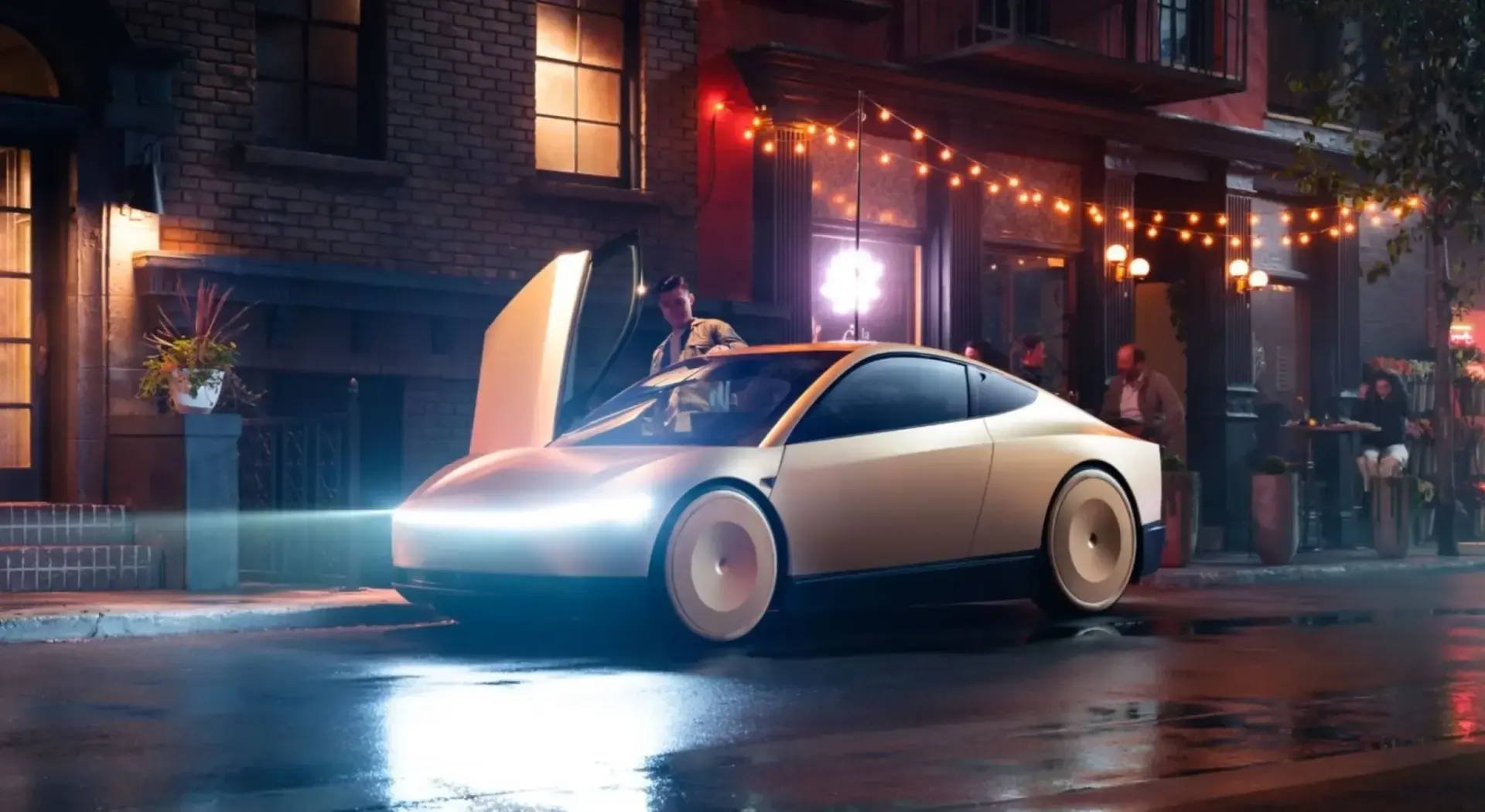
Certification data gives the Tesla Cybercab an energy consumption figure of 165 Wh/mi, equal to around 10.25 kWh/100 km. That places it well below the most efficient electric cars currently on the market. The comparison with benchmark models helps put the figure into context: the Lucid Air Pure RWD sits at around 14.29 kWh/100 km, the rear-wheel-drive Tesla Model 3 and Model Y come in at about 14.91 kWh/100 km, while the Hyundai Ioniq 6 reaches roughly 14.98 kWh/100 km. Tesla’s autonomous robotaxi creates that gap through a design approach radically different from that of traditional cars.
Tesla Cybercab sets a new EV efficiency benchmark at 10.25 kWh/100 km
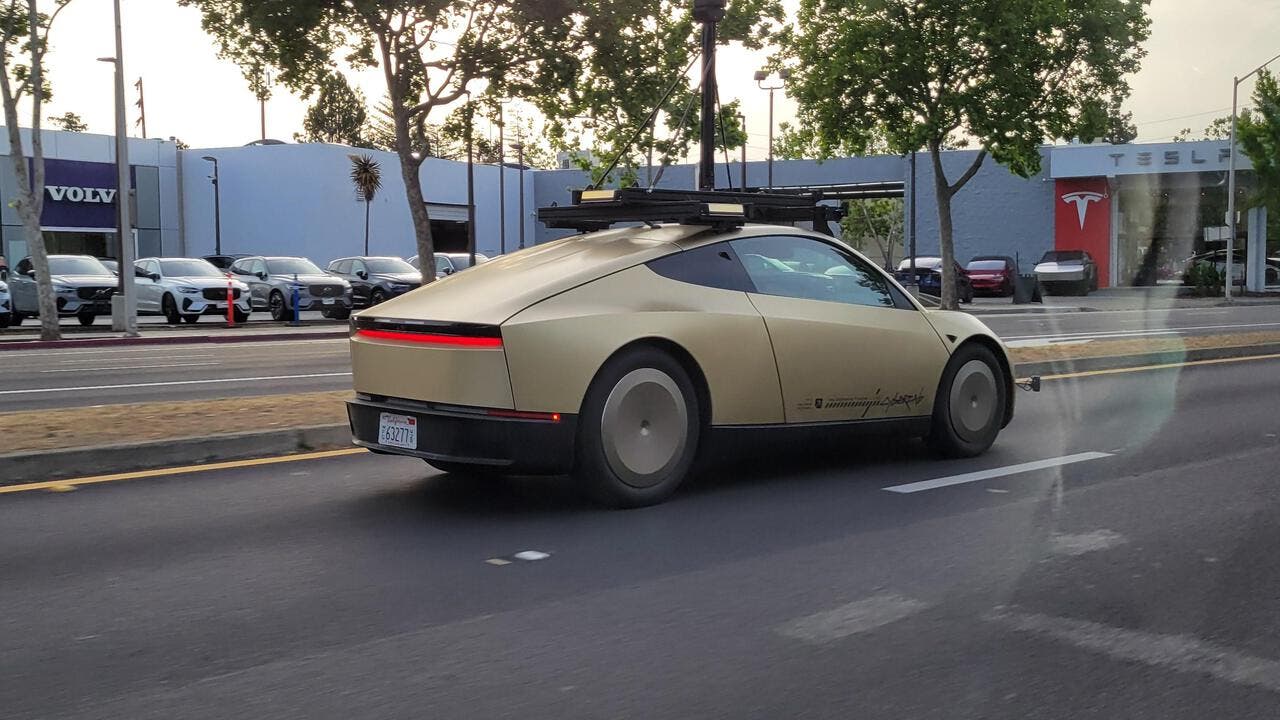
The result does not come from the gradual refinement of an existing platform, but from an industrial choice focused from the outset on a single goal: transporting two passengers with the lowest possible energy consumption. The Cybercab therefore abandons the conventions of private cars, doing without a steering wheel, pedals, rear seats and much of the extra hardware normally needed to guarantee everyday versatility. Its structure takes the form of a two-seat autonomous capsule, with lower weight, smaller dimensions and far less mechanical complexity than a conventional electric saloon or crossover.
This design philosophy comes together with careful work on aerodynamics and powertrain energy management, two factors that help push specific consumption even lower. The battery pack reportedly sits at around 50 kWh, a modest capacity that should still allow a range close to 480 km thanks to the system’s overall efficiency. For a robotaxi fleet designed to operate in urban environments, the operational advantage becomes significant, as it translates into lower running costs, faster charging times and a smaller amount of raw materials needed for cell production.
Of course, the direct comparison with the Model 3, Lucid Air or Hyundai Ioniq 6 highlights an important difference. Those cars must carry four or five people, offer a usable boot and work well both in the city and on long journeys. The Cybercab, on the other hand, exists for a much narrower task, and its decision to eliminate everything unnecessary makes such low consumption possible. In other words, its efficiency comes more from specialization than from a true technological leap over the competition.
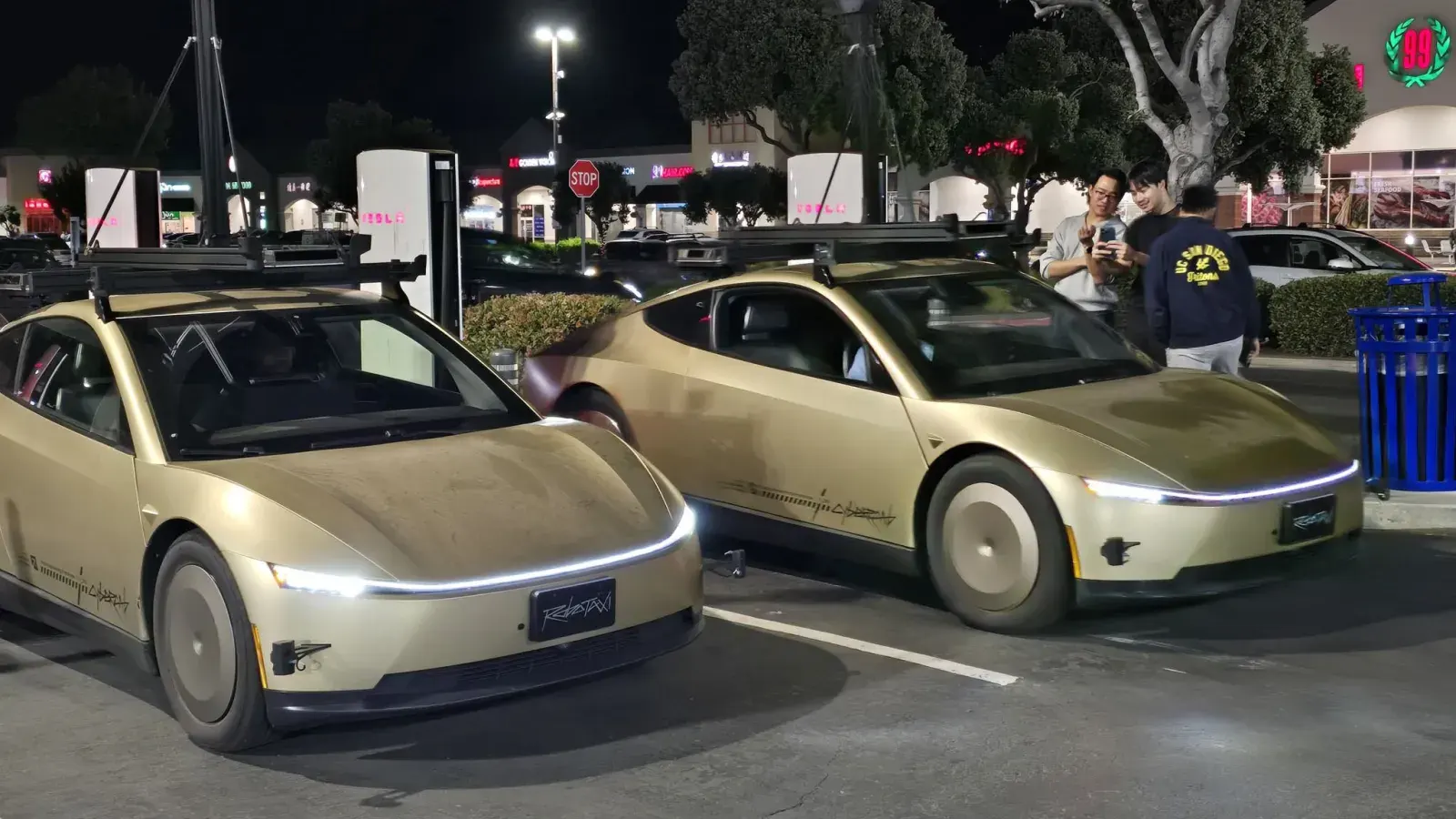
Efficiency alone, however, does not make the project sustainable. The Cybercab only makes sense if unsupervised autonomous driving truly works and gains the required approvals in different markets, something far from guaranteed given the challenges faced by FSD software and the regulatory resistance seen so far. Without full autonomy, the robotaxi risks remaining a technical exercise with limited real-world relevance.
The real challenge for Tesla, then, is not the battery or the aerodynamics, but the software. If the Cybercab manages to operate without a driver, its 10.25 kWh/100 km figure will become a benchmark for the entire sector, and one that will be very difficult to match for the reasons mentioned above.