Stellantis and Microsoft have signed a five-year strategic agreement covering artificial intelligence, digital engineering, and cybersecurity. The plan includes more than 100 initiatives already under development across the group’s entire value chain, from vehicle design to manufacturing, from customer relationships to data protection.
Stellantis and Microsoft are expanding their partnership around AI, cloud, and cybersecurity
The agreement builds on an existing foundation. Stellantis already uses Microsoft tools across several operating areas and, according to Ned Curic, the group’s Chief Engineering and Technology Officer, it was among the first automakers to introduce AI at scale in fields ranging from engineering and design to manufacturing and onboard software. The new five-year deal should deepen that integration by embedding Microsoft’s cloud and AI technologies more deeply into business processes, with applications that range from predictive maintenance and new-system validation to advanced testing and faster deployment of digital features and connected services.
On the customer side, the group points to the example of a Peugeot driver receiving suggestions to improve energy efficiency in the city, advance information about vehicle condition, and updates that enrich the everyday ownership experience. For Jeep, the focus shifts toward connectivity in remote environments and secure data management even far from urban areas.
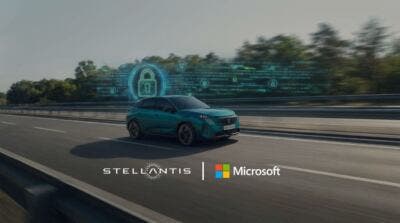
One of the most important parts of the partnership involves cybersecurity. Stellantis plans to develop a global AI-based center that will go beyond corporate IT systems and extend to connected vehicles, digital services, and production plants, with the goal of reducing threat-detection time and protecting the group’s entire digital ecosystem more consistently.
Inside the company, the transformation is already under way. Stellantis is making Copilot Chat available to employees and has assigned around 20,000 Microsoft 365 Copilot licenses to selected roles, supported by dedicated training programs. The group also uses Microsoft Azure as part of a strategy aimed at cutting data-center impact by 60 percent by 2029. Over the next few years, the collaboration should expand further through the involvement of additional Microsoft-certified partners, allowing Stellantis to bring in more specialized expertise wherever it needs it.