

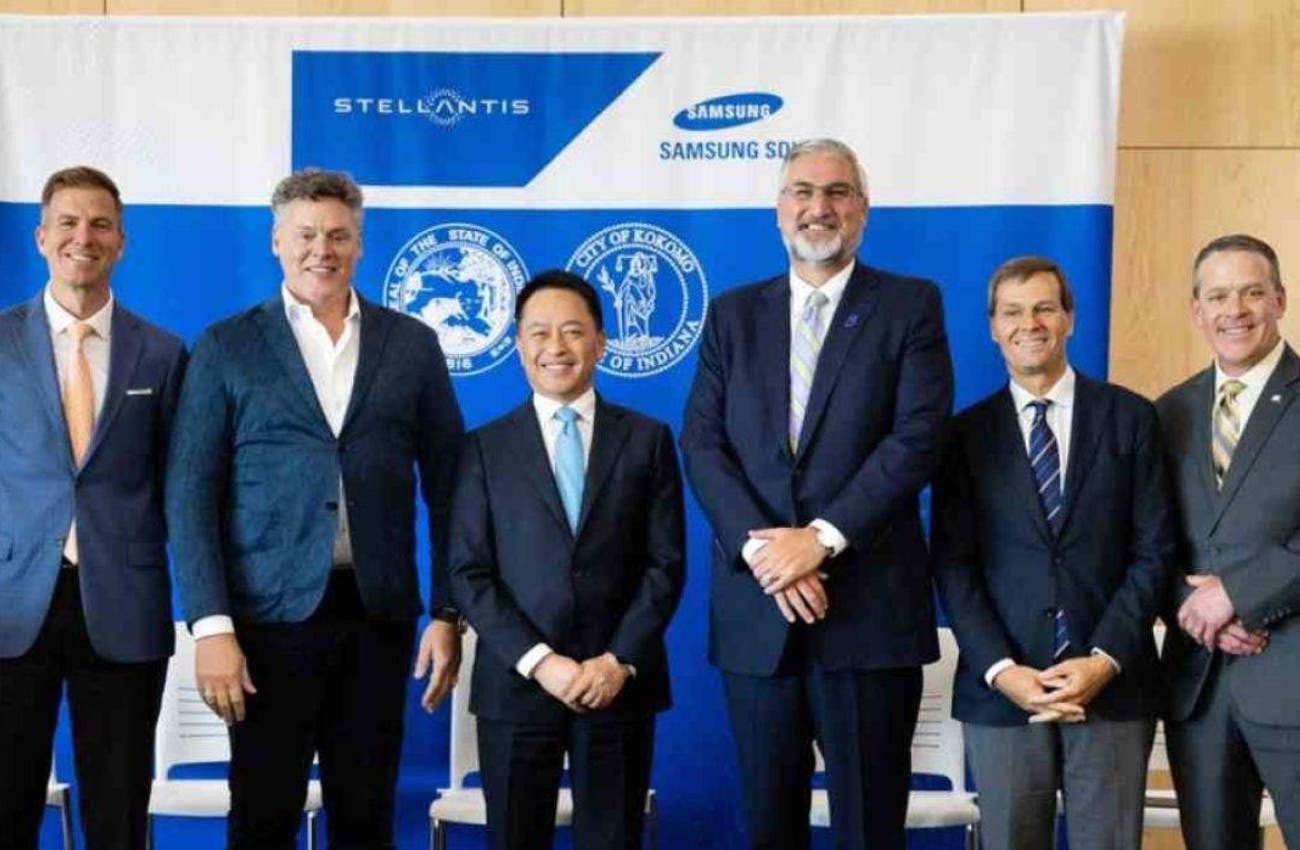
Stellantis is reportedly reviewing its electric strategy in depth and, according to reports cited by Bloomberg, is also evaluating a potential exit from its US battery joint venture with Samsung SDI. This possible move fits within a broader reassessment of investments linked to electric mobility, after the group led by CEO Antonio Filosa announced total write-downs exceeding €22 billion (about $23.8 billion), a sign of the challenges faced during the energy transition.
Stellantis reviews battery strategy and evaluates Samsung JV exit

According to the cited sources, Stellantis has already examined several options to reduce or divest its stake in StarPlus Energy, though no final decision has yet been taken. Any potential withdrawal could require significant time and cost, with the possibility of selling the stake to a third party. In an official statement, the group confirmed that “collaborative discussions” with Samsung regarding the future of the partnership remain ongoing, without providing further details.
The review follows closely after Stellantis exited its joint venture with LG Energy Solution in Canada, where the South Korean partner acquired Stellantis’ share in the Windsor facility, while the group will continue purchasing batteries from the plant. This move has raised questions among analysts about the future direction of industrial alliances in the battery sector, as also noted by HSBC.
The strategic reassessment reflects a more complex market environment than initially expected, with electric vehicle demand growing but not at the projected pace and industrial costs remaining high. In Europe, signs of slowdown have also emerged, including the halt of new gigafactory projects by the ACC alliance in Germany and Italy and the start of labor discussions in France to adjust production rates.
According to Bloomberg, this review phase may lead to reduced need for production facilities in both the United States and Europe. In recent months, several automakers, including Stellantis, Ford and General Motors, have revised investment plans launched in previous years in response to a changing political and economic environment and a slower, more complex electric transition than originally anticipated.