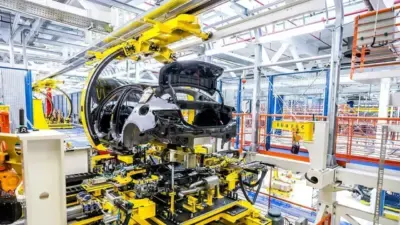
Stellantis ended the session higher in Milan on a day when the market began to weigh a scenario that remains far from defined, namely the possible use of part of the auto industry’s manufacturing capacity for military-related components. Reports from The New York Times pushed the issue back into focus, suggesting that the Pentagon has started preliminary talks with some major U.S. automakers to gauge their willingness to provide production lines and civilian engineering expertise for defense-related purposes.
Stellantis rises as markets react to new rumors about military-related auto production

According to those reports, Ford and General Motors were the first companies involved. At least at this stage, the discussions do not appear to involve a full conversion of factories or the production of complete weapons systems. Instead, the focus seems to be on using industrial infrastructure and technical know-how to build specific components. The Department of Defense appears to be considering these options because it wants to strengthen U.S. military reserves at a time when tensions with Iran and continued support for Ukraine are both consuming significant resources.
Even so, analysts are urging caution. Equita argues that even a partial conversion of plants would require time, dedicated investment, and major adaptation work. Carmakers have designed their factories entirely around automotive production, and those lines cannot meet military standards without major structural changes. Even if the project took on a more concrete form, it would likely affect only a limited share of the total production capacity of the groups involved.
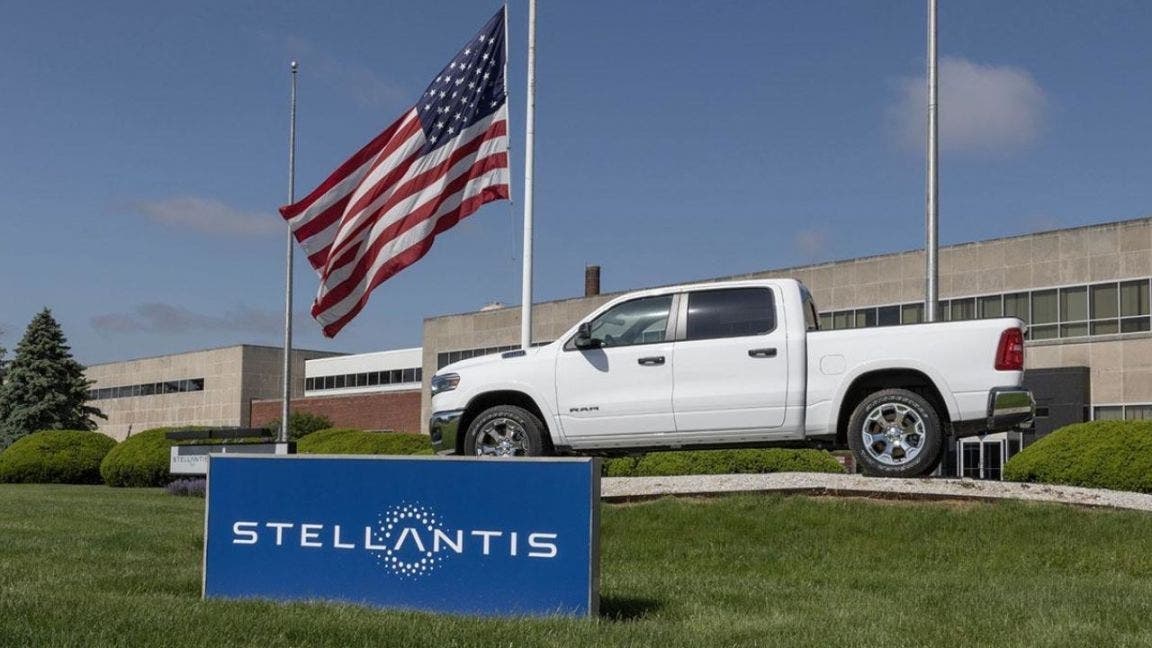
Stellantis does not appear among the automakers named in the reports, a detail that fits with the Pentagon’s apparent initial decision to approach companies whose industrial base sits entirely in the United States, both for logistical reasons and for strategic considerations. That said, similar evaluations could later extend to other international operators, especially if geopolitical instability lasts longer than currently expected.
The comparison with past industrial conversions, when Detroit factories turned into wartime arsenals within months during World War II, may seem natural, but today’s manufacturing reality looks radically different. Military components now require certifications, materials, and production cycles that have little in common with those used in automotive plants. Any attempt to adapt factories built for mass-market vehicle production to those kinds of needs would require a deep restructuring of processes, quality controls, and supply chains, with timelines and costs that would be very hard to compress.