From the hydropneumatic suspension of the Citroën DS to the minimalist philosophy of the 2CV, and more recent solutions tested on the Ram 1500, Stellantis has a long history of unconventional approaches to automotive engineering. The latest patent uncovered by CarBuzz confirms it: the group is studying a possible return of leaf springs on passenger cars.
Stellantis patent aims to modernize leaf springs and cut weight and costs

Leaf springs, made of multiple layered and curved steel strips, have always stood out for strength, simplicity and low cost. Today they still appear on commercial and heavy vehicles, but the car industry abandoned them long ago because of limited travel and noticeably lower comfort compared with modern suspensions. Stellantis addresses exactly this historical limitation with its new patent.
The proposed solution introduces a revised mounting system with a T-shaped slot where the spring pin slides. Under normal conditions the pin stays in the lower section, but when loads increase a secondary spring allows it to move upward, increasing vertical travel. According to the technical documentation, this setup can add at least one inch of extra travel, improving comfort and ride quality without sacrificing the typical durability of leaf springs.
Unlike the transverse leaf springs used in the past on some sports cars and SUVs, this system uses a longitudinal layout parallel to the direction of travel. The concept remains traditional, but modern refinements optimize dynamic behavior. This configuration also simplifies the rear suspension architecture, reducing the need for complex control arms required by other systems to keep wheel alignment stable.
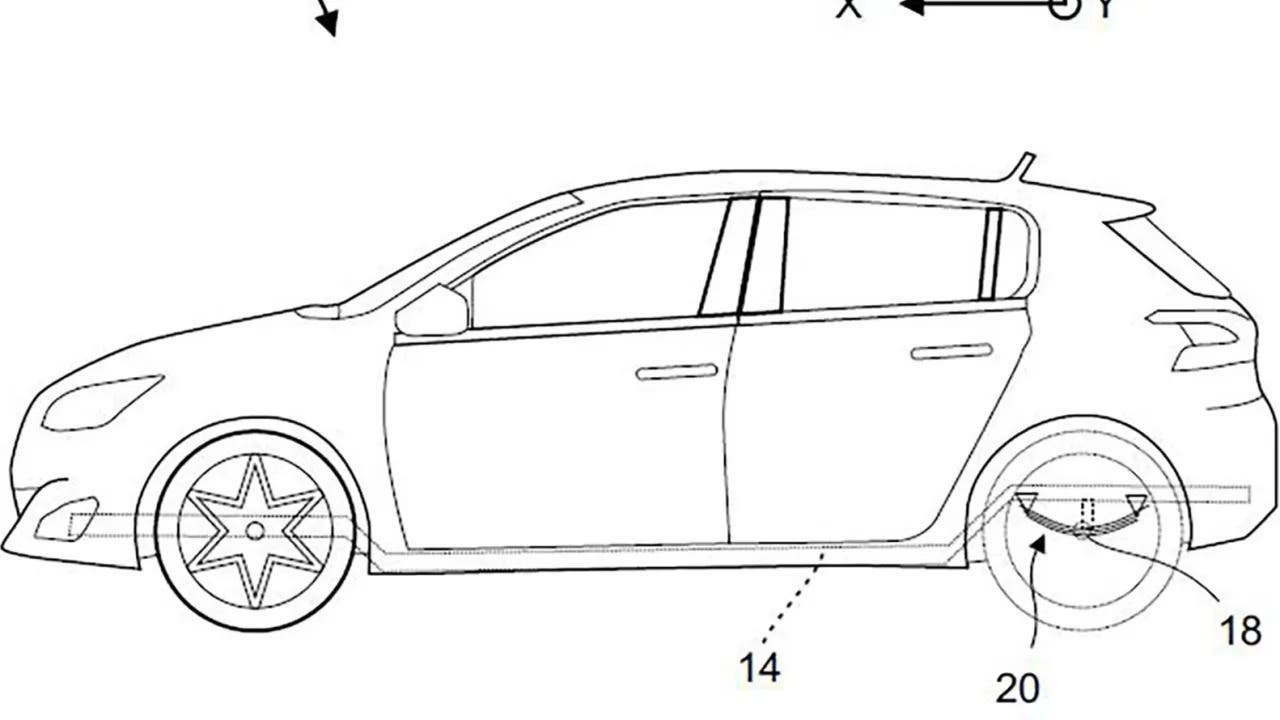
Fewer components can mean lower weight, reduced production costs and simpler maintenance, all crucial factors in an industry facing electrification and tighter margins. In this context, revisiting leaf springs does not necessarily represent a step backward, but rather an attempt to find more efficient solutions suited to next-generation vehicles.
Whether this patent will reach production remains uncertain. However, the fact that Stellantis is investing time and resources to reinterpret a technology once considered obsolete reveals how the group plans to approach the coming years.