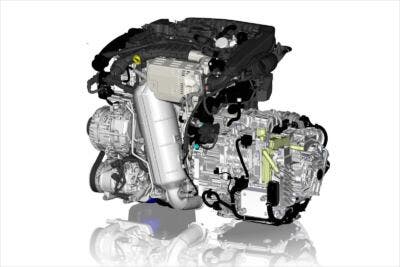
Stellantis is reportedly working on a full-hybrid system specifically designed for the European market. The technology should arrive from 2027 and will differ technically from the solution used overseas on the new Jeep Cherokee. The European project should revolve around the 1.2-litre three-cylinder turbo engine, already widely used on mild-hybrid models from Fiat, Peugeot, Opel and Jeep. In its latest evolution, this engine has adopted a timing chain and a variable-geometry turbo.
Stellantis prepares European full hybrid system, different from the US solution

The group’s current mild-hybrid setup pairs the 1.2-litre turbo engine with an eDCT transmission integrating a 21 kW electric motor. This solution allows short electric driving phases, especially in urban use, but the electric side still plays a relatively limited role. With the new system, the battery-powered component should become more important, enabling more frequent zero-emission local driving in city conditions and improving fuel consumption and efficiency without external charging.
The eDCT transmission, already produced at Mirafiori as well, could become a decisive element in the development of the new architecture. It already sits at the centre of Stellantis’ European hybrid strategy. The group could therefore build its full-hybrid system around components already present in its continental supply chain, with clear advantages in terms of industrial logic and development cost rationalization.
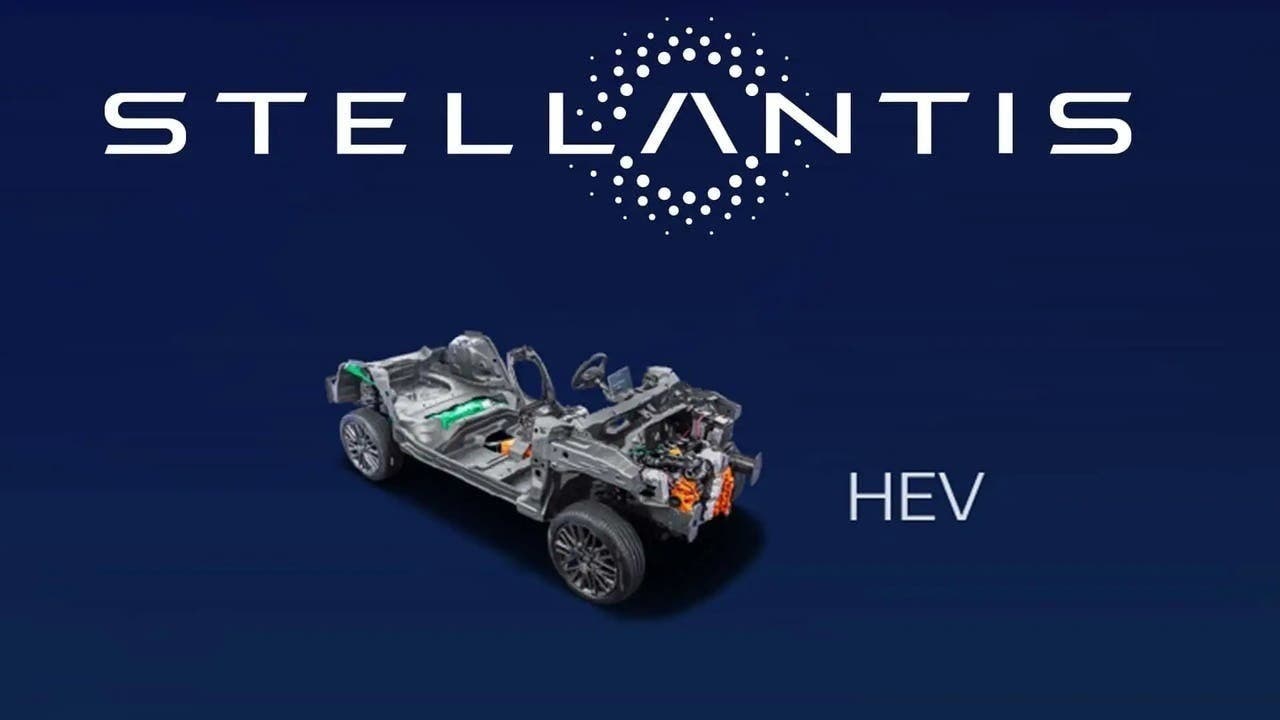
The new system should not use a large-capacity battery like plug-in hybrids, since it will not require external charging. However, the higher electric output compared with today’s mild hybrids could deliver a significant step forward in performance and efficiency. The technology could mainly appear on compact models and mid-size SUVs, with possible applications on future upper-segment Fiat models, the Peugeot 3008, the Jeep Compass and other vehicles based on Stellantis’ next-generation architectures. Its use on cheaper cars would prove more difficult, as every additional euro in cost has a stronger impact on the final price.
In North America, Stellantis appears to have taken a different technical route with the new Jeep Cherokee Hybrid. That model uses a 1.6-litre four-cylinder turbo engine paired with an electrified EVT hybrid transmission. According to Reuters, Jeep would use a two-motor transmission supplied by Blue Nexus, a company backed by Toyota. The split between markets therefore looks clear: the US architecture answers local needs, while the European solution builds around the 1.2-litre turbo engine and eDCT transmission, in line with Stellantis’ production base in the Old Continent.