Nobody asked Ferrari for its opinion on the Iran war. Nobody ever does, with these things. And yet, there it is, the Prancing Horse dragged into a geopolitical mess it had absolutely nothing to do with, watching $22 billion in market capitalization quietly evaporate while the order books remain, paradoxically, as full as ever.
That’s the uncomfortable truth about Maranello’s moment. Ferrari is arguably the most desired car company on the planet right now, and the stock market just doesn’t care. On March 19, 2026, shares dropped 5.4% in a single session, sliding to €274.10. Over the past twelve months, the market cap has shrunk from €76 billion to just under €54 billion.
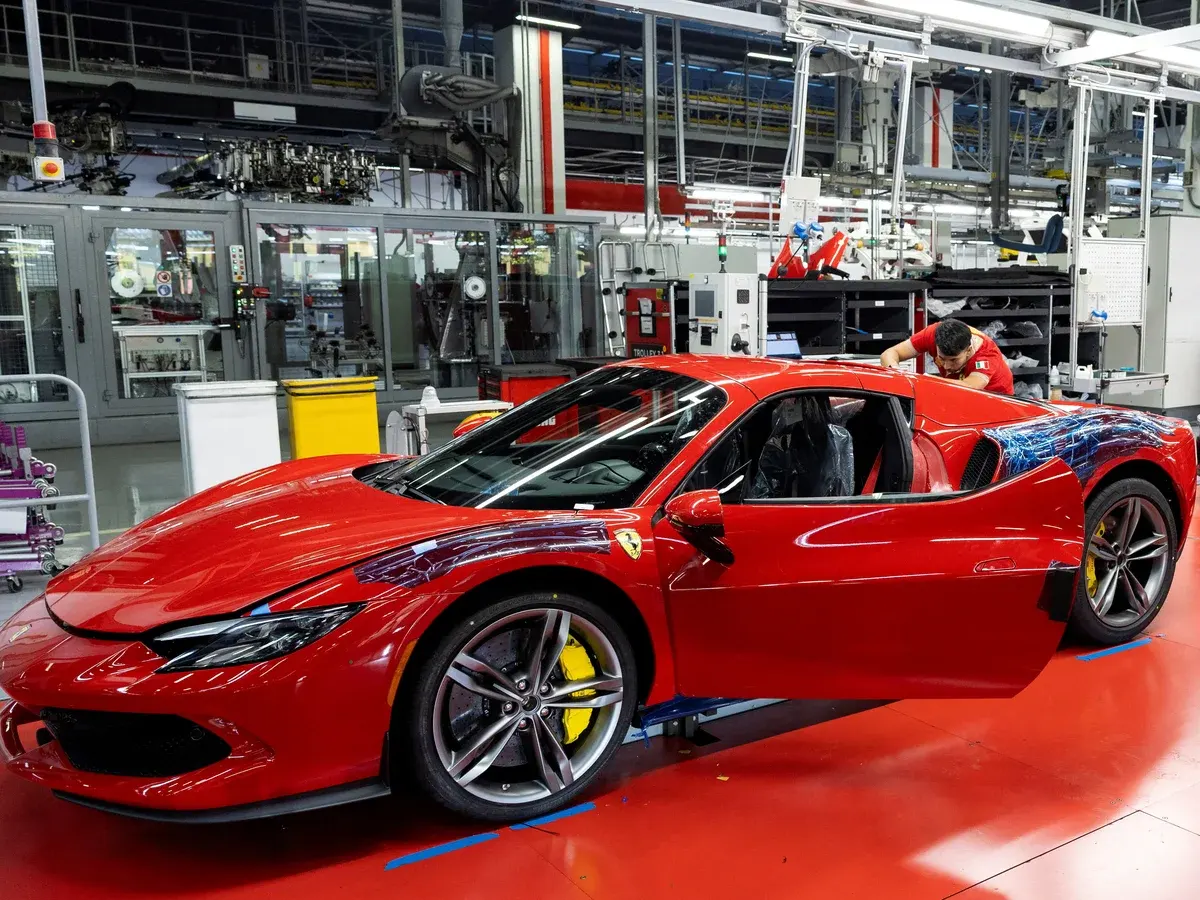
The immediate trigger is the Middle East crisis. With the US-Israeli military operation against Iran rattling the entire region, Ferrari has temporarily suspended most deliveries there, a market that, despite representing just around 5% of total shipments in 2025, punches well above its weight in margins and desirability. The few cars still getting through are being flown in. Charming, as a solution. Also expensive.
The Middle East is the detonator, not the bomb. The real fuse was lit back in October 2025, when CEO Benedetto Vigna unveiled Ferrari’s new industrial plan. The market read it as too cautious, too measured, too lacking in the kind of swaggering ambition that historically justified Ferrari’s sky-high valuation multiples. And since then, the correction has been steady and merciless.
The operational numbers, for their part, remain entirely solid. Ferrari is targeting €7.5 billion in revenues for 2026, an EBITDA of €2.93 billion at a 39% margin, and free cash flow of at least €1.5 billion. In 2025, the company delivered 13,640 cars globally. These are not the numbers of a company in crisis.
In the short term, rerouting deliveries to less volatile markets absorbs some of the damage. Medium-term, the equation gets thornier: rising insurance costs, stretched delivery timelines, margin pressure, and the ever-present risk that passing any of that on to clients might, just might, chip away at the mythology of absolute desirability that Ferrari has spent two decades building with almost religious dedication.