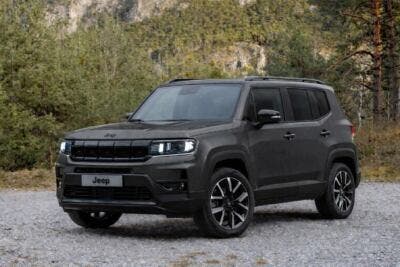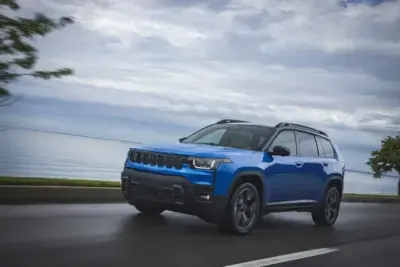
The new Jeep Cherokee will reach the market only as a hybrid, using a system that pairs Stellantis’ 1.6-liter turbo gasoline engine with an electrified setup designed mainly to improve efficiency, smoothness, and comfort in everyday driving. Jeep will include all-wheel drive as standard, and the overall powertrain setup clearly aims to deliver a more relaxed and natural driving experience rather than chase the kind of performance expected from a sporty SUV.
New Jeep Cherokee relies on a hybrid powertrain focused on comfort and efficiency
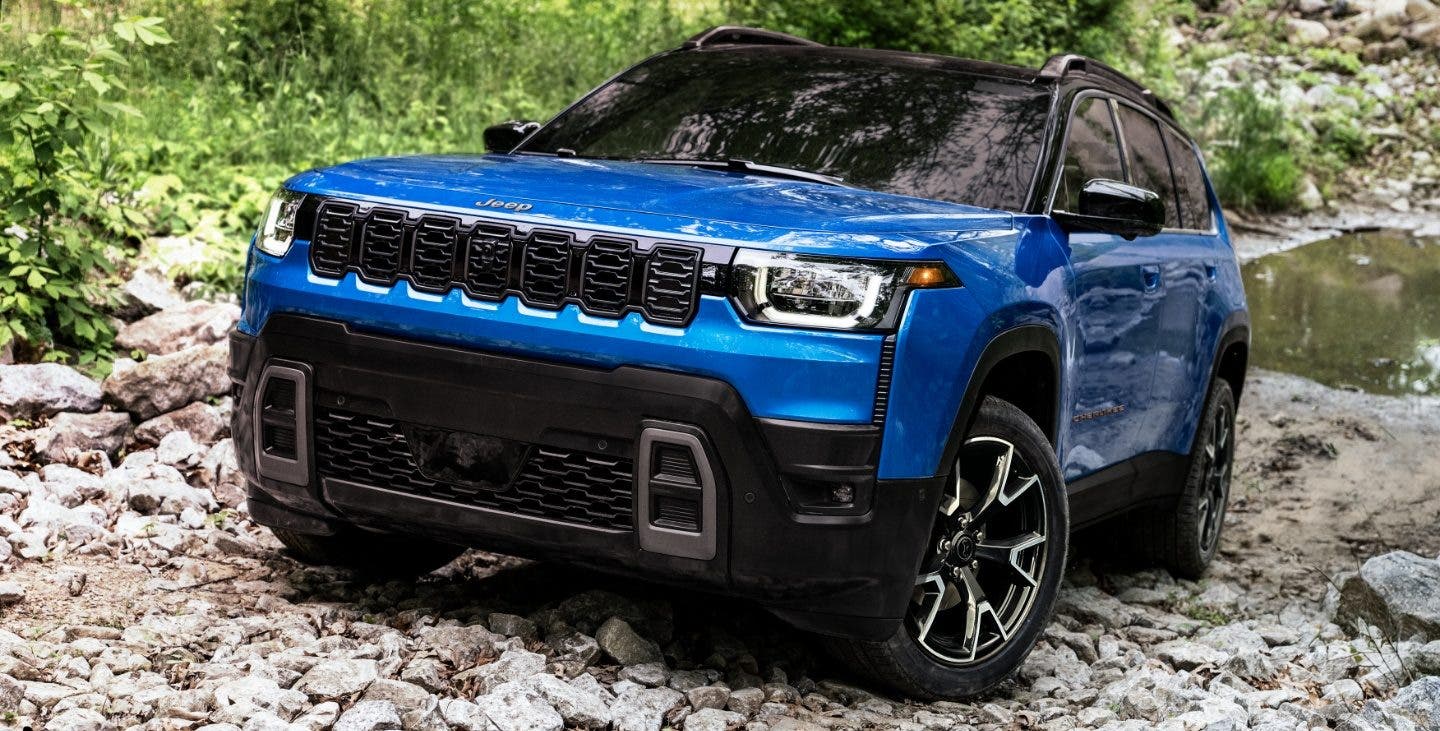
The combustion engine produces 180 horsepower and 300 Nm of torque, while the full system delivers 213 horsepower and 312 Nm. Jeep routes that output through an eCVT transmission. Those figures reinforce the model’s mission. Jeep designed the new Cherokee to make daily driving easier, reduce fuel use, and lower traffic stress rather than impress drivers with straight-line speed.
Early impressions from the U.S. press point in exactly that direction. Reviewers describe the new Cherokee as a more mature and more refined SUV than the previous generation. They see the hybrid system as better integrated, more linear in its response, and more convincing in the way it works during normal driving. What seems to stand out is not quick acceleration, but the overall quality of the experience behind the wheel, with stronger cabin quietness, smoother road manners, and a level of comfort that marks a clear step forward over the old model.
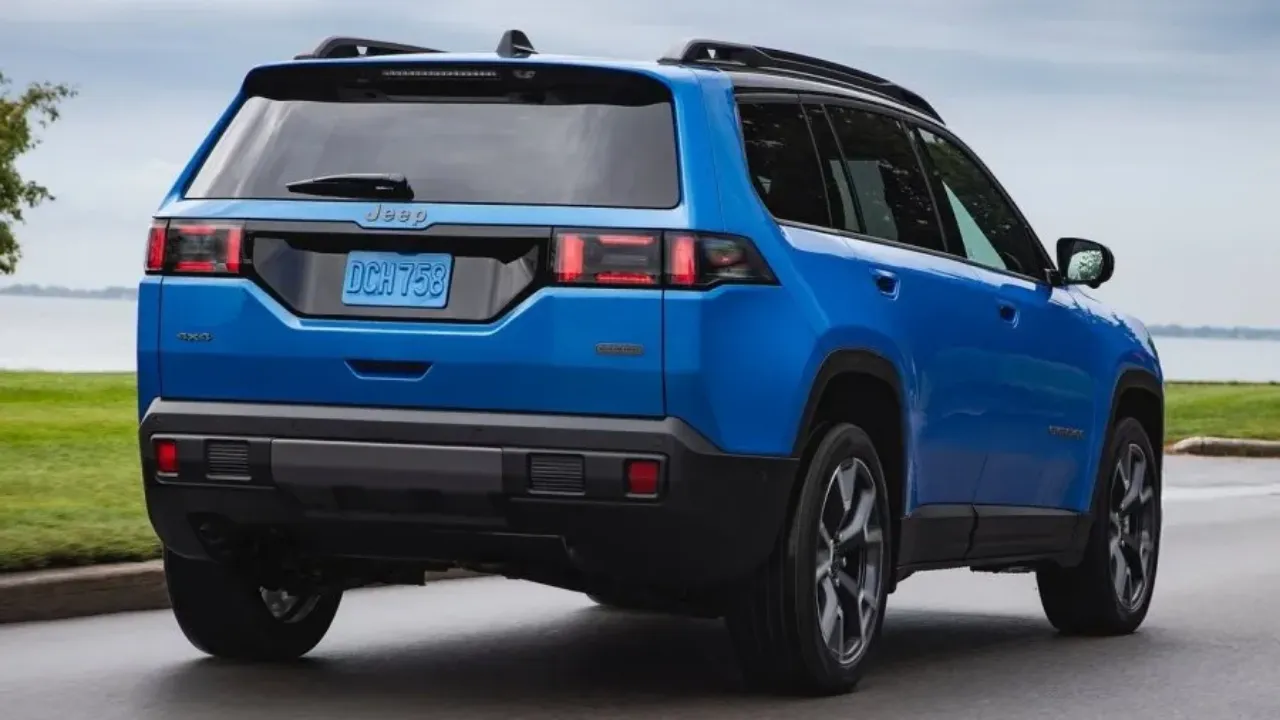
Jeep also appears to be putting major emphasis on fuel economy. In the United States, the model is expected to deliver about 37 to 38 mpg combined, a major improvement over the outgoing Cherokee and potentially the strongest argument for buyers who want to lower running costs without moving directly to a fully electric vehicle. Some limits seem to appear at higher speeds, where early impressions suggest the powertrain may feel slightly short of breath despite the turbo and electric assistance, but in real-world use that matters less than the everyday advantages drivers are likely to notice.
Looking at Europe, a 1.6 Turbo Hybrid setup like this could also make sense for other models inside the Stellantis group. For the company, it would represent a solution capable of reaching buyers who want a balanced mix of traditional combustion power, partial electrification, and real-world usability without needing to jump immediately to a fully electric vehicle.