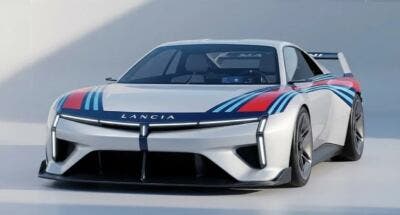
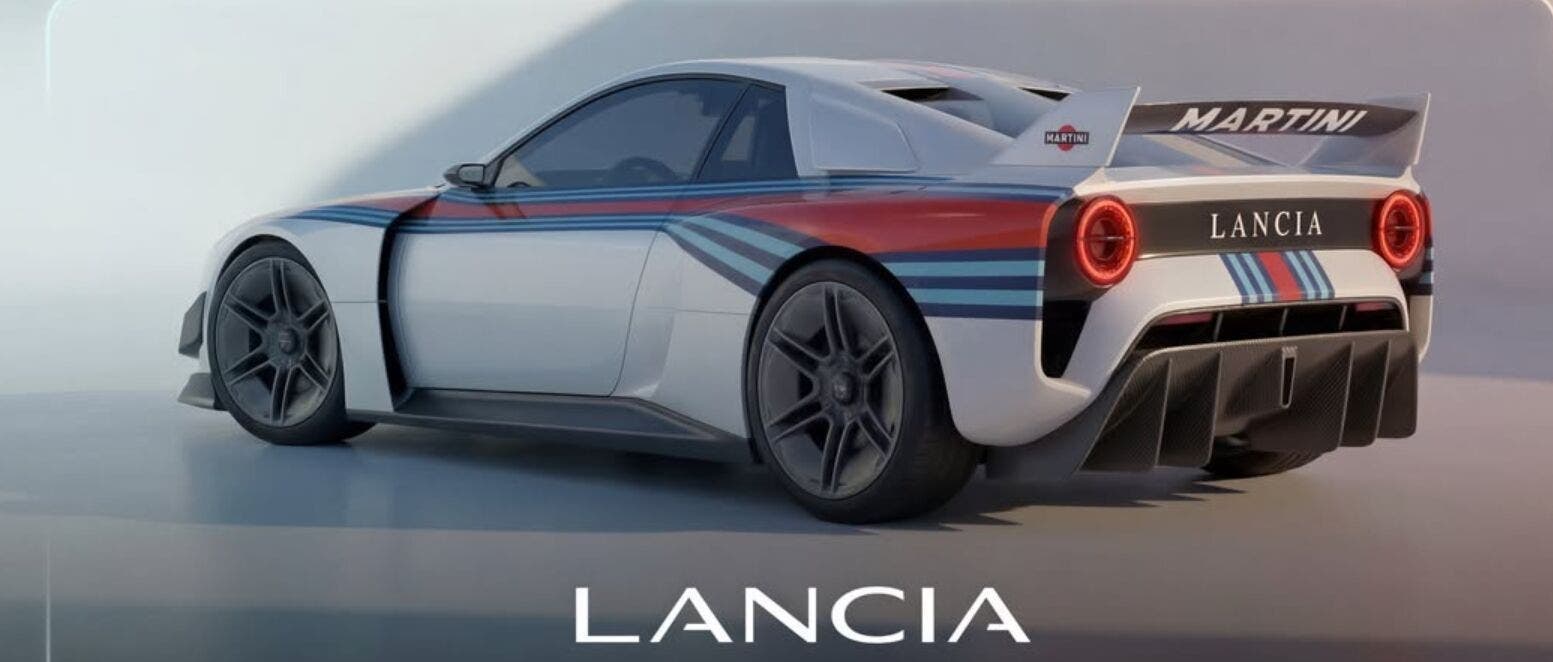
A modern Lancia Beta Montecarlo, low-slung, wide and finished in the iconic Martini livery, stands at the center of an independent render created by Andrea Piazza. The concept reinterprets the sports car that Lancia built from 1975 to 1981 through the design language the brand uses today, without suggesting any production-bound project.
This modern Lancia Beta Montecarlo render brings back a rally-era icon
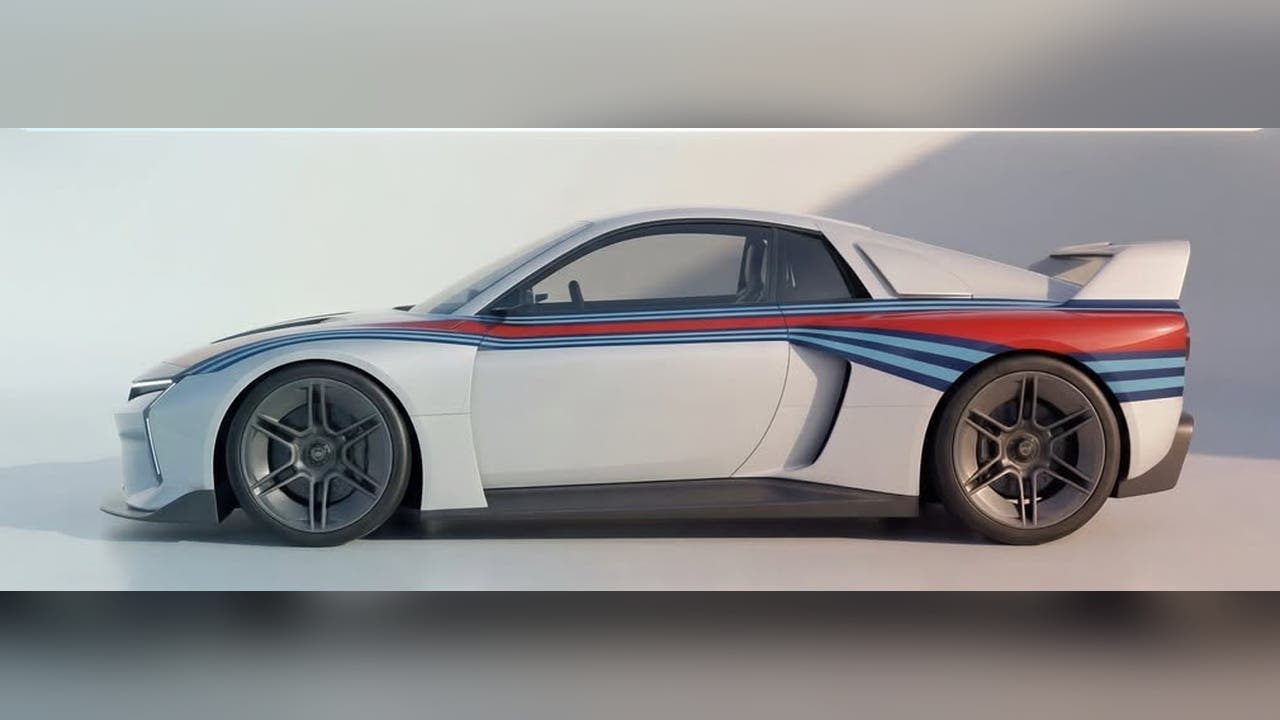
The imagined car keeps the original Montecarlo’s low and compact layout, but adds more sculpted surfaces and far more aggressive proportions. The rear-set cabin and heavily flared wheel arches shift the visual weight toward the back, while the brand’s chalice-shaped lighting signature adapts to a wide front end that sits close to the ground.
Large openings carved into the hood appear to work with the front air intake, creating a passage designed to direct airflow over the body and increase aerodynamic downforce. The Martini graphics run across the fenders, doors and side panels without simply copying the look of the historic race cars, instead blending into the lines of the new concept.
Lancia built the original Beta Montecarlo between 1975 and 1981. It was a two-seat, mid-engine sports car known internally as the Tipo 137. Its sharp-edged shape, low stance and connection to the competition versions helped make it one of Lancia’s most recognizable models of that era, especially after the success of the Martini Racing-liveried cars.
The render arrives at a time when Lancia is redefining its role within Stellantis, where the FaSTLAne 2030 plan places the brand under Fiat’s supervision and positions it for a narrower customer base. Based on the information released so far, that strategy does not include the return of a dedicated sports car.
Instead, Lancia’s next confirmed model will be the new Gamma, a fastback crossover based on the STLA Medium platform and offered with hybrid and electric powertrains. For now, a modern Beta Montecarlo remains a virtual exercise that uses Lancia’s sporting past to show how the brand could reinterpret it through its current design language.