

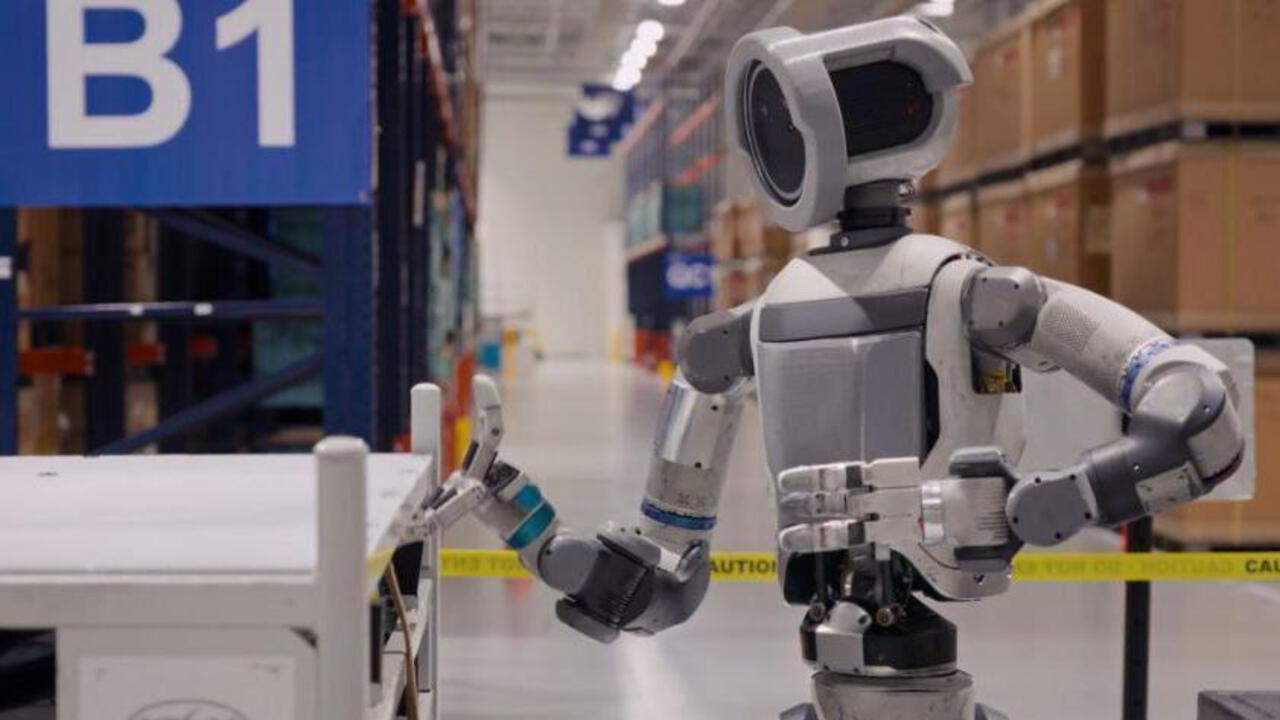
The auto industry has spent decades automating the boring and the dangerous. Now it wants to automate the guy standing next that boring and dangerous work. Welcome to the era of humanoid robots.
Hyundai is arguably the most aggressive player in this space. The Korean automaker doesn’t just want to deploy Boston Dynamics’ Atlas robots across its production facilities. It has taken a controlling stake in the robotics company, signaling that physical AI isn’t a side experiment but a core strategic pillar. Workers, predictably, are not thrilled.
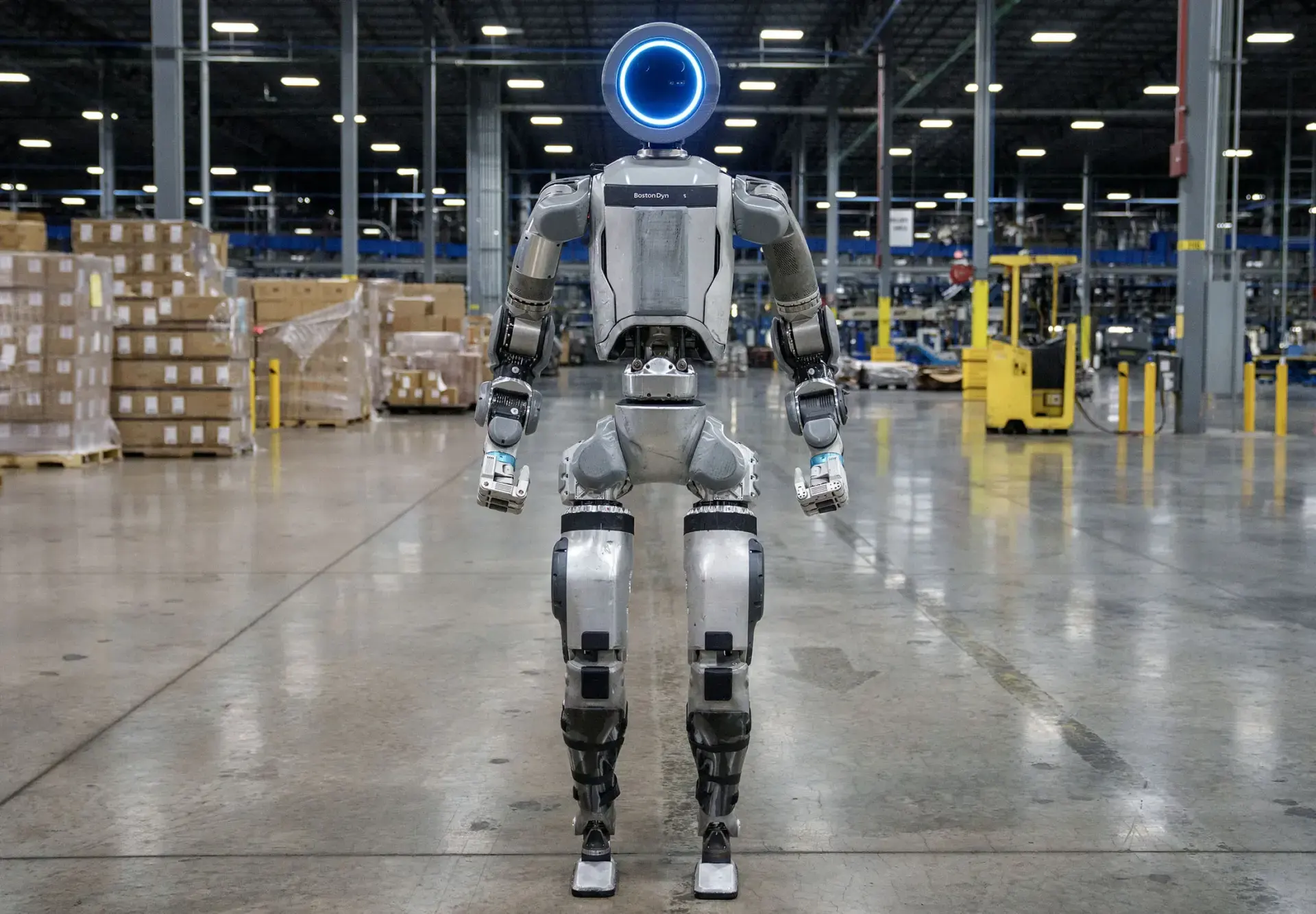
In January 2026, Hyundai’s South Korean union issued a blunt warning: Atlas would face resistance, because “the use of robots will cause enormous employment shock”. The union’s position was equally direct: no robot rolls onto the floor without a labor-management agreement. Whether that line holds remains to be seen, but the declaration set a tone that will resonate well beyond Seoul.
BMW is running its own humanoid trial, testing Hexagon’s AEON robot at its Leipzig plant. AEON features a human-like torso adaptable to various gripping tools and scanning devices. Essentially a modular mechanical colleague who never calls in sick, never asks for a raise, and presumably doesn’t have opinions about the break room coffee.
The broader anxiety is real, though. Hexagon’s global Robot Generation study found that 41% of adults fear job displacement by robots, trailing only cybersecurity concerns at 51%. Crucially, researchers found that anxiety tends to be highest where robot exposure is lowest, suggesting that familiarity breeds, if not affection, at least tolerance.
Labor law experts aren’t predicting a union veto. A collective bargaining agreements typically allow unions to negotiate the implementation of technology, not block it outright. Privacy and algorithmic management laws may offer some indirect leverage, but the fundamental direction of travel isn’t in question.
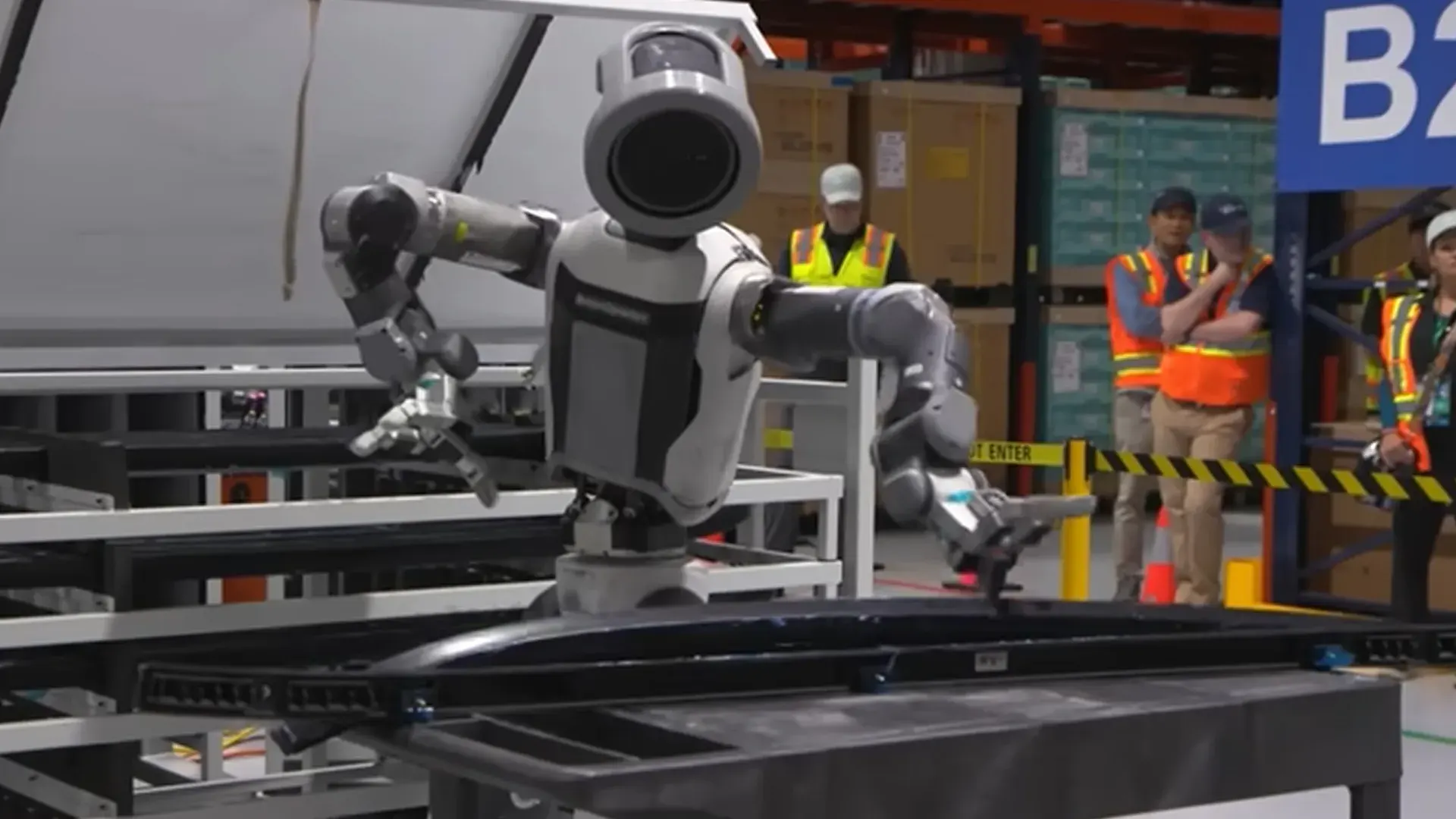
Historically, automotive automation has produced better-paid, higher-skilled jobs alongside greater productivity. The catch, of course, is that companies failing to adapt face financial pressure. And financial pressure has a well-known tendency to relocate production somewhere cheaper.
Humanoid robots in auto manufacturing aren’t a dystopian plot twist. They’re the next chapter in a story that started the moment the first assembly line replaced the first craftsman.