

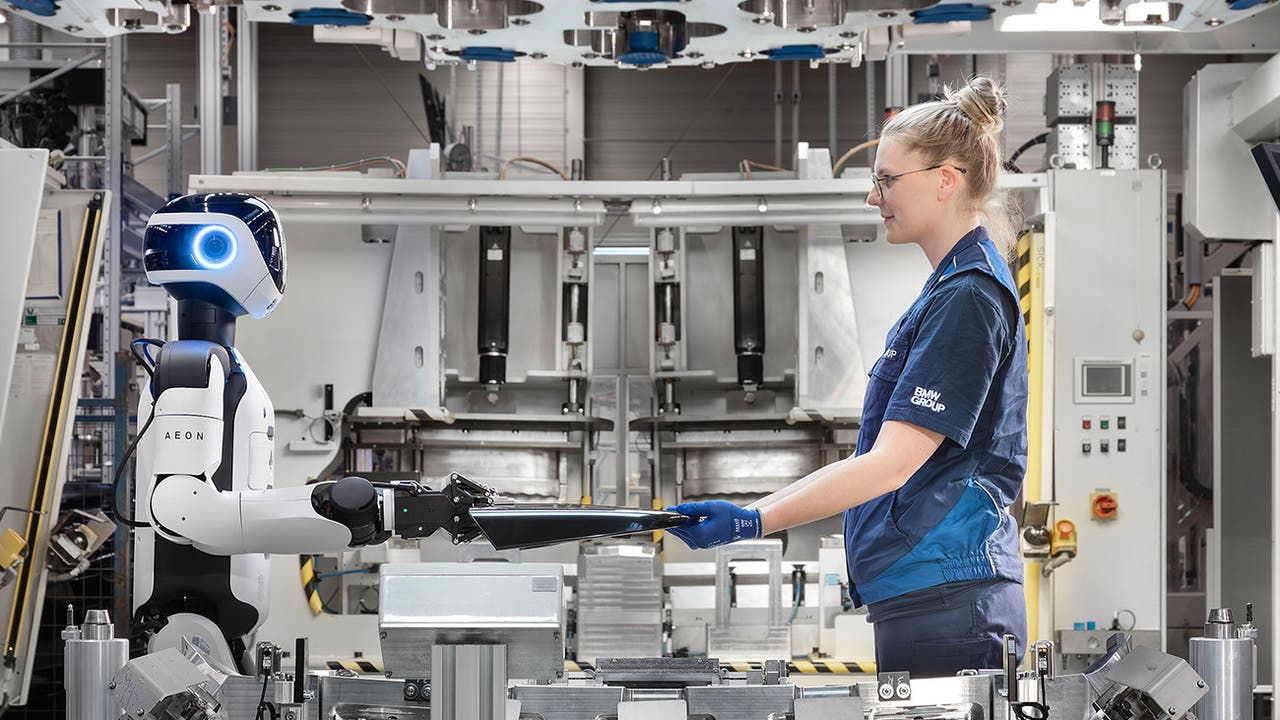
BMW has been quietly auditioning our replacements. The dream of the “human touch” in automotive manufacturing is starting to look like a nostalgic fairy tale. In Spartanburg, South Carolina, a bipedal artificial creature called Figure 02 has spent the last year showing us how it’s done. This silicon-brained worker dominated, helping churn out 30,000 BMW X3 SUVs by moving 90,000 sheet metal parts with the kind of precision that would make a surgeon nervous. It clocked 1,250 hours without a single drop of sweat or a request for a raise.
Now, the Germans are bringing the show to Europe. Enter the Hexagon Aeon, a Swiss-made newcomer set to haunt the halls of the Leipzig plant. Standing at a modest 165 cm and weighing 60 kg, it’s a bit leaner than its American predecessor, the Figure 02, but don’t let the smaller frame fool you.
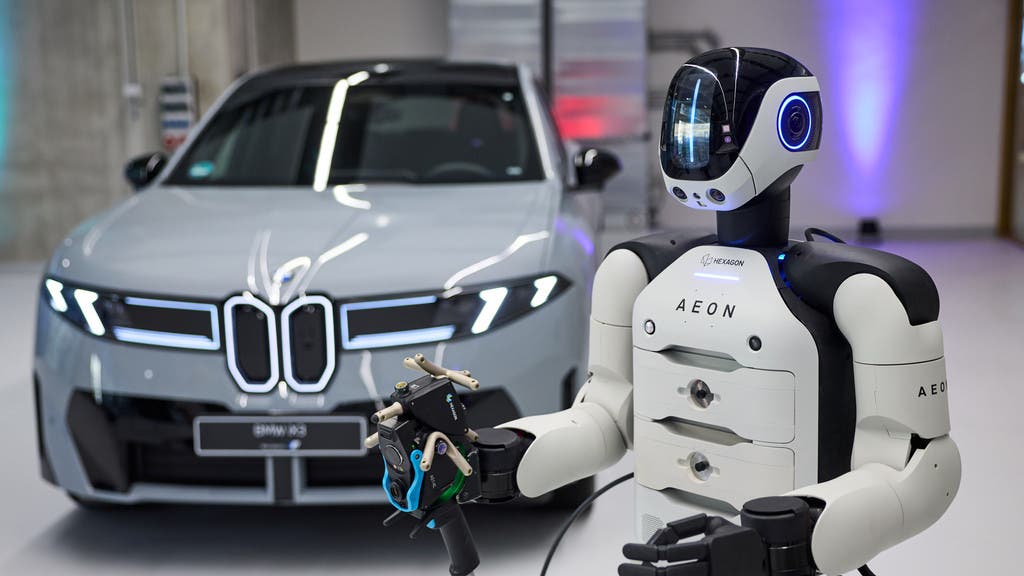
This thing is built for the grind. With 34 degrees of freedom and a top speed of 8.6 km/h, it actually walks faster than most people heading to the breakroom. When the battery dies after four hours, it autonomously swaps it out for a fresh one. No downtime, no excuses, just pure, cold efficiency.
BMW calls it a “humanoid”, yet they’ve equipped its legs with wheels. Apparently, in the future, being human means having casters for feet. But marketing labels aside, the Aeon is a serious piece of kit, packed with 3D spatial intelligence and multimodal sensors that allow it to handle tasks, like positioning components with millimeter accuracy, that would leave a human worker with a permanent backache.
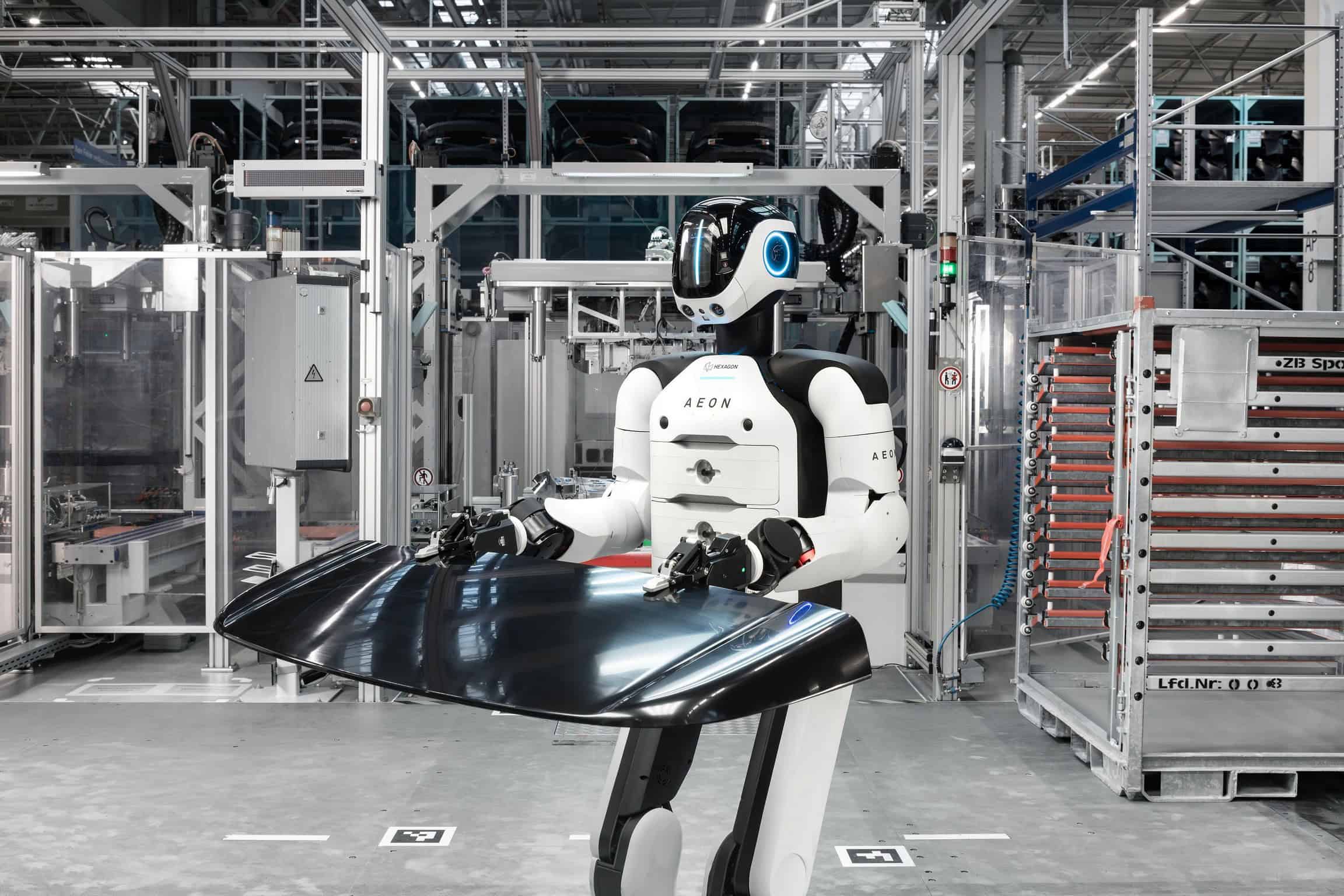
The automaker has even set up a “Competence Center for Physical AI” to accelerate this mechanical invasion. They aren’t just testing toys. They are integrating these machines into series production for cars and batteries. The pilot phase in Leipzig has been running since late last year, with full integration planned for this summer.
The industry has realized that machines are simply better at the boring, dangerous, and repetitive stuff. While we wait to see if the competition can catch up, BMW’s new wheeled “colleagues” are already pulling double shifts. The era of the robot worker is already clocking in.