Forget the range anxiety and the “software-defined vehicle” for a moment. The automotive industry is facing a pivot that smells like gunpowder. While we’ve spent years debating whether a battery is a sustainable heart for a dying planet, the Pentagon, now unironically rebranding itself as the “Department of War”, has a different vision. According to recent reports, high-ranking officials and “Secretary of War” Pete Hegseth are knocking on Detroit’s doors, asking General Motors and Ford if they can stop worrying about panel gaps and start worrying about ballistics.
It’s a nostalgic, almost haunting echo of 1942. Back then, the “Arsenal of Democracy” swapped civilian coupes for heavy bombers. Today, the motivation is about industrial existentialism.
With the US munitions stock depleted by years of shipments to Ukraine and escalating tensions in the Gulf, the Trump administration’s proposed $1.5 trillion military budget is the carrot being dangled in front of an industry currently drowning in EV uncertainty.
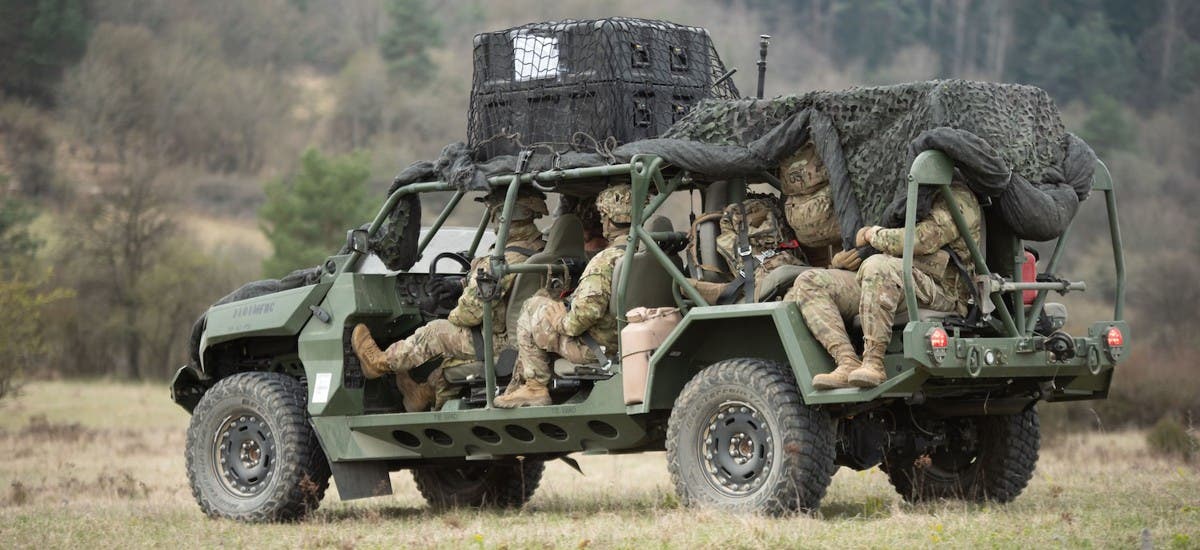
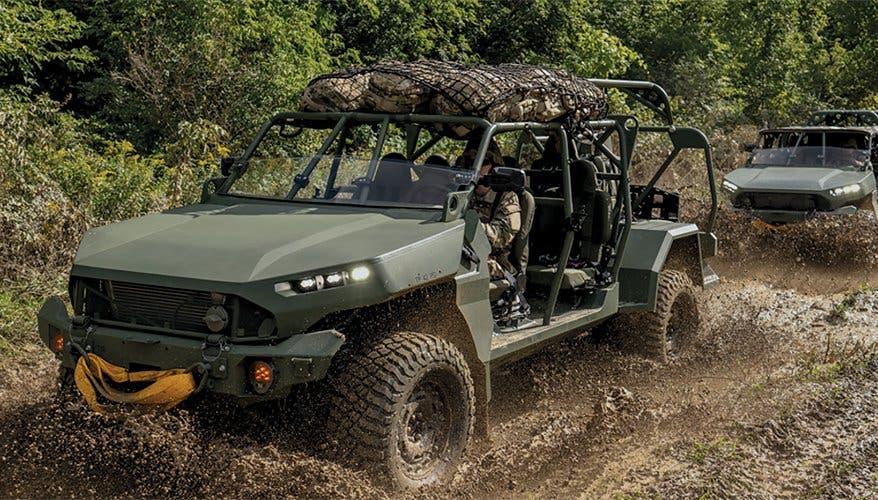
General Motors is already halfway there, playing “soldier” with its Infantry Squad Vehicle, essentially a Chevrolet Colorado that traded its dignity for olive drab paint. But the leap from a pickup truck to 21st-century precision weaponry isn’t just a matter of changing the paint job. Modern warfare requires production tolerances that would make a luxury CEO sweat. Yet, for companies like Oshkosh and GE Aerospace, the “state of war” is becoming a business plan.
Across the Atlantic, the irony is even thicker. Volkswagen, a brand currently suffocating under its own bureaucratic weight and the threat of closing its Osnabrück plant by 2027, is looking at a literal “Iron Dome” for salvation. In a twist that feels like a satirical fever dream, the German government is backing a deal with Israel’s Rafael to build missile transport trucks where Golfs used to roll off the line.
If the consumer won’t buy your vision of the future, perhaps the military will buy your means of destruction. For an industry that once dreamed of “mobility for all”, the new mission seems to be “firepower for some,” proving that in the valzer of global uncertainty, the loudest noise always comes from the assembly line.