


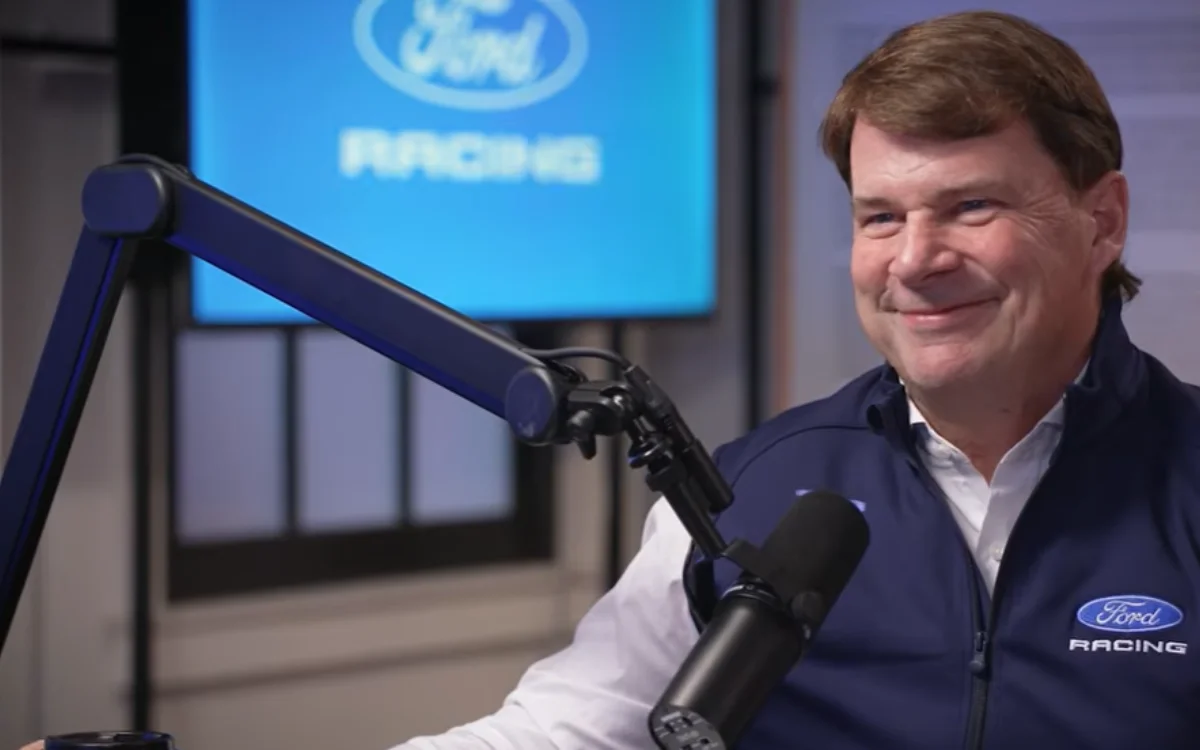
Jim Farley is sounding the alarm, and it doesn’t sound like a standard seatbelt chime. The Ford CEO has finally stopped playing the role of the polite corporate diplomat and started speaking with the raw, muscular urgency of a man watching a tidal wave approach a sandcastle.
During a recent sit-down with Fox News, Farley didn’t just express a mild “industry concern”. “We shouldn’t let them enter”, he declared, painting a picture of an American manufacturing landscape so scorched by Chinese competition that it would leave the national economy looking like a rusted-out frame in a forgotten Detroit junkyard.

Ford boss is a “car guy” in the truest sense. He’s driven the Chinese competition, he’s appreciated their tech, and he knows that if brands like BYD or Xiaomi are allowed to step into the ring with Ford, GM, or Toyota on US soil, it wouldn’t be a fair fight. While Farley is busy auctioning off his vintage De Tomaso Pantera, the reality of 2026 is much colder.
The threat is parked in the neighbor’s driveway. Despite Washington’s 100% “paper wall” of tariffs, the wolf is already at the door. Mexico is already a playground for BYD, Canada has opened the gates, and Stellantis is even flirting with the idea of building Chinese Leapmotor EVs in old Jeep plants. It’s an identity crisis of epic proportions. Farley’s main beef? The state subsidies. He argues there is no world where this is a level playing field when Beijing is bankrolling the competition’s R&D.
But the real “Judgment Day” scenario involves more than just price tags. It’s about the ten cameras staring back at you from every bumper. Farley is leaning heavily into the “spy-car” narrative, hinting that these high-tech EVs are essentially data-hungry vacuum cleaners on wheels.
Between the unfair economics and the privacy paranoia, Farley’s message is clear. If we let these cars cross the border, we aren’t just buying cheaper wheels, we’re trading our industrial heritage for a one-way ticket to obsolescence.