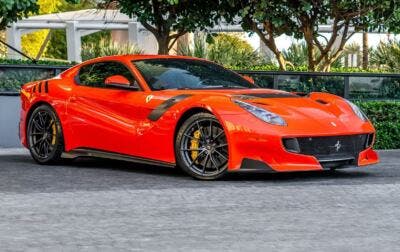
The Ferrari F40 includes nothing that lacks a purpose. The cabin feels bare and almost brutal. Exposed carbon fiber covers every surface. Racing seats dominate the space. The doors open with a simple pull cable. Inside, the twin-turbo V8 behind the driver overwhelms every other sound because engineers removed everything else. Enzo personally approved this model, and many consider it his spiritual testament. Power and lightness come first. Nothing else matters.
Minimalism here is not an aesthetic statement. It reflects a strict design philosophy. Engineers saved every gram and removed every unnecessary component to increase speed and driver involvement. At track speeds, clear controls within easy reach improve both function and safety. Even the cable-operated doors follow this logic. The F40 rejects technology for its own sake. It delivers emotion by stripping the car down to its essentials.
Ferrari F40 vs Luce: two visions of interior minimalism
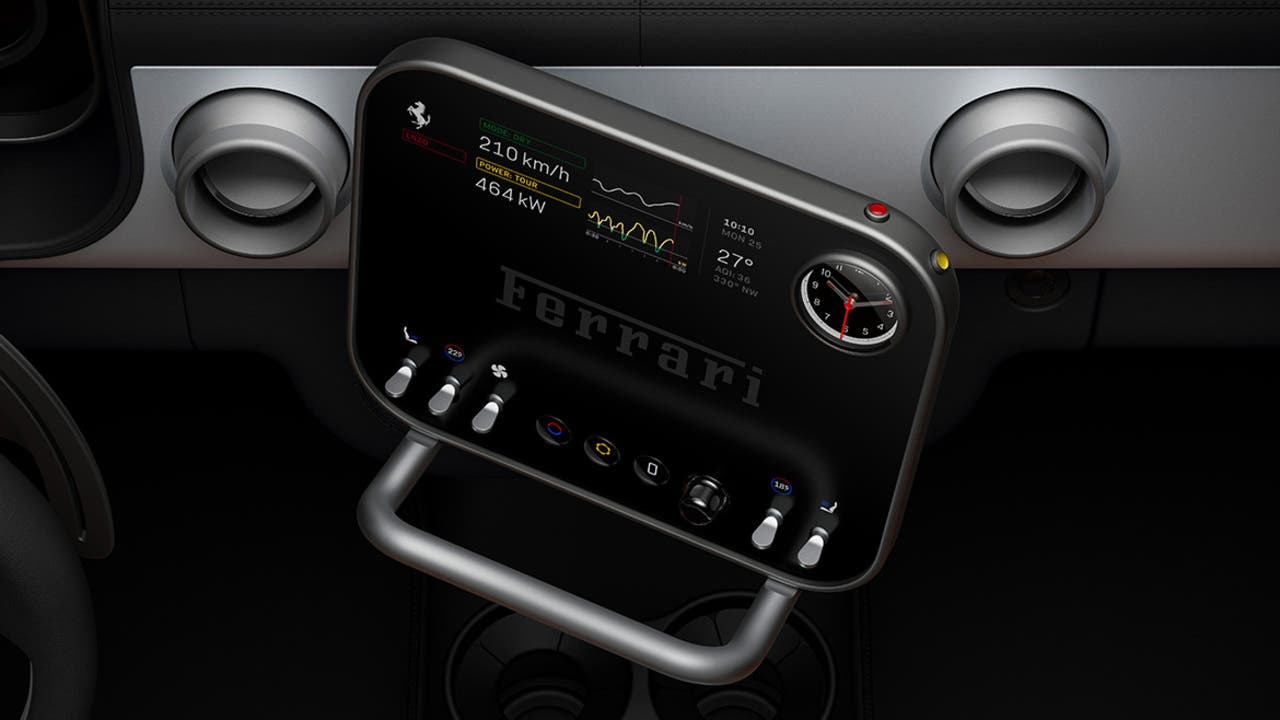
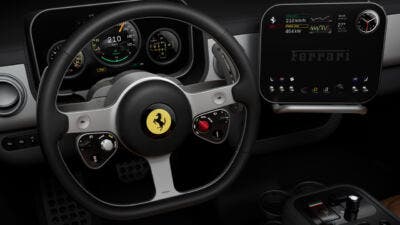
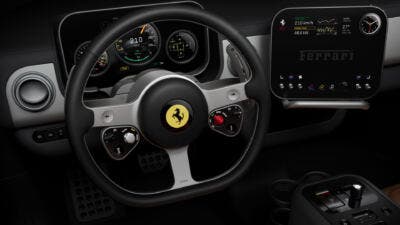
The Ferrari Luce, Maranello’s first electric model, starts from a different premise. Its cabin shows clean lines yet carries dense content. Advanced digital displays shape the dashboard. Premium materials define the surfaces. Designers worked with LoveFrom, the collective founded by Jony Ive and Marc Newson, to create the interfaces. Visual simplicity remains, but sophisticated technology sits beneath the surfaces. The F40 would never have accepted that complexity.
The Luce focuses on intuitive interaction. Physical and digital controls work together instead of competing. The cockpit feels closer to a refined high-tech object than to a traditional dashboard. Designers did not remove complexity. They organized it. They made it accessible through clean surfaces and natural gestures.
Ferrari has always eliminated excess in its most extreme cars. The brand believes high speed demands clarity and immediacy. The F40 pushes that principle to an almost ascetic extreme. The Luce applies the same idea in a modern way. Here minimalism means structure and order rather than subtraction. The experience stays intuitive without abandoning the advanced technology required by a high-performance electric car.
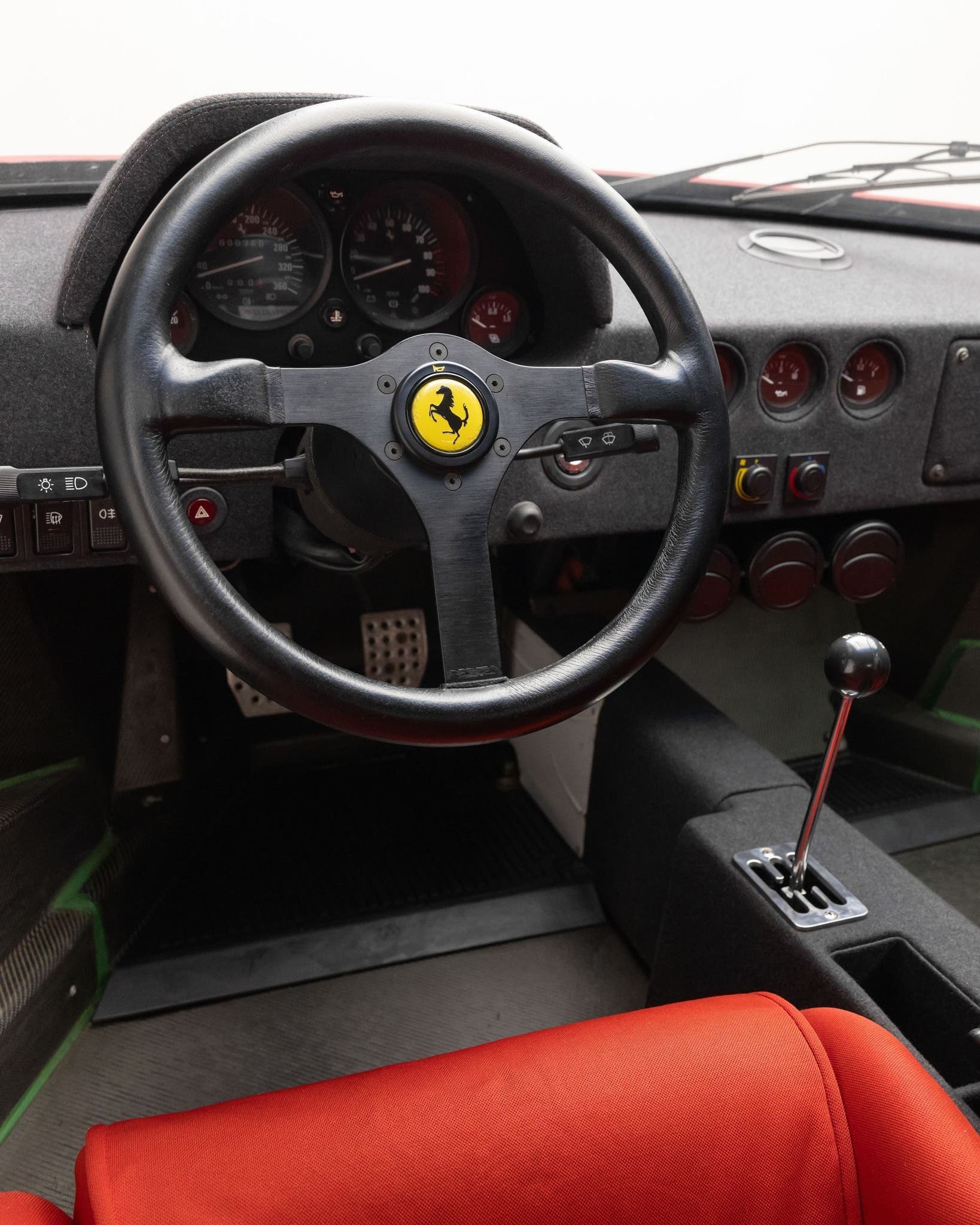
The gap between the two approaches remains wide. The F40 creates emotion through reduction. It removes weight, filters and distance between driver and mechanics. The Luce pursues emotion through precision and innovation. It blends craftsmanship and software into a carefully balanced whole. The F40 exposes the driver to the raw act of driving. The Luce surrounds the driver with systems that inform, assist and enhance the experience.
Both cars carry the same badge, yet they speak different languages. For many enthusiasts, the F40 remains emotionally unmatched. Its raw involvement is difficult to reproduce. The Luce opens a new chapter for Maranello. The shift feels necessary, yet divisive. The Prancing Horse now faces the electric transition with a new vocabulary. That language does not always resonate with those who grew up with the roar of a V8 and the smell of fuel. Whether the Luce can inspire the same visceral attachment the F40 still generates decades later remains an open question.