

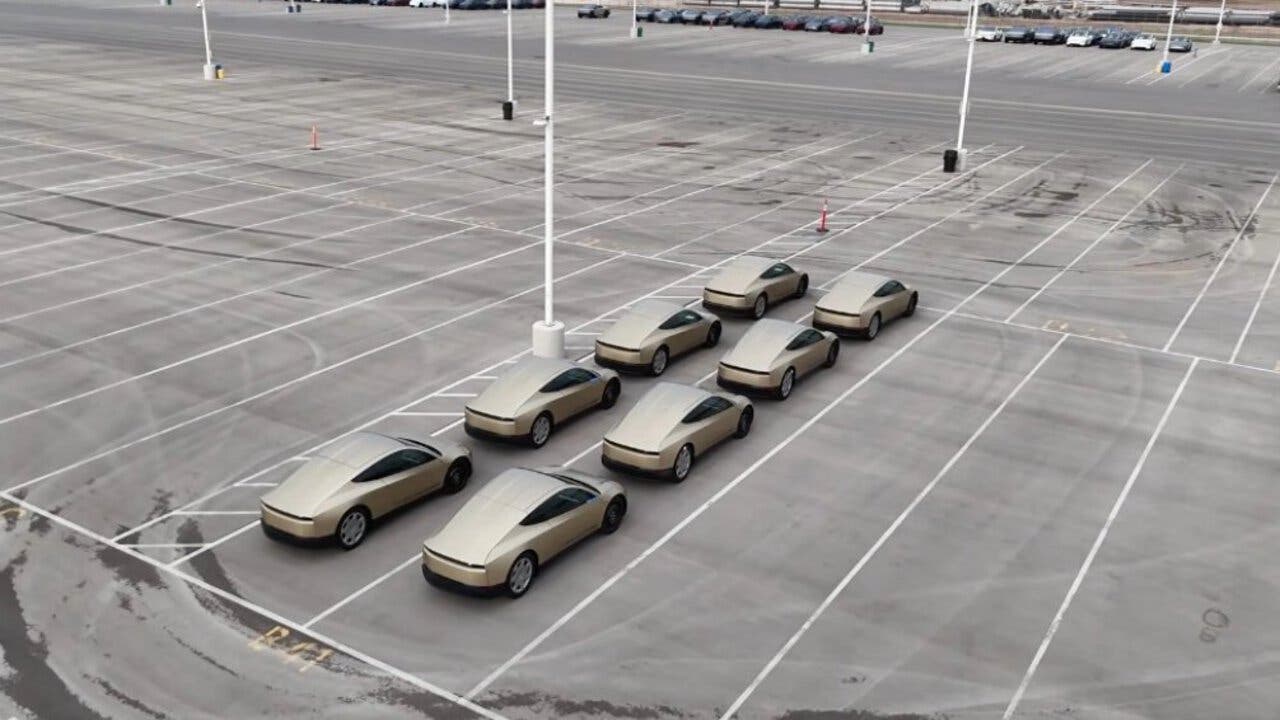
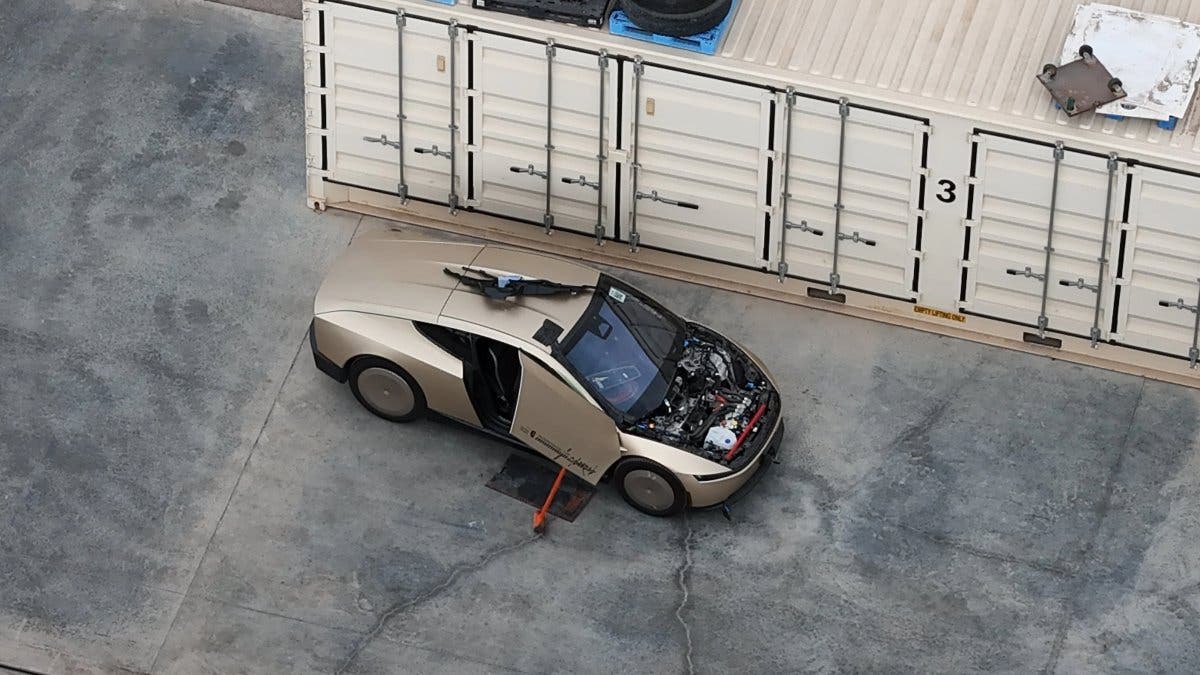
Drone footage doesn’t lie. And what it caught hovering over Tesla’s Texas Gigafactory this week is about as revealing as it gets without actually pulling the hood off yourself. A short aerial video, flagged by Tesla observer Joe Tegmeier, captured roughly a dozen Cybercab parked at the crash test facility, and offered the clearest look yet at what sits beneath the robotaxi’s front end.
The Cybercab’s frunk, that increasingly standard piece of electric vehicle real estate, simply doesn’t exist here. Tesla made a deliberate call to fill that space with the hardware the car actually needs to function. Chief among the surprises is an oversized fluid reservoir feeding both the windshield washer system and, more critically, the cleaning circuits for all seven external cameras.
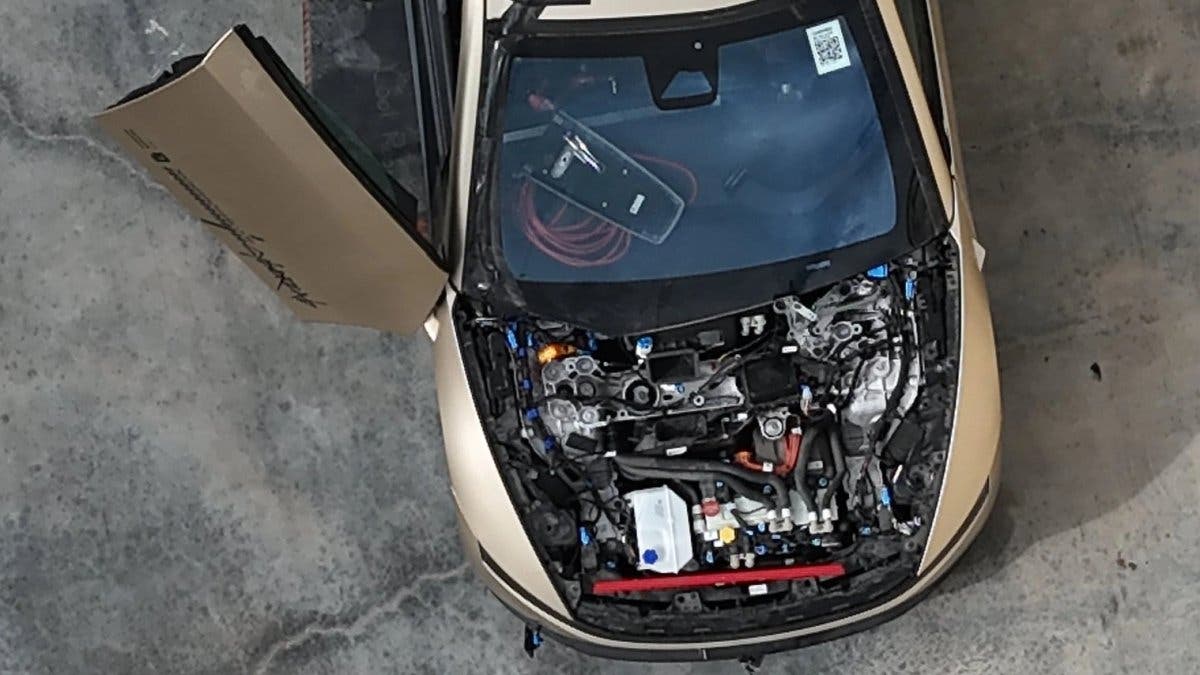
A hydraulic system pressurizes the camera cleaning setup, and the front compartment also appears to house the climate control components, which Tesla relocated from behind the dashboard. The payoff for passengers, more legroom. The tradeoff, zero chance of sneaking a carry-on in the front. There is, however, a full-size rear trunk, equipped, in very Tesla fashion, with a camera that alerts passengers if they leave anything behind.
Inside, the minimalist doctrine holds firm. Nearly every function routes through a 21-inch touchscreen, and the Cybercab introduces a new single-touch door mechanism that combines electronic and mechanical locking in one gesture. Clean, deliberate, and slightly unnerving if you still believe door handles are load-bearing emotional support.
One detail that raised eyebrows among enthusiasts. The front-heavy component layout strongly suggests front-wheel drive, a surprising choice given that earlier prototypes were spotted with oversized rear wheels, the traditional calling card of rear-wheel-drive architecture. Whether that’s a final production decision or an engineering placeholder remains to be seen.
Back at the Gigafactory, the current production pause is exactly what it looks like, the deep breath before the sprint. Tesla is converting prototype assembly lines into full mass-production configuration. Eight engineering prototypes have already shown up in the shipping area, identifiable by blue tape on their mirror brackets.
Mass production is set to begin this month. The robotaxi era, whether the world is ready for it or not, is no longer hypothetical.