Since 2024, General Motors has more than doubled its stock value. Ford is basically where it started, down a forgettable 2%. And Stellantis? Down 70%. At some point, “same sector” stops being a valid excuse. While STLA keeps bleeding on the ticker, someone out there is actually buying in. Not the stock, but something more tangible: the dealerships.
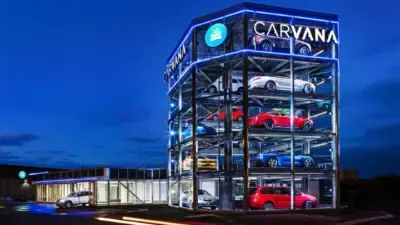
Carvana, the online used-car retailer famous for its drive-through vending machines the size of small office buildings, has been quietly pivoting. Last week it acquired another Stellantis dealership, the latest step in a hybrid model that blends e-commerce convenience with old-school physical retail. A significant slice of car buyers still wants to touch the door panel, smell the interior, and ask a salesperson questions they could have Googled.
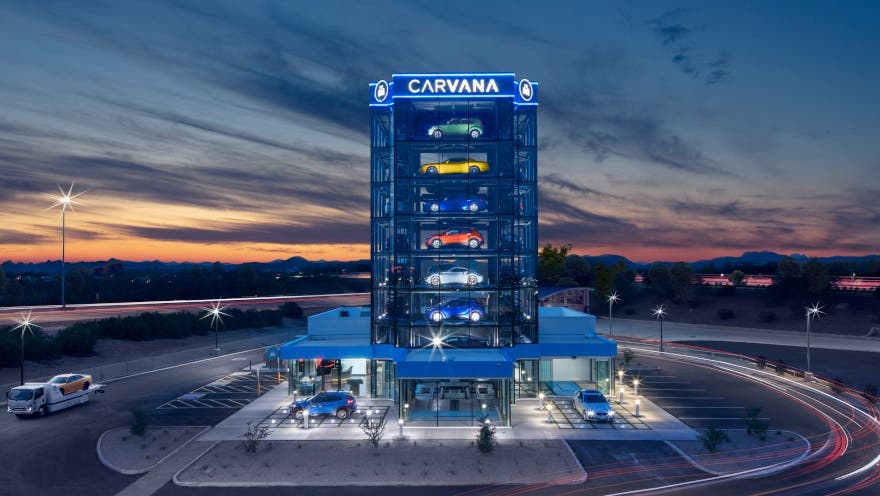
New locations, concentrated in the southwestern US, a region where Carvana’s footprint has historically been thin, open the door to new customers, new-vehicle sales with healthier margins, and a steady pipeline of off-lease inventory to recondition and flip. As a network expansion play, it’s clean. It makes sense on its own terms, with or without Stellantis.
The Stellantis part, though, is where it gets complicated. Carvana could have bought dealerships from anyone. It chose the automaker trading at a fraction of its former self. Read into that what you will, but investors should probably resist the urge to follow that door without turning the lights on first.
The problems facing Antonio Filosa’s company are not subtle. A roughly $26 billion charge tied to its EV strategy overhaul comfortably exceeds Stellantis’s entire current market cap of around $20 billion. The dividend is suspended. The stock is in pieces. A 14-brand portfolio demands serious capital and, in more than a few cases, a coherent strategic direction that has yet to fully materialize. Global market share has slipped from 8.1% in 2020 to 6.1% in 2025, according to S&P Global Mobility.
The North American market remains the open wound: pricing that’s out of step with competitors, a product lineup that’s missed the moment, and dealers who aren’t exactly sending thank-you notes to headquarters. Stellantis is pumping roughly $13 billion into reintroducing gasoline and hybrid models.
Carvana’s bet reads as smart opportunism. For everyone else watching Stellantis, the recovery story is still looking for its first convincing chapter. The opportunity might exist somewhere down the road.