

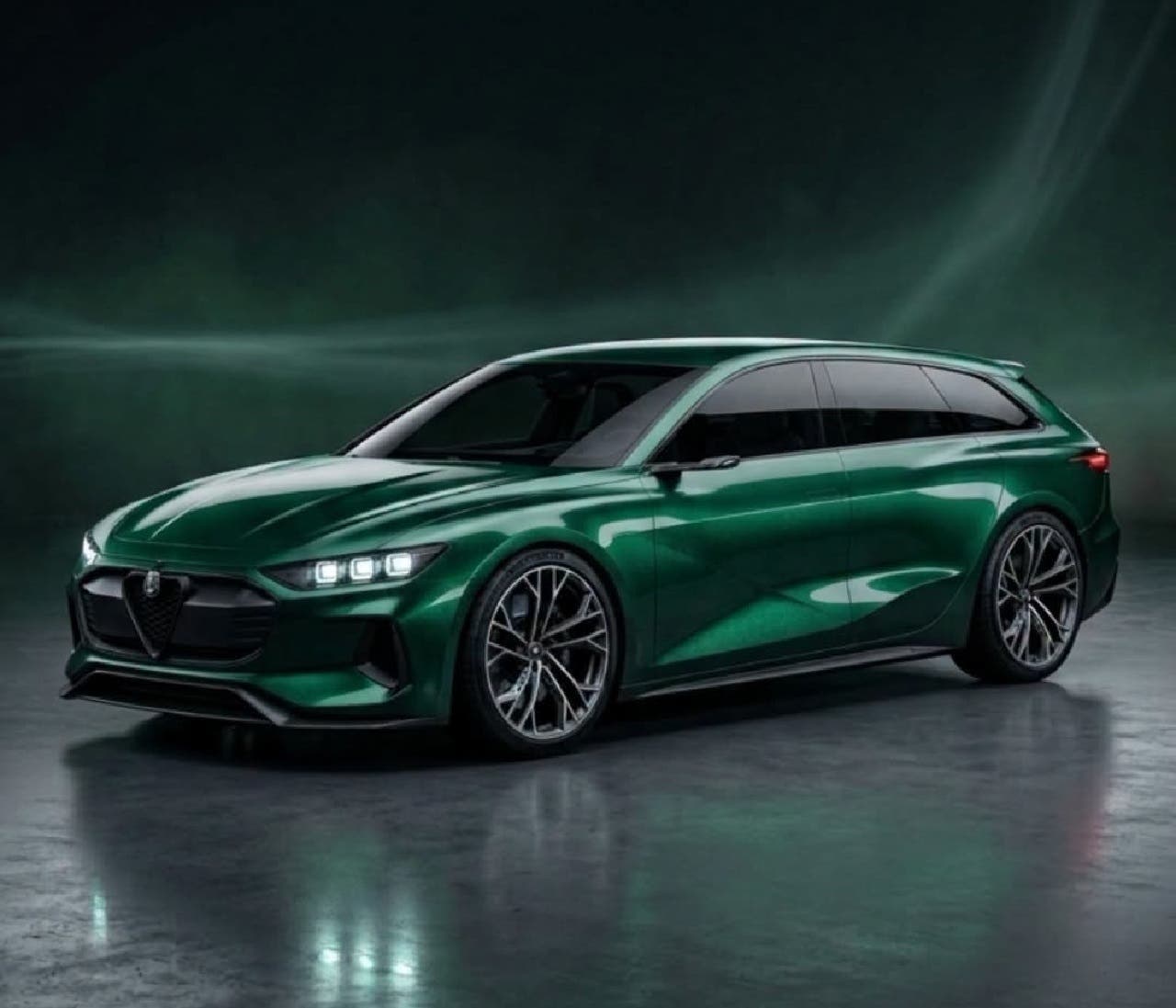
Alfa Romeo has not yet revealed which model will take over the D-segment once the Giulia ends production, currently expected at the end of 2027. With no official answer in sight, designer Bruno Callegarin has imagined one possible solution: the Milano Sportwagon, a digital performance wagon based on the Giorgio platform.
The project uses the Giulia’s architecture to create a wagon with the proportions traditionally associated with rear-wheel-drive Alfa Romeos, while also leaving room for a possible sedan version.
Alfa Romeo Milano Sportwagon imagines a rear-wheel-drive wagon based on the Giulia
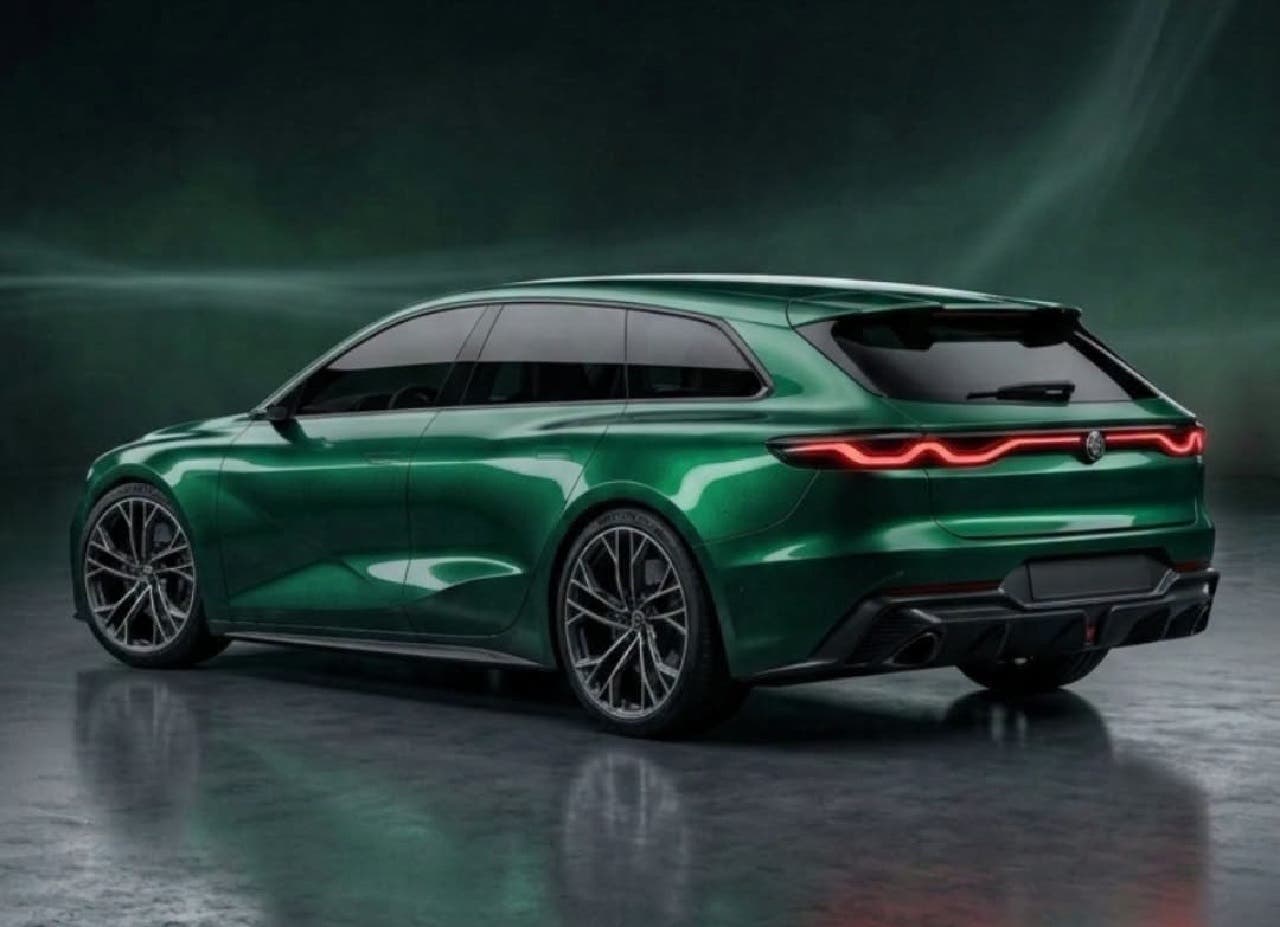
Starting with the Giorgio platform gives the render a long hood, short overhangs, and a cabin pushed toward the rear. The roof stretches beyond the second row, but the design avoids becoming an overly practical, boxy wagon. Instead, the roofline gradually slopes toward the tailgate, emphasizing the car’s sporty profile.
At the front, Alfa Romeo’s shield-shaped grille sits between slim headlights, while large bumper openings and a wide stance suggest a high-performance specification. The rear features a full-width lighting element, an aggressive diffuser, and exposed exhaust outlets.
The Milano Sportwagon also recalls a body style Alfa Romeo previously explored with the 156 and 159 Sportwagon. Both models prioritized design and driving character over maximum cargo capacity, targeting buyers who wanted a more dynamic alternative to conventional family wagons.
A similar formula could still find an audience in the premium wagon segment, particularly among performance-focused customers. However, Alfa Romeo has not included a station wagon in any of the product plans announced so far. The render therefore reflects what some enthusiasts would like to see rather than a confirmed production program.
Alfa Romeo originally planned to introduce the next-generation Giulia in 2026, but the project has since been delayed. The automaker now appears to be reconsidering its presence in the D-segment without confirming whether the replacement will retain the Giulia name, remain a traditional sedan, or adopt a fastback or crossover-inspired body.
More concrete information currently concerns the smaller segments. Production of the model replacing the Tonale should begin by the end of 2027, while a new vehicle connected to the Giulietta name is expected by 2030.
For now, the Milano Sportwagon remains a digital exercise built around an existing platform. It offers less of a preview of Alfa Romeo’s actual future and more of a demonstration of how the brand’s design language could translate into a low-slung, driver-focused wagon.