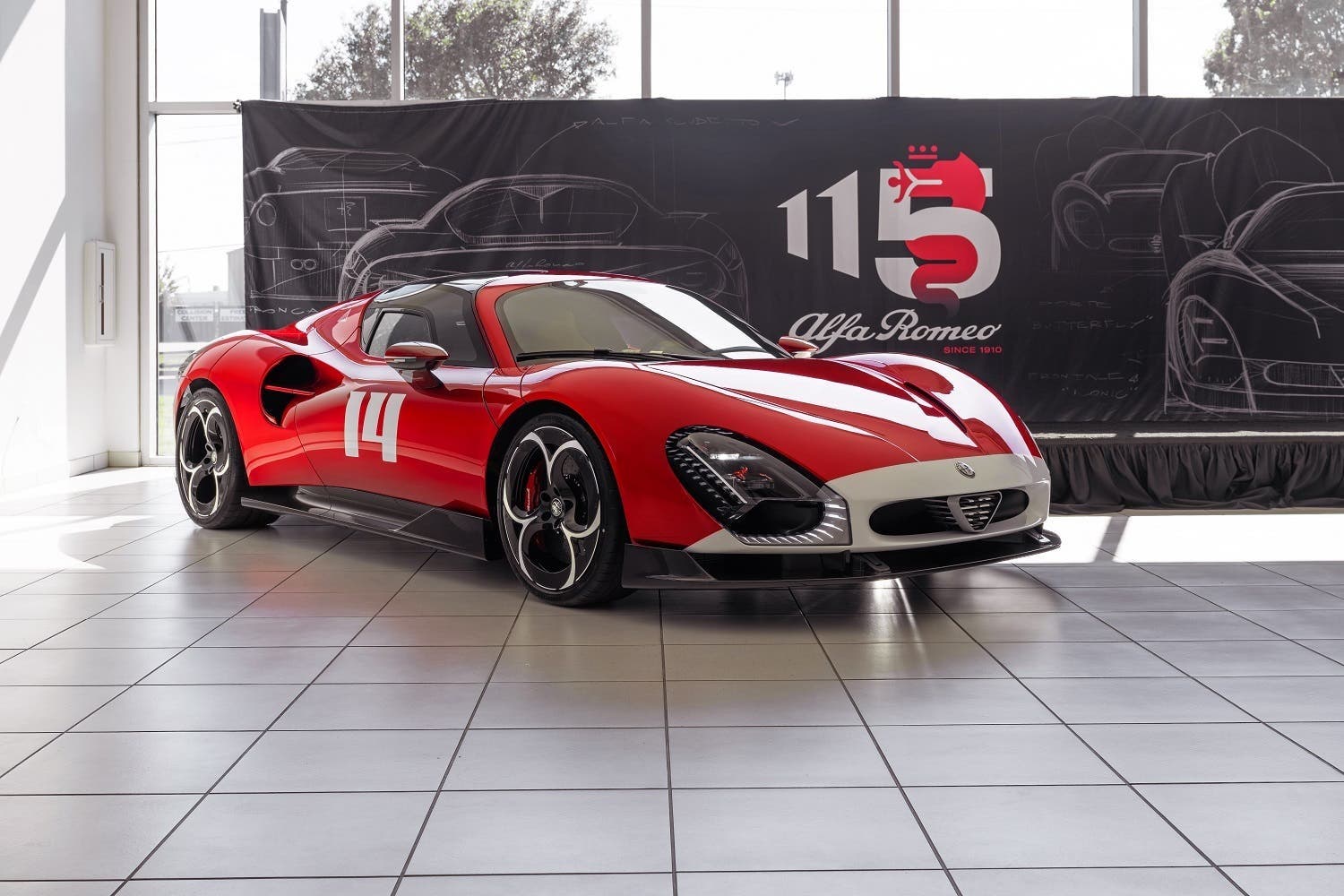
Two new Alfa Romeo 33 Stradale examples reached their owners in recent weeks, confirming that deliveries of the Biscione’s coachbuilt supercar are moving ahead as planned. The first car arrived in Austin, Texas, where entrepreneur and motorsport enthusiast Glynn Bloomquist received what appears to be the first unit destined for a U.S. customer.
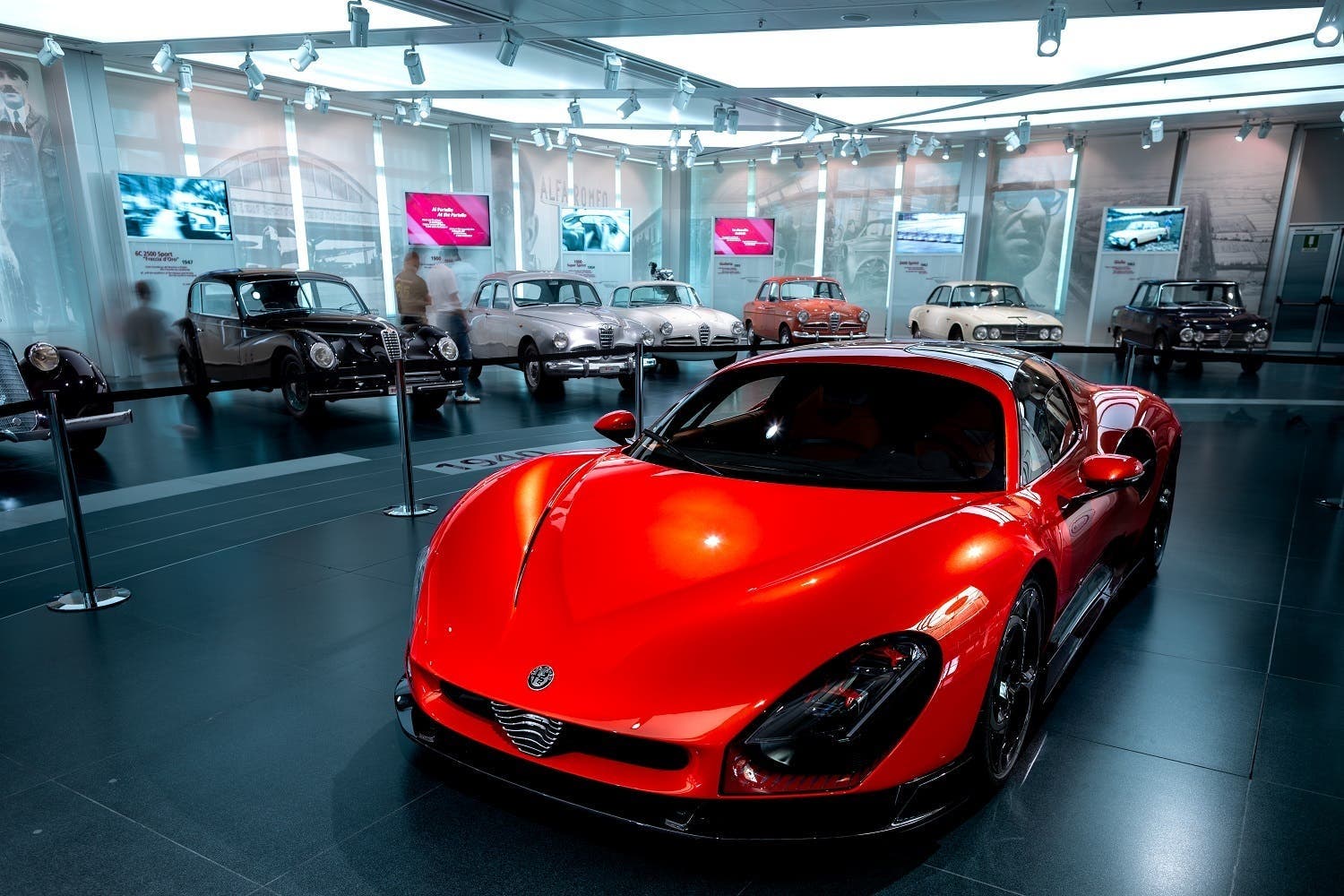
The second handover took place at the Alfa Romeo Museum in Arese, a location with special meaning for the Italian brand. The same building hosted the approval of the original 33 Stradale project in 1967.
From Texas to Arese, the new Alfa Romeo 33 Stradale is winning over the world
Bloomquist’s car features a Rosso Villa d’Este livery with a white stripe across the front, recalling the Tipo 33 race cars of the 1960s. Black 20-inch Progressive wheels with carbon fiber inserts complete the exterior, while the cabin uses leather personally selected by the owner. The number 14 appears on the doors and headrests, a reference Bloomquist chose as a tribute to Enzo Ferrari and American driver A.J. Foyt.
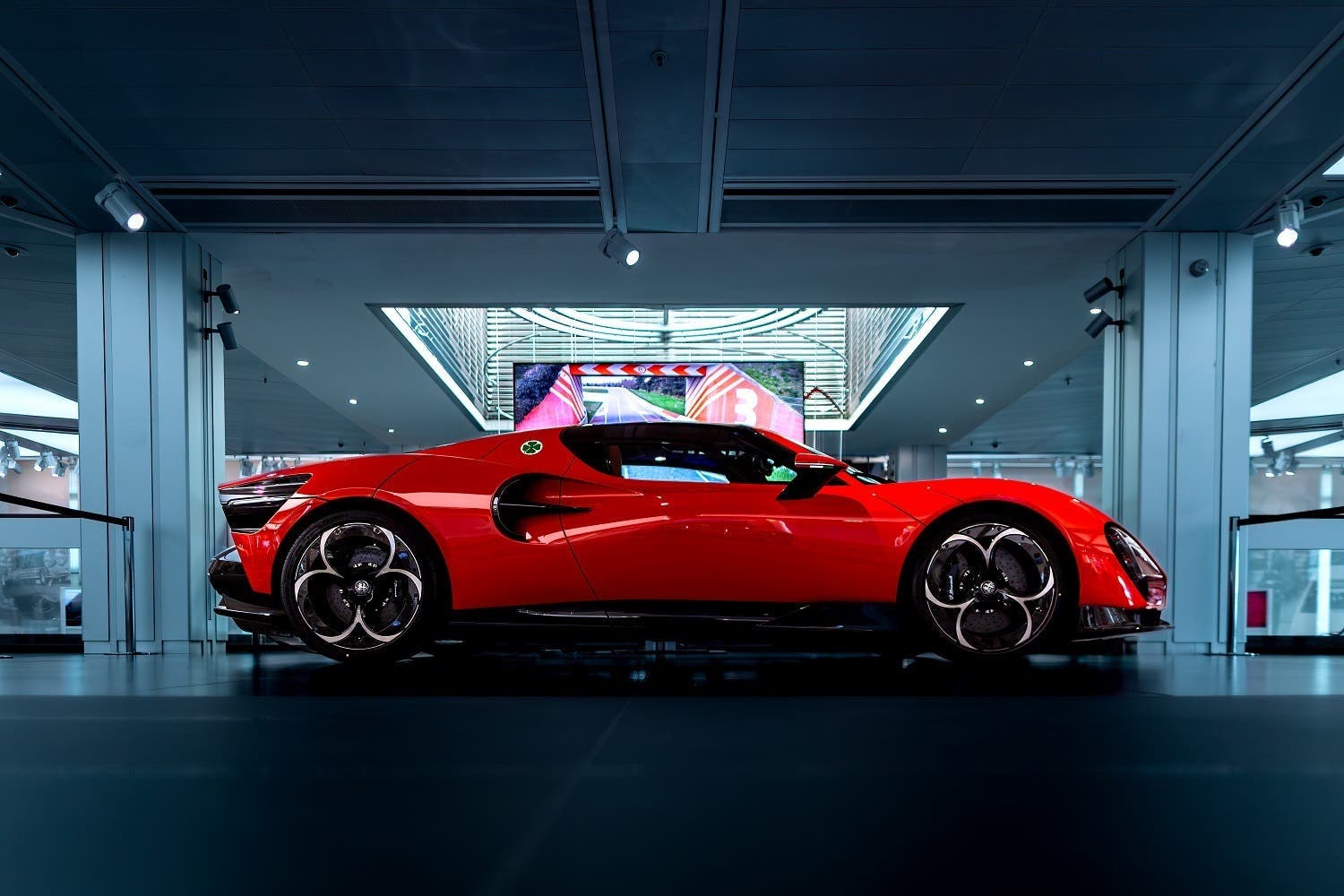
The car delivered in Arese follows a different chromatic approach, built around a custom color developed by Bottega Fuoriserie through a four-layer process. The result is a red shade that recovers typical Alfa Romeo tones from the 1960s and blends them with orange nuances inspired by the Montreal. Under natural light, the color changes intensity and highlights the sculpted surfaces of the bodywork.
Both deliveries reflect the essence of a project built entirely around individual personalization. Each of the 33 planned examples gets configured by its future owner inside the Sala del Consiglio at the Arese Museum and takes shape through the work of Touring Superleggera, the historic Italian coachbuilder involved in the car’s construction.
The limited production run and handcrafted process place the 33 Stradale in a segment Alfa Romeo had not entered for decades: collectible coachbuilt cars for an extremely small audience. Deliveries of the remaining examples should continue through 2026, with configurations that, according to the brand, will all differ from one another through color combinations, materials and personalized details.