

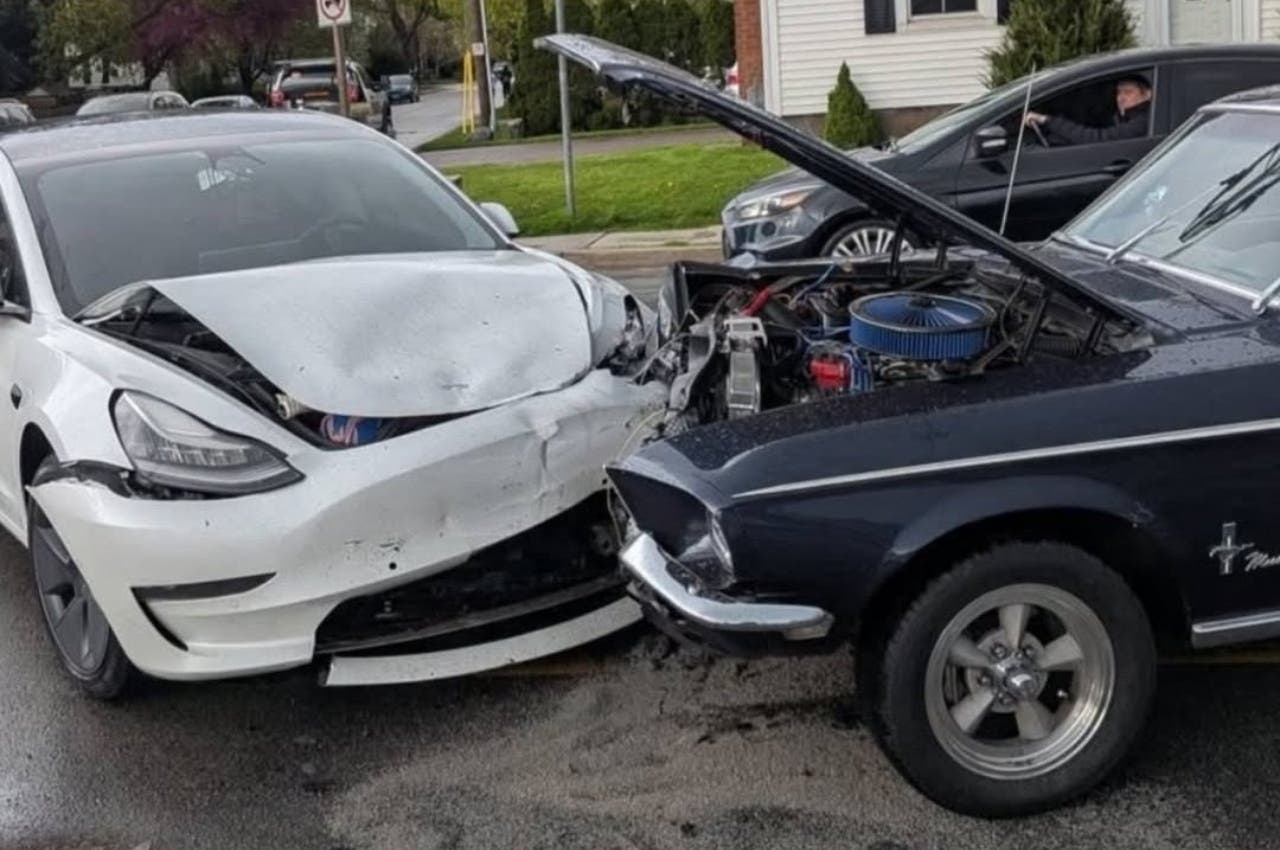
A 1968 Ford Mustang suffered severe damage in Milton, Ontario, after a head-on collision with a Tesla Model 3. According to the first reconstruction by Canadian authorities, the crash appears to have resulted from the electric car losing control while travelling at high speed shortly before the impact. Local police charged the Model 3 driver with reckless driving.
Tesla Model 3 crashes into 1968 Ford Mustang as classic muscle car is badly damaged in Milton, Ontario
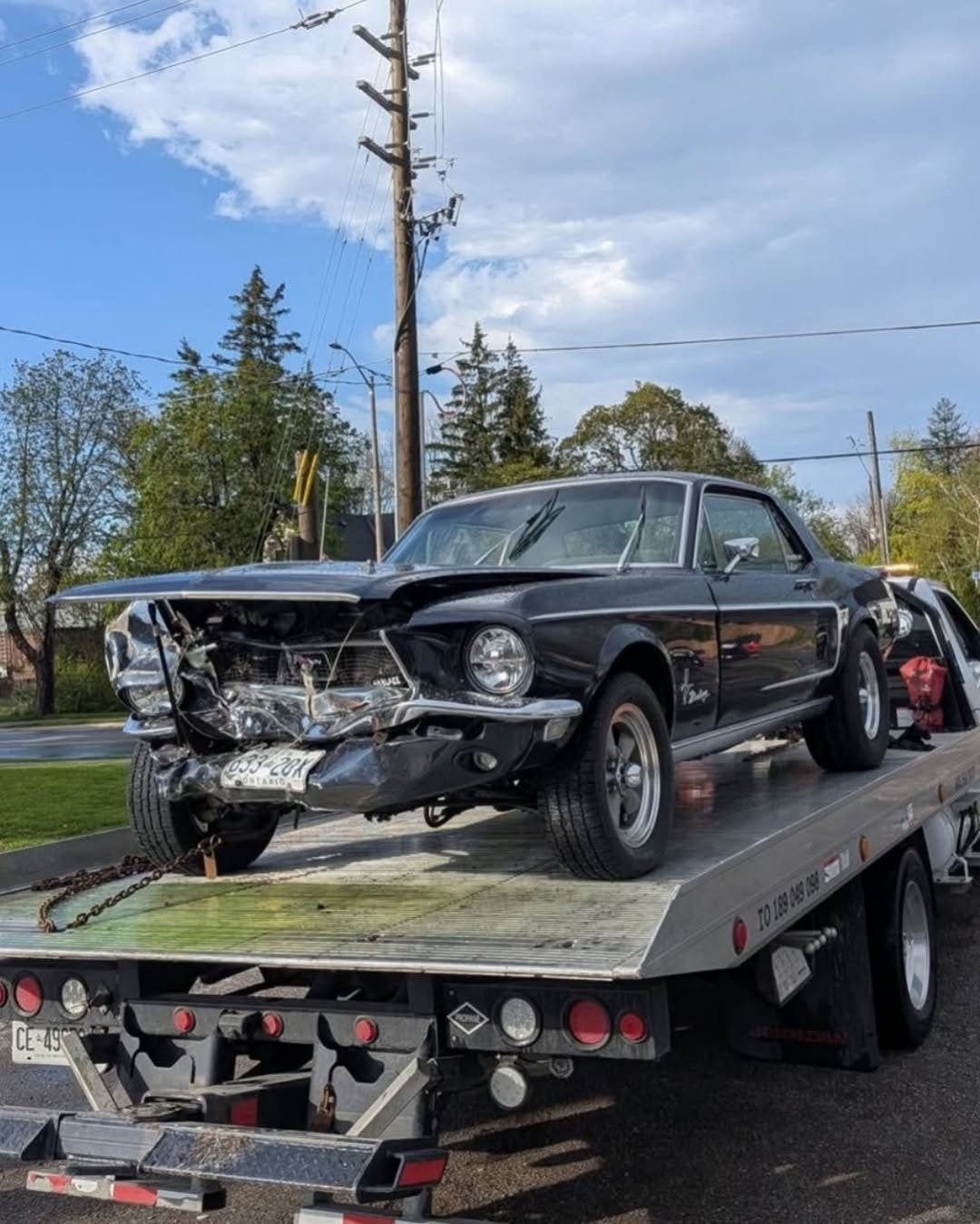
The impact heavily deformed the front end of the Mustang, with the bonnet, fenders and grille visibly compromised in the images circulating on social media. Any restoration would require a long process, high costs and access to period-correct components, which may not always be available. That leaves doubts over whether the car can return to its pre-crash condition. With a vehicle like this, the issue goes beyond physical repair, because an original first-generation Mustang carries historical value, collector rarity and a story that cannot simply be replaced by buying another classic car on the used market.
The muscle car community reacted immediately, with many comments on specialist forums expressing sadness over the loss of a vehicle that would be difficult to replace. The Tesla Model 3 also suffered significant damage, but the difference is clear: the electric saloon is a recent production car and can be repaired or replaced through an established network of authorised body shops, now widely available even for battery-powered vehicles.
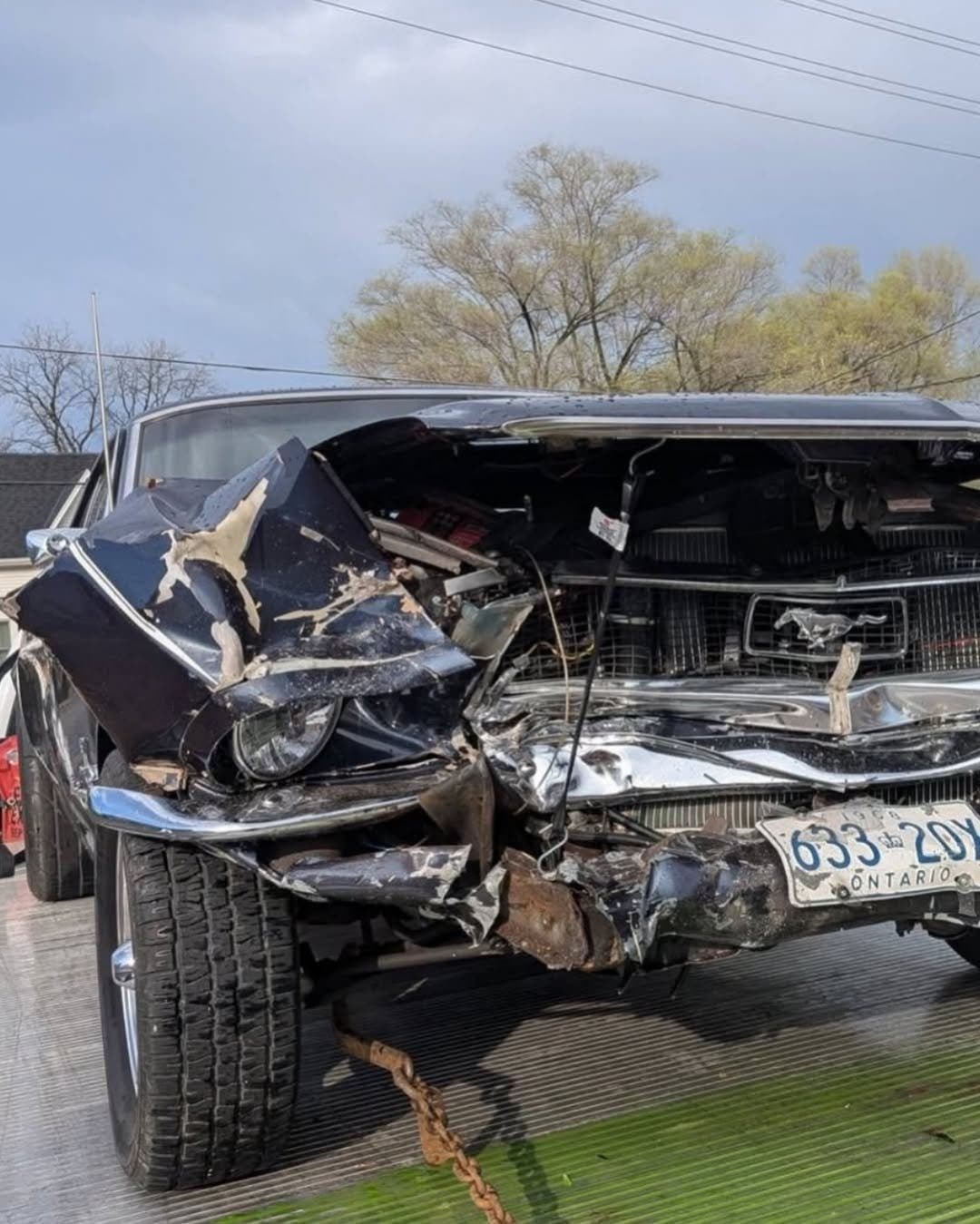
The incident also gained attention because of the contrast between the two vehicles involved. The Model 3 represents today’s electric mobility, while the first-generation Mustang recalls the era of V8 muscle cars. The type of powertrain has no bearing on responsibility for the crash, which, according to the authorities’ allegations, concerns only the behaviour of the Tesla driver. Even so, the images of the two damaged cars have fuelled debate over the protection of historic vehicles, especially in North America, where 1960s muscle cars still support a very active collector market. Restoring the Mustang remains theoretically possible, but according to early assessments in specialist circles, the result would probably struggle to match its condition before the impact.