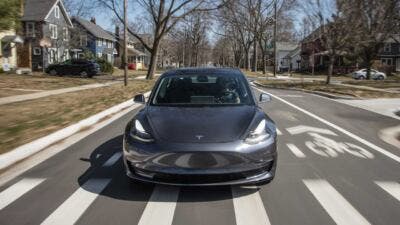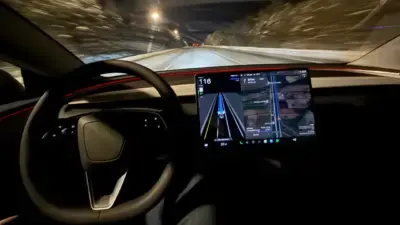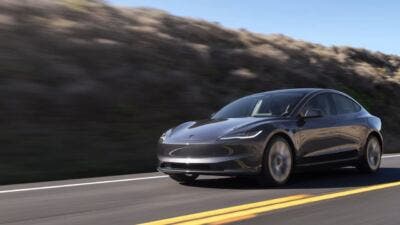
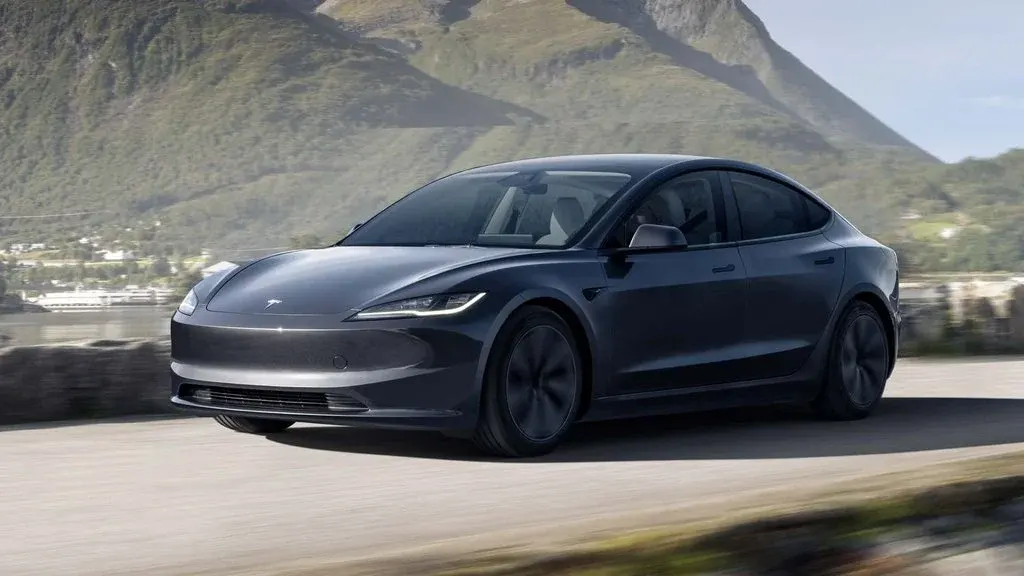
Tesla has repositioned the Model 3 in the Canadian market with a particularly aggressive pricing strategy, introducing the new Premium Rear-Wheel Drive trim with a starting price of CA$39,490, one of the lowest entry points ever offered for this model in the country.
Including additional costs for transportation, preparation, air-conditioning tax and tire fees, the total rises to around CA$42,116. Even so, the figure remains well below the average price of a new car in Canada, estimated at about CA$63,000, and puts Elon Musk’s electric sedan back among the most competitive premium options on the market.
Tesla Model 3 gets aggressive new pricing in Canada
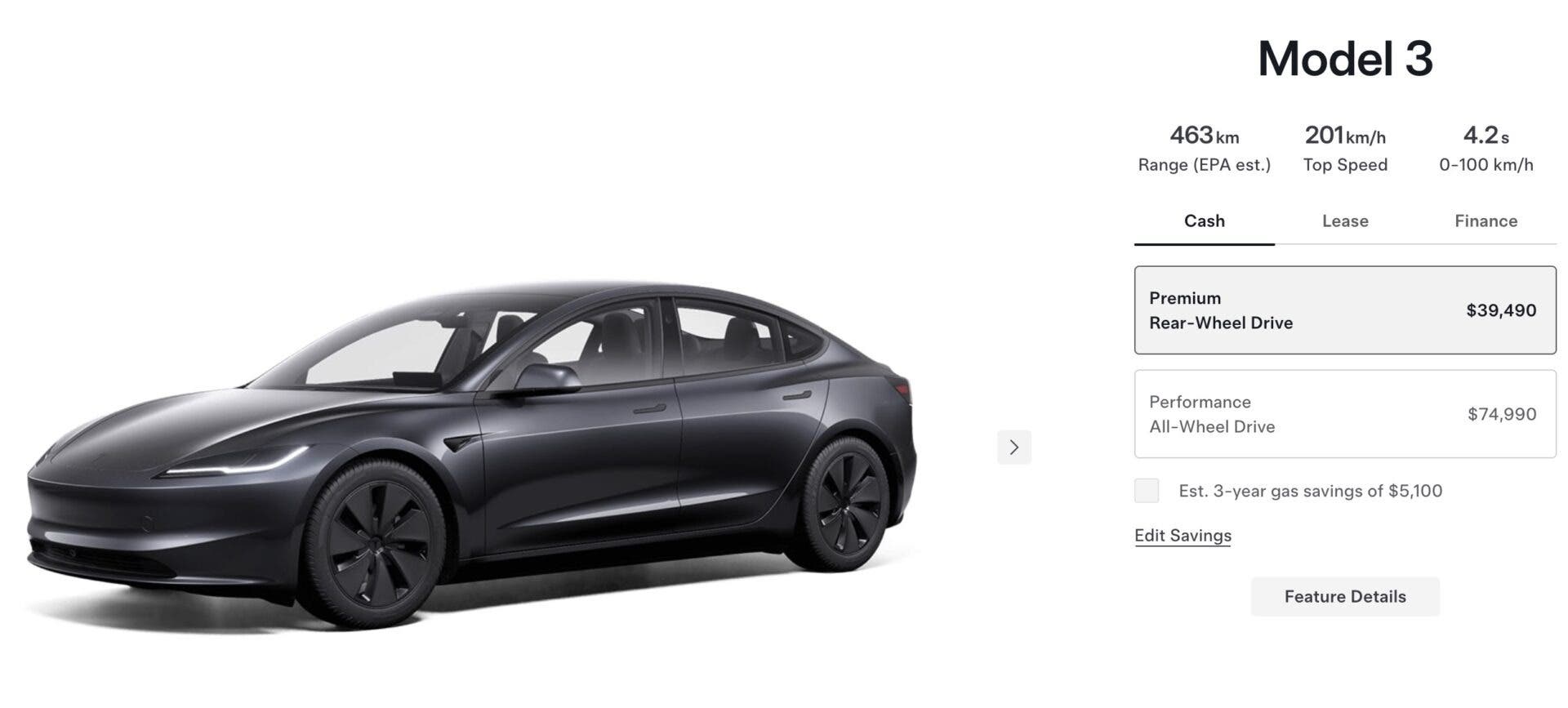
The price cut has also affected the Model 3 Performance, whose price has dropped from CA$89,990 to CA$74,990, a 17% reduction that leaves a gap of around CA$35,000 compared with the rear-wheel-drive version.
The key to this pricing policy lies in Tesla’s return to supplying Canada from Gigafactory Shanghai, the company’s most efficient plant in terms of production costs. Canada’s new trade framework also helps make the move sustainable, as it includes a managed quota for electric vehicles produced in China with a reduced 6.1% tariff. This allows Tesla to offer much lower prices than in other markets. At current exchange rates, the CA$39,490 base price equals around US$29,000, well below what U.S. buyers pay for a similar Model 3.
However, Chinese production excludes the car from Canada’s federal CA$5,000 iZEV incentive, which only applies to vehicles from countries with free-trade agreements with Canada. Some provincial bonuses remain available in Manitoba, Quebec and Yukon, and they could lower the effective price even further. The new pricing could also put downward pressure on the residual values of Model 3 vehicles already on the road, a side effect that current owners may not overlook.
The return of Chinese production also brings the adoption of the LFP, or lithium iron phosphate, battery. Compared with the nickel-based batteries used in other markets, this chemistry offers the practical advantage of regular charging to 100% without significantly accelerating cell degradation. For drivers who use the car daily and charge it overnight, this matters because it allows them to use the full stated range more often without limiting the charge level.
The timing does not look accidental. The price cut comes as the Canadian market prepares for the arrival of new Chinese automakers, including BYD and Xiaomi. Tesla seems determined to set a pricing threshold that will be difficult for rivals to attack, especially those aiming to gain share mainly through value for money. First deliveries under the new pricing are expected in June 2026, with an indicative monthly payment of CA$479, in a context of still-high fuel prices that could make the switch to electric power increasingly convincing from an economic standpoint.