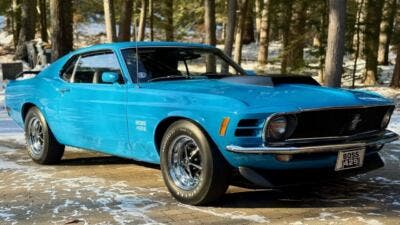
The eternal debate between the 1969 and 1970 Ford Mustang Boss 429 is a classic case of tribalism, with wealthy collectors ready to throw hands over pure aesthetics. If you are trying to choose between these definitive NASCAR homologation specials, the differences are mostly skin-deep but financially massive.
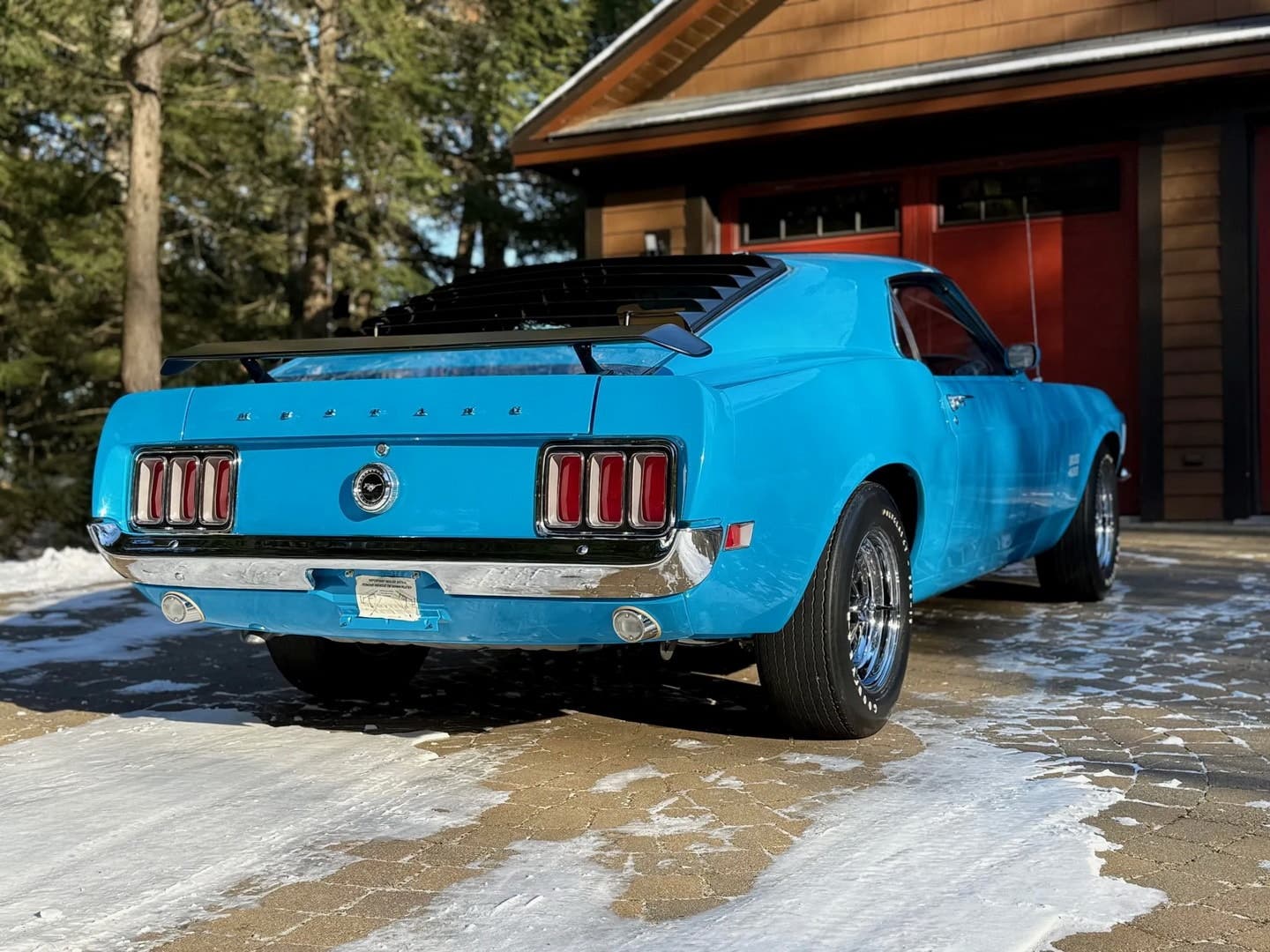
The 1969 model rocked an aggressive four-headlight face, whereas the 1970 variant scaled back to two grille-mounted lights, slapped some questionable faux vents on the outer bumper, ditched the rear quarter panel scoops entirely, and flattened out the previously concave rear taillight panel. Even the massive hood scoop traded its subtle, body-colored look for a bold, non-negotiable black. To seal the deal, Ford threw in a Hurst shifter instead of the standard factory unit, alongside a few loud, extroverted paint options like Grabber Orange, Grabber Green, and the highly coveted Grabber Blue.
Take, for example, a stunning 1970 Mustang Boss 429 that was originally delivered to the Joe Cullinan Ford dealership in Marlboro, Massachusetts. Dressed in flawless Grabber Blue over a black vinyl interior, this particular beast just crossed the auction block for a jaw-dropping $410,000.
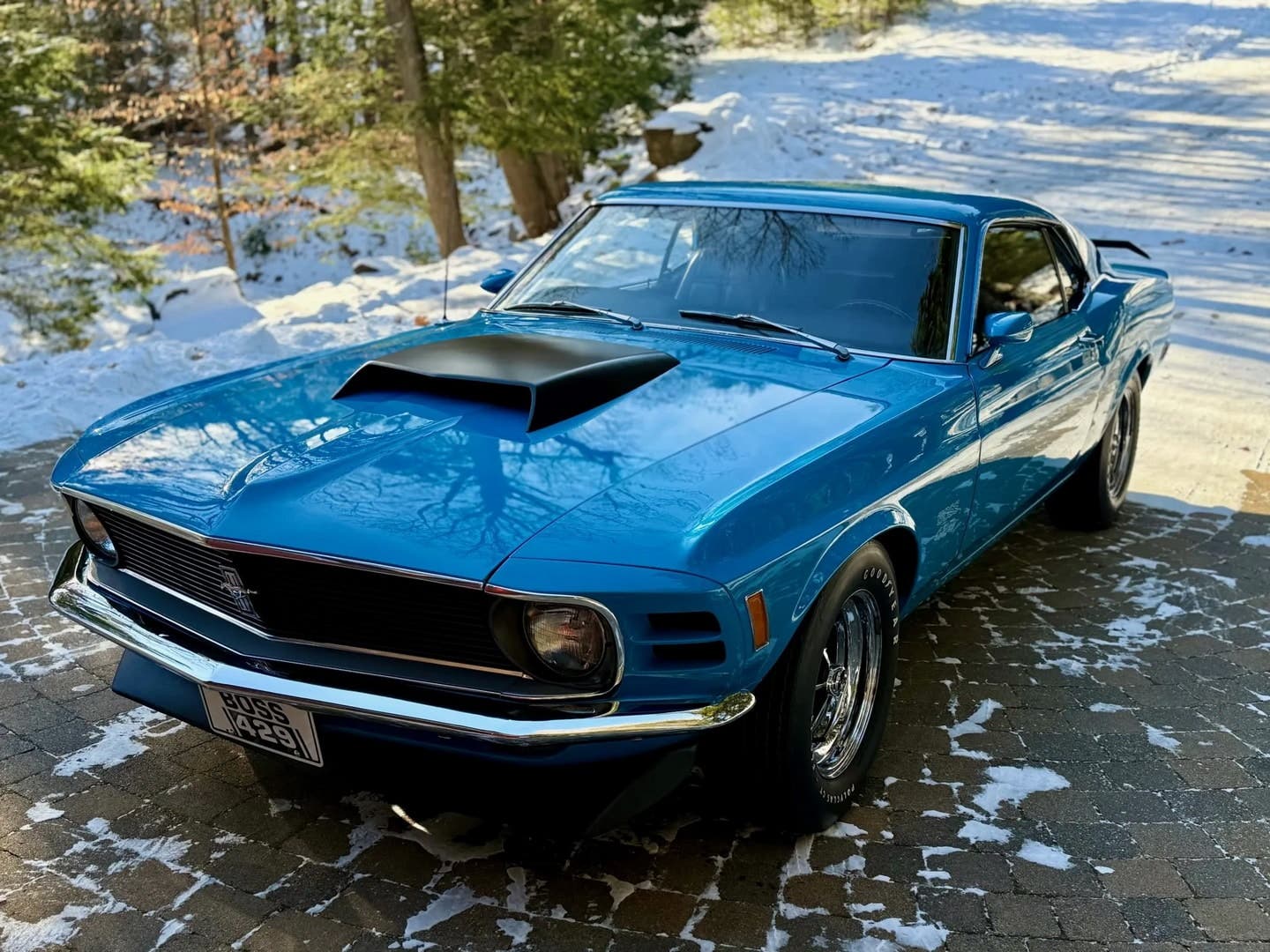
Following a meticulous mid-2000s restoration, this Mustang still looks absolutely immaculate, boasting its factory-spec front and rear spoilers, rear window louvers, dual side mirrors, dual exhaust tips, and those iconic 15-inch Magnum 500 wheels wrapped in Goodyear Polyglas GT F60-15 tires.
Step inside, and you are instantly transported back to an era of questionable luxury: high-back bucket seats, heavy doses of faux wood-grain trim on the dash and console, a Philco AM radio, and that legendary Hurst T-handle shifter, all framed by a Rim Blow steering wheel and a five-digit odometer showing a mere 28,000 miles.
Powering this asset-class muscle car is the iconic 429-cubic-inch V8. Rated at a highly understated 375 HP, it breathes through a 735-cfm Holley four-barrel carburetor and channels power to the rear wheels via a four-speed manual transmission. Standard power wasn’t enough to justify the premium: this car features the factory Drag Pack, which upgrades the mechanical internals with a high-lift camshaft, a modified crankshaft, a heavy-duty flywheel, and a specialized vibration damper. Is any piece of 1970s nostalgia truly worth nearly half a million dollars?