

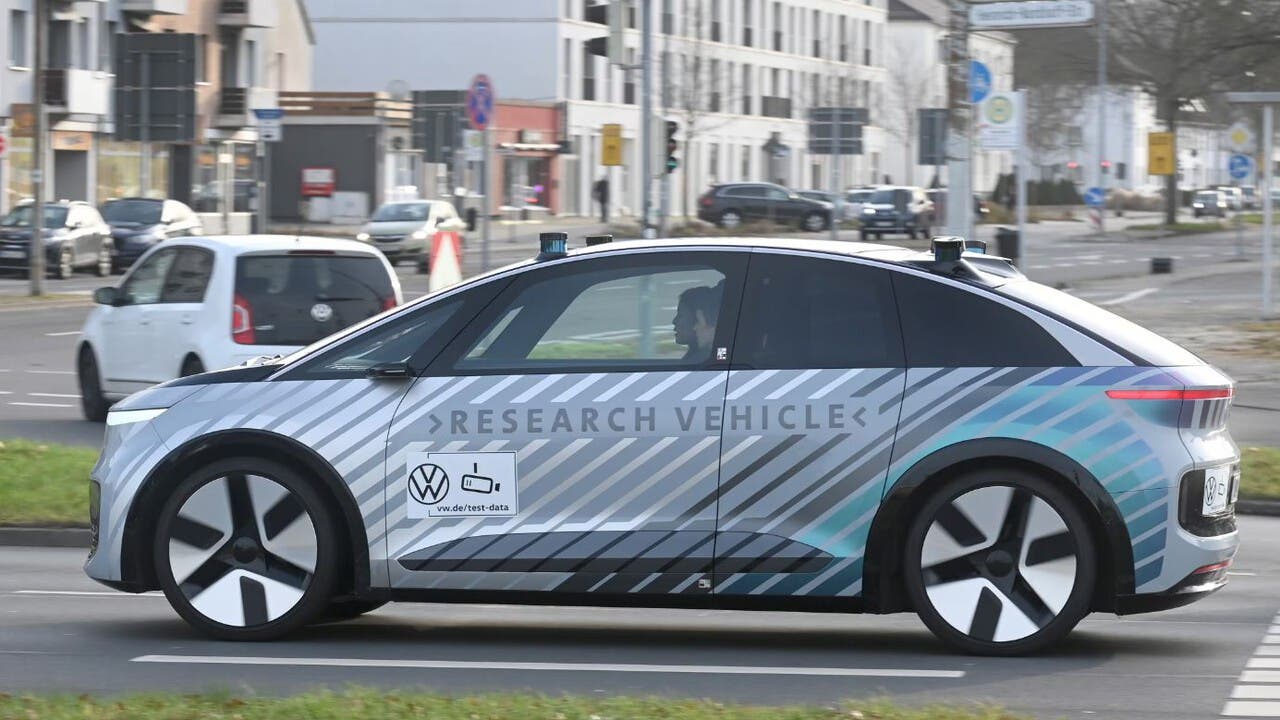
While Tesla continues to court controversy and headlines with its Full Self-Driving (FSD) system, other manufacturers are quietly focusing on the crucial question. Will people actually trust a car with no wheel? Volkswagen has just announced the next phase of testing for its experimental autonomous vehicle, the Gen.Urban, moving it from intensive, covert trials to live testing on the streets of Wolfsburg, its corporate hometown.
The Gen.Urban is strictly a research project for now, a conceptual lab on wheels designed to “explore the passenger experience aboard an autonomous vehicle without a traditional steering wheel or pedals”. This focus on the human element sharply contrasts with the tech-first approaches of competitors like Tesla and Waymo (which uses modified Jaguar I-Pace vehicles).
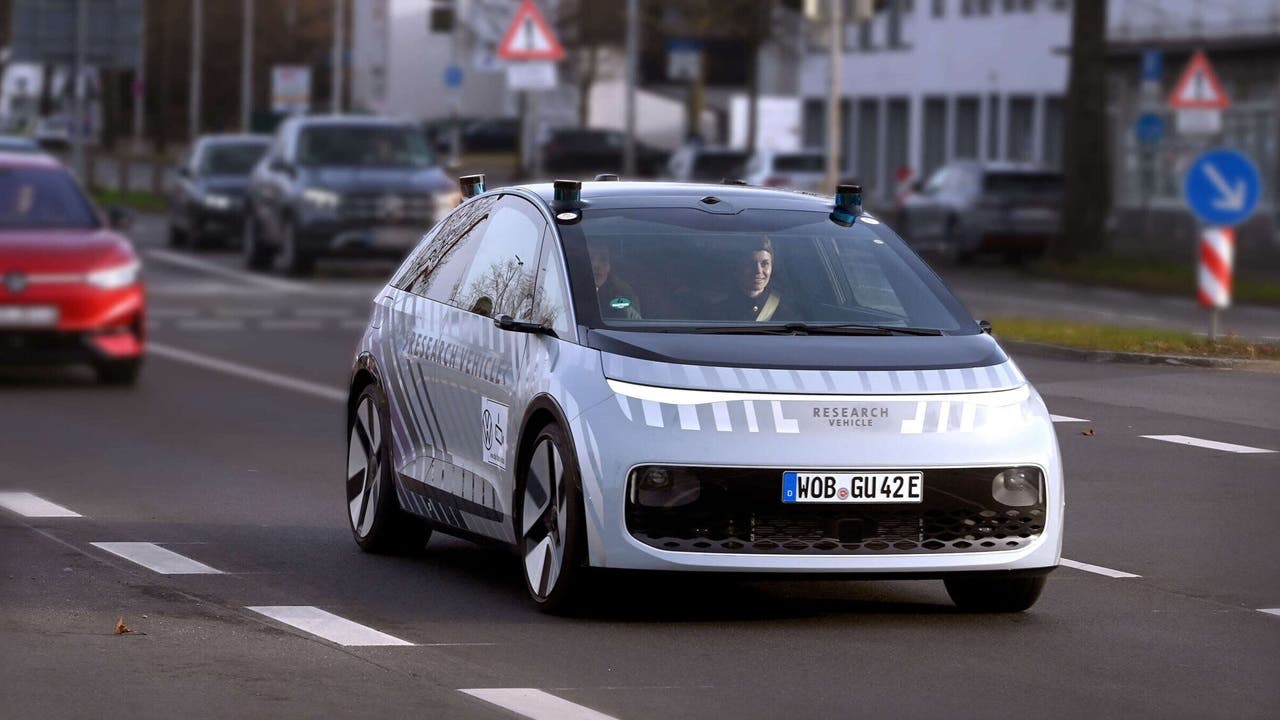
Dr. Nikolai Ardey, Head of Innovation for the Volkswagen Group, articulated this philosophy: “With our research vehicle Gen.Urban, we want to understand exactly how passengers experience autonomous driving. Because the key to a positive customer experience is creating trust”. He notes this is achieved through factors like “meaningful interaction, a relaxed atmosphere, and intelligent assistance systems”. Volkswagen believes the technology must adapt to the people, not the other way around. A lesson some of their peers are learning the hard way.
Like other self-driving cars, the Gen.Urban allows customers to adjust the cabin temperature and ambient lighting pre-arrival. The removal of the wheel and pedals naturally frees up interior space, hinting at a more comfortable, social cabin environment than the restrictive two-seat Tesla Cybercab.
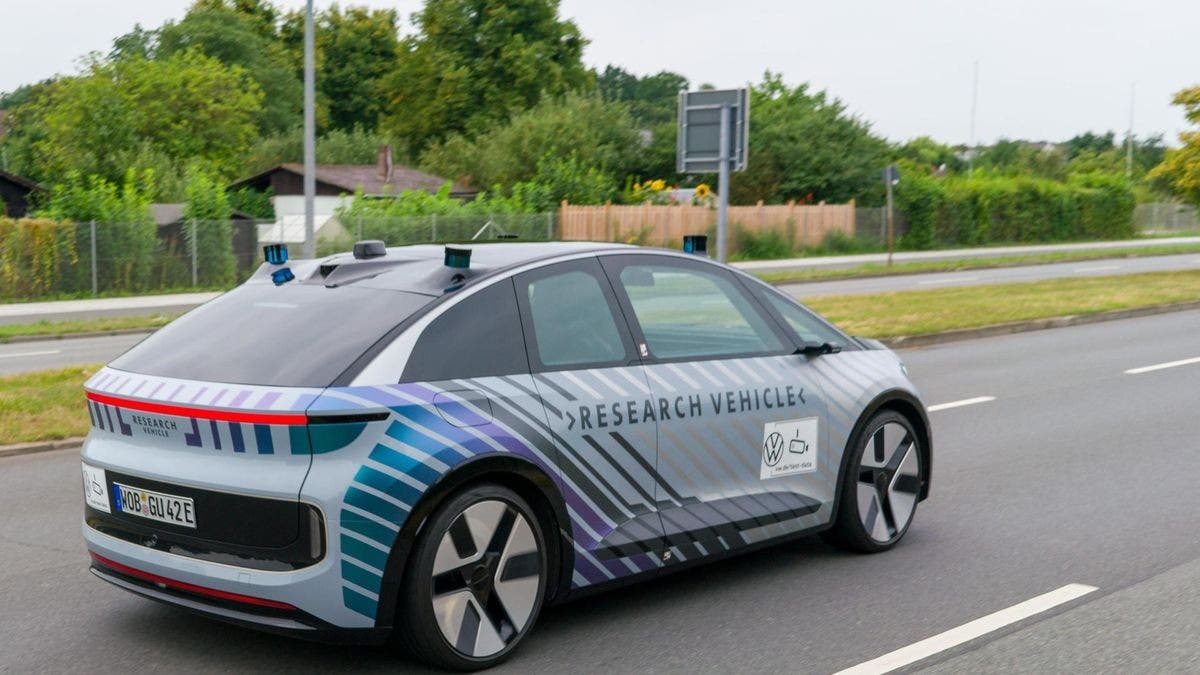
However, Volkswagen isn’t completely cutting the cord. The prototype features a specially developed “control panel with a joystick” for the trained “safety driver” positioned in the passenger seat, ready to intervene if the robot has an existential crisis. The four-door, multi-seater layout of the Gen.Urban suggests a practical, family-friendly future for autonomous driving, proving that Volkswagen still believes people might want to share their self-driving experience with more than one companion.