Volkswagen enthusiastically promised that its ID.4 crossover would smoothly lead the masses into a flawless, emission-free future. Now, that corporate dream has officially transformed into a literal fire hazard, accompanied by a catastrophic 95.6% collapse in first-quarter U.S. sales this year. Instead of confidently conquering the American suburbs, Wolfsburg’s flagship electric SUV is currently conquering the desks of class-action defense lawyers.
Plaintiffs Timothy Y. Chen and Robert Warren, who leased 2025 and 2023 models respectively in California, have filed a lawsuit claiming that their high-tech German EVs are essentially unusable, failing spectacularly to perform as advertised.
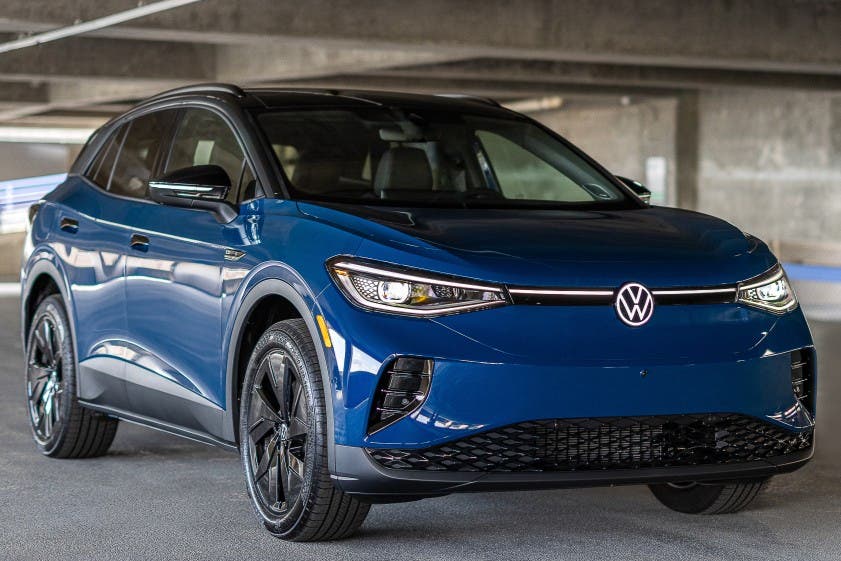
The core of the litigation lies in the absurd set of survival rules Volkswagen handed to its customers. Following a massive global recall that expanded to nearly 100,000 electric vehicles due to high-voltage battery system failures, Volkswagen first caught wind of the disaster when an ID.4 experienced a thermal event at a Level 3 DC fast charger back in January 2024.
More battery fires followed, some erupting while the vehicles were actively in motion. The automaker’s brilliant interim solution? Instructing paying customers to never charge their batteries beyond 80%, completely avoid fast chargers, and crucially, do not plug the car in overnight. Battery supplier SK Battery America eventually traced the nightmare to misaligned battery electrodes, seasoned with an additional production hardware defect just to keep things interesting.
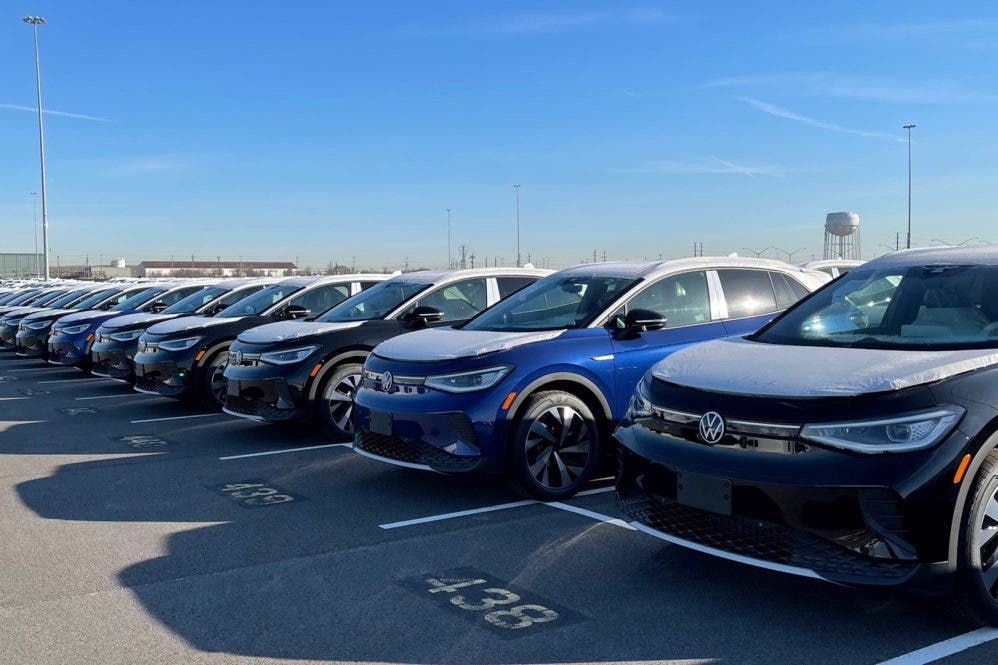
For the plaintiffs, these ridiculous charging restrictions completely shatter any real-world utility. Stripped of fast-charging privileges, fully replenishing a 2023 ID.4 on a standard 11 kW Level 2 charger stretches into an agonizing six-and-a-half to seven-and-a-half-hour ordeal. To make matters worse, early variants of the crossover already offered a mediocre 209 miles of range on a perfect day. Simple math dictates that capping an already underwhelming battery at 80% leaves disgruntled owners facing a dismal driving range well under 200 miles until a fix arrives.
It turns out that when you market a vehicle as a freedom-inducing road-tripper but deliver an anxious machine that cannot be trusted to charge while you sleep, consumers notice. While Volkswagen promises that its dealers will inspect high-voltage systems and replace affected modules for free, the commercial damage is done.