Ford named it Lightning twice. The first time, it earned the badge. The second time someone in Maryland decided the name needed to actually mean something again, and they brought a turbocharged Coyote V8 to make the point.
Before Ford recycled the Lightning nameplate for its battery-powered truck, the original F-150 Lightning was the real deal: a performance pickup that kicked off an entire genre and still turns heads two generations later.
The first-gen ran a 5.8-liter V8 borrowed from the LTD Crown Victoria police package, modest at 180 HP at launch, eventually punched up to 240 HP with suspension upgrades to match. Then Ford went full send on the second generation, bolting on a supercharged 5.4-liter V8 good for 360 HP. Glorious, loud, and completely impractical in the best possible way.
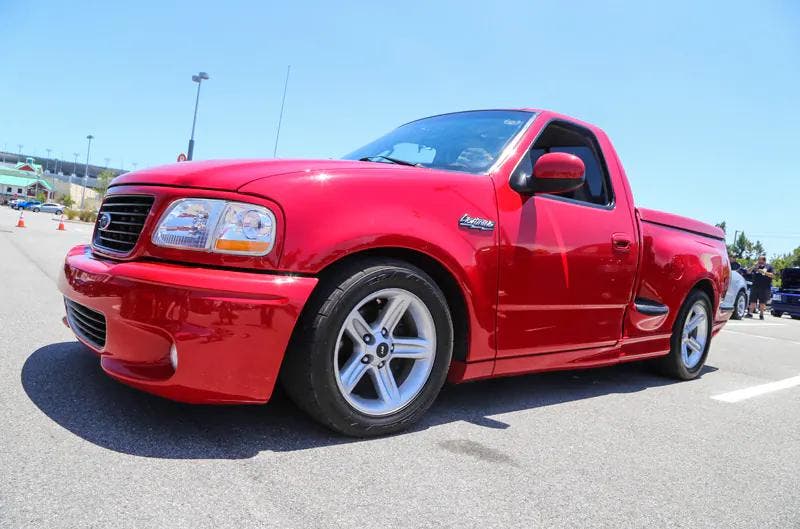
Then Ford went quiet on the performance front, until a shop called Next Gen Performance Center, out of Maryland, decided the Lightning name had been sitting idle for too long. These guys have been building Coyote-powered weapons for years, and they got their hands on a second-gen Lightning with a plan.
The Coyote 5.0-liter V8, in stock form on a modern F-150, already makes 400 HP. Drop it into the lighter second-gen Lightning body and you’re already ahead of the original supercharged truck. But Next Gen wasn’t here to play it safe. They strapped on a turbocharger, and the numbers stopped being polite real fast.
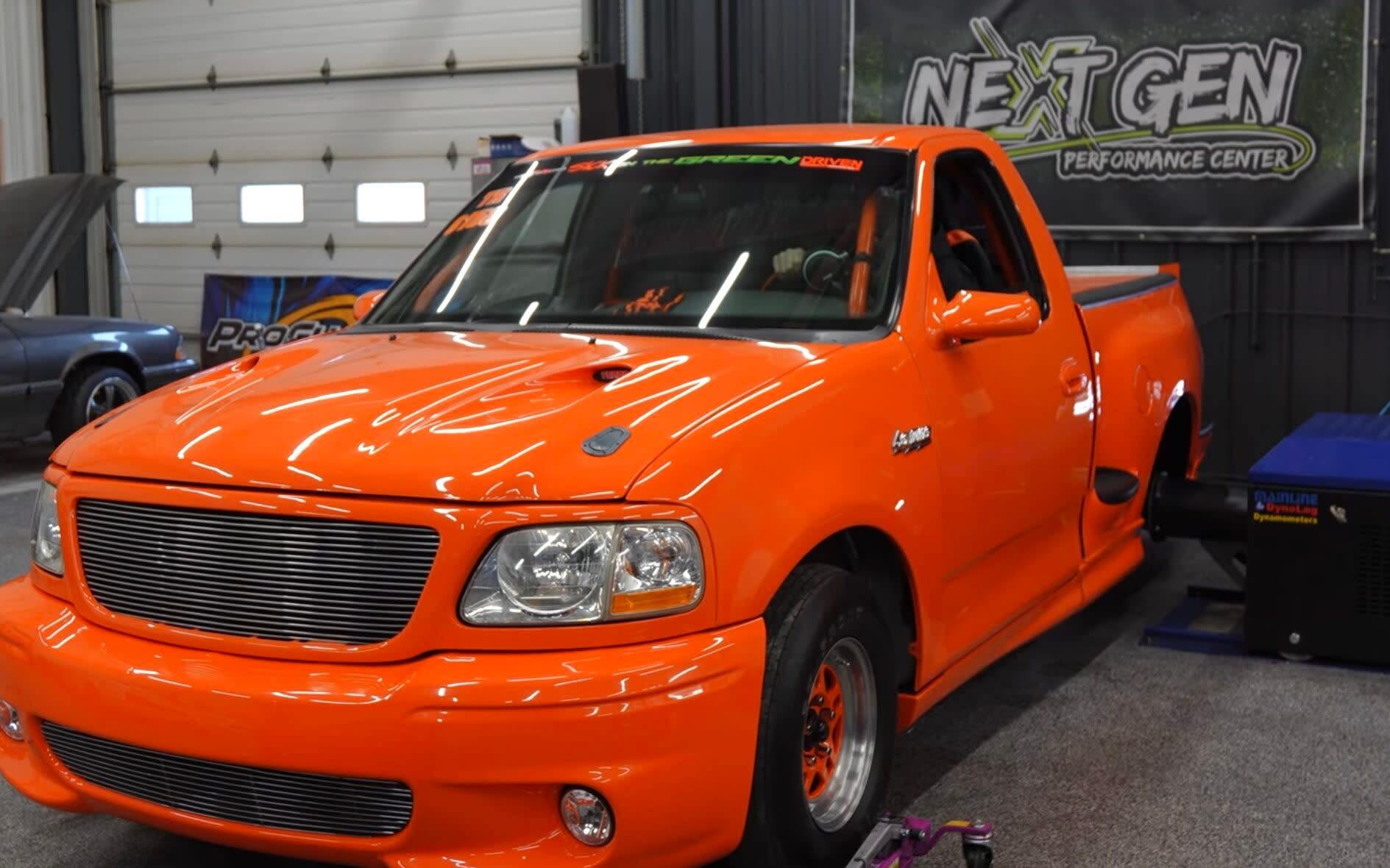
At 6 psi of boost, the dyno read 755 HP. Bump it to 8 psi, and the needle swings to 955 HP, more than double what the factory supercharged engine ever delivered. With stronger internals and supporting hardware already in place, Next Gen then pushed to 9.5 psi in experimental trim and crossed the 1,000-horsepower mark. Four digits. In a pickup truck. On the street.
The goal, apparently, is to keep it street-legal and actually drivable. Not a trailer queen, not a one-run drag strip special. Just a thousand-horsepower F-150 Lightning that you can take to the grocery store.