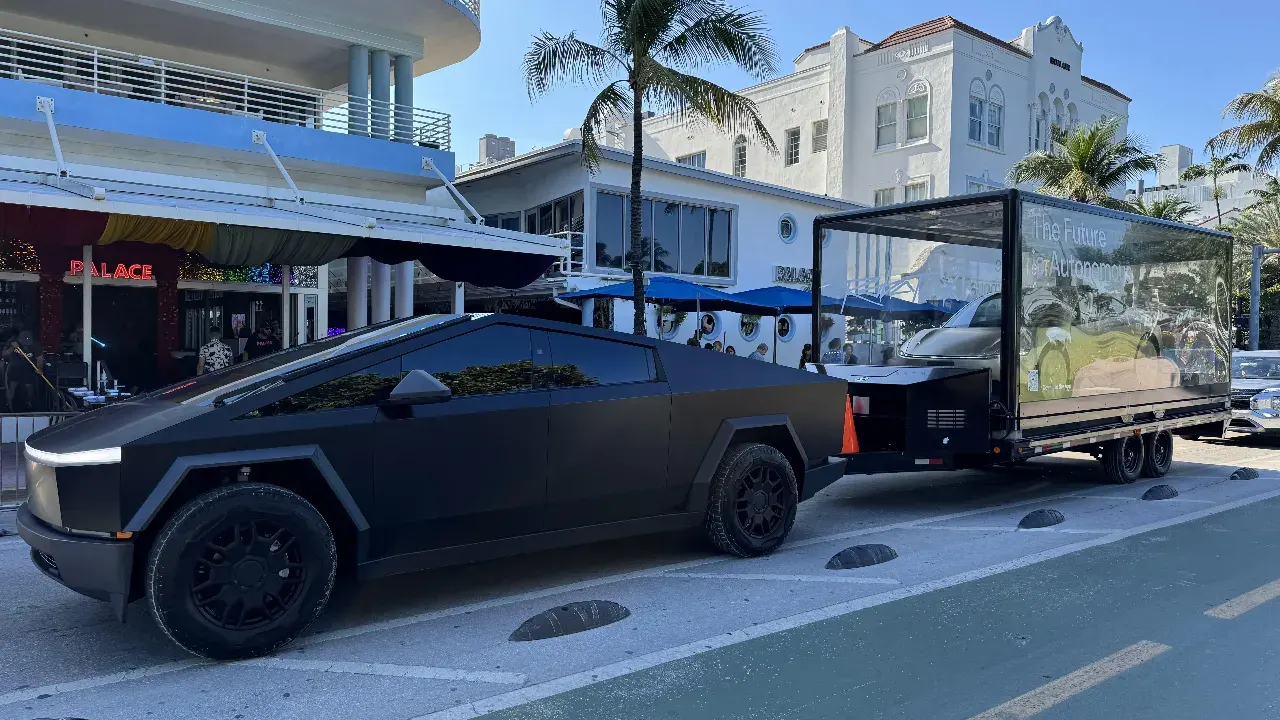
Nothing says “the future is here” quite like a car encased in glass and towed through the sand by a stainless-steel triangle. During the Formula 1 Miami Grand Prix Fan Fest at Lummus Park, Tesla decided to remind everyone that while the Ferraris and McLarens were burning rubber on the track, the real show was a stationary “Autonomy Pop-Up”. A Cybertruck, looking as subtle as a tank in a library, paraded a Cybercab through the beach crowds inside a display case labeled “The Future is Autonomous”.
Miami is, of course, the perfect stage for this automotive theater. It’s one of seven cities, alongside Dallas, Houston, Phoenix, Orlando, Tampa, and Las Vegas, set to receive Tesla’s robotaxi service in the first half of 2026.
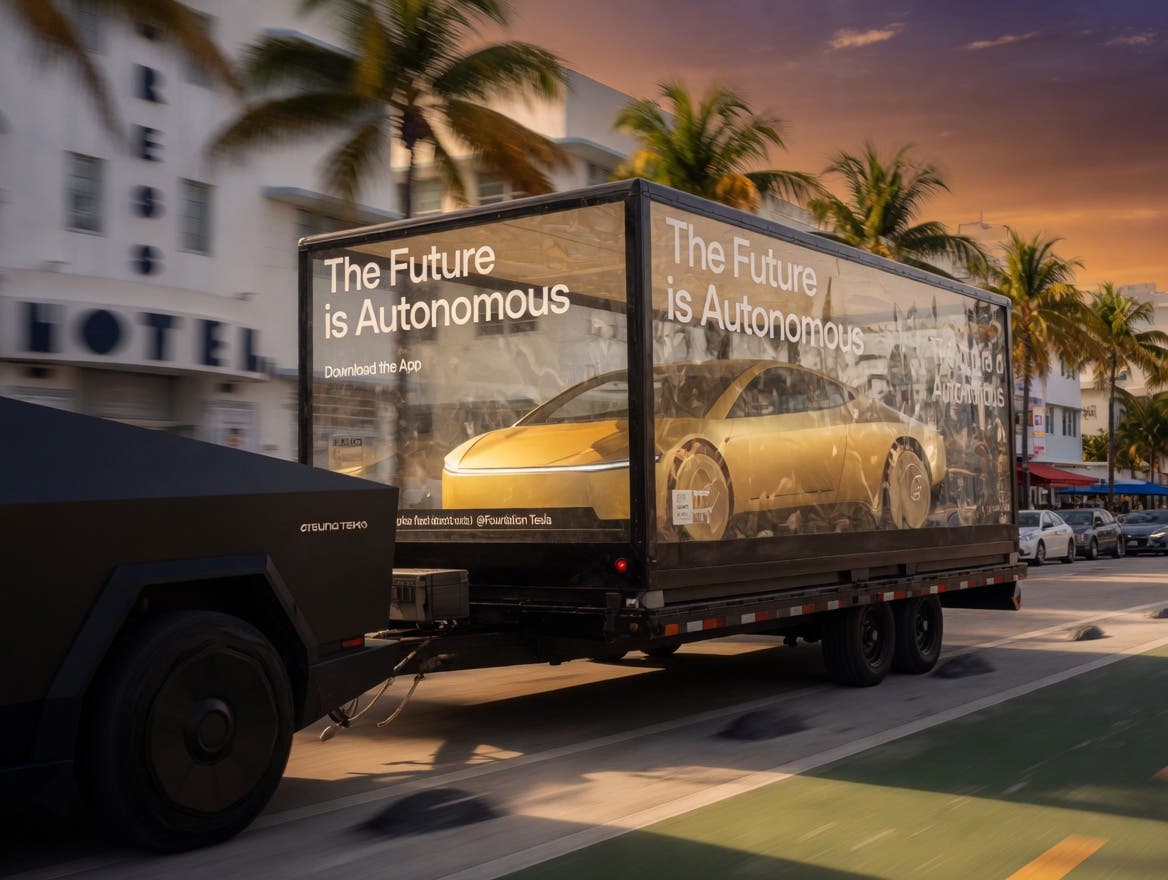
This isn’t Tesla’s first time playing dress-up in South Beach. They previously haunted Art Basel with Optimus robots that interacted with the elite. It’s a brilliant, if slightly cynical, marketing strategy. Insert a robot or a wheel-less car into high-traffic events like the Boston Marathon or an F1 race, soak up the free media coverage, and avoid spending a dime on traditional advertising.
But behind the glitz of Miami Beach lies a manifesto of staggering proportions. Elon Musk is looking to dominate the continent. He predicts that by the end of 2026, his robotaxis will cover up to half of the United States. To get there, he’s promising a production miracle: five million Tesla Cybercabs a year, with one unit rolling off the line every ten seconds. It’s a pace that would make a traditional assembly line look like it’s moving through molasses.
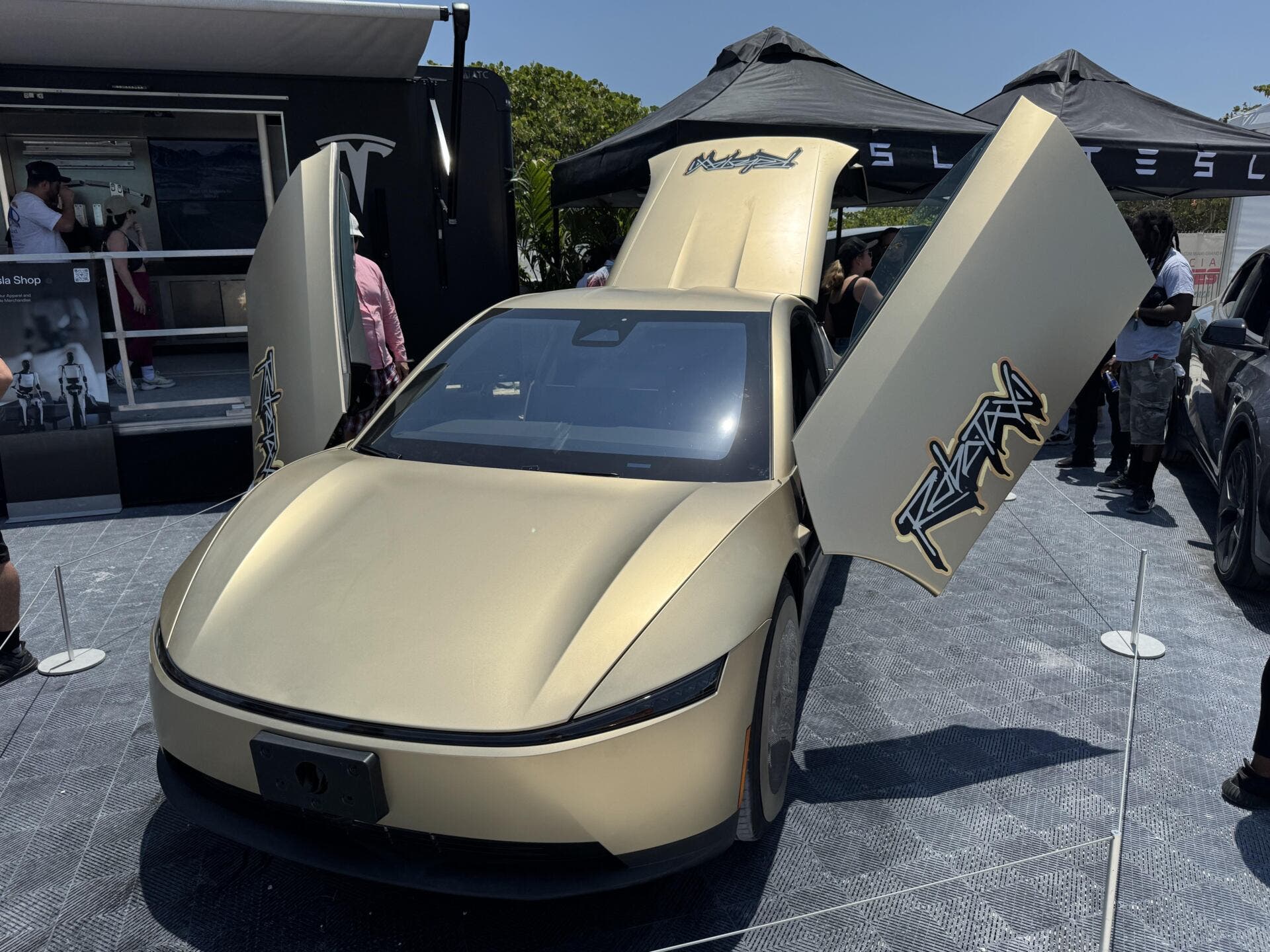
Of course, there’s a massive carrot dangling at the end of this high-speed stick. Musk’s own pay package depends on hitting a target of 10 million operational robotaxis within the decade.
Then there’s the price. Musk claims you’ll be able to snag a Tesla Cybercab for under $30,000, with operating costs around 20 cents a mile. It sounds like an urban utopia, provided the mass-production reality doesn’t collide with the laws of physics or economics. For now, the Cybercab remains a shiny, glass-enclosed promise.