

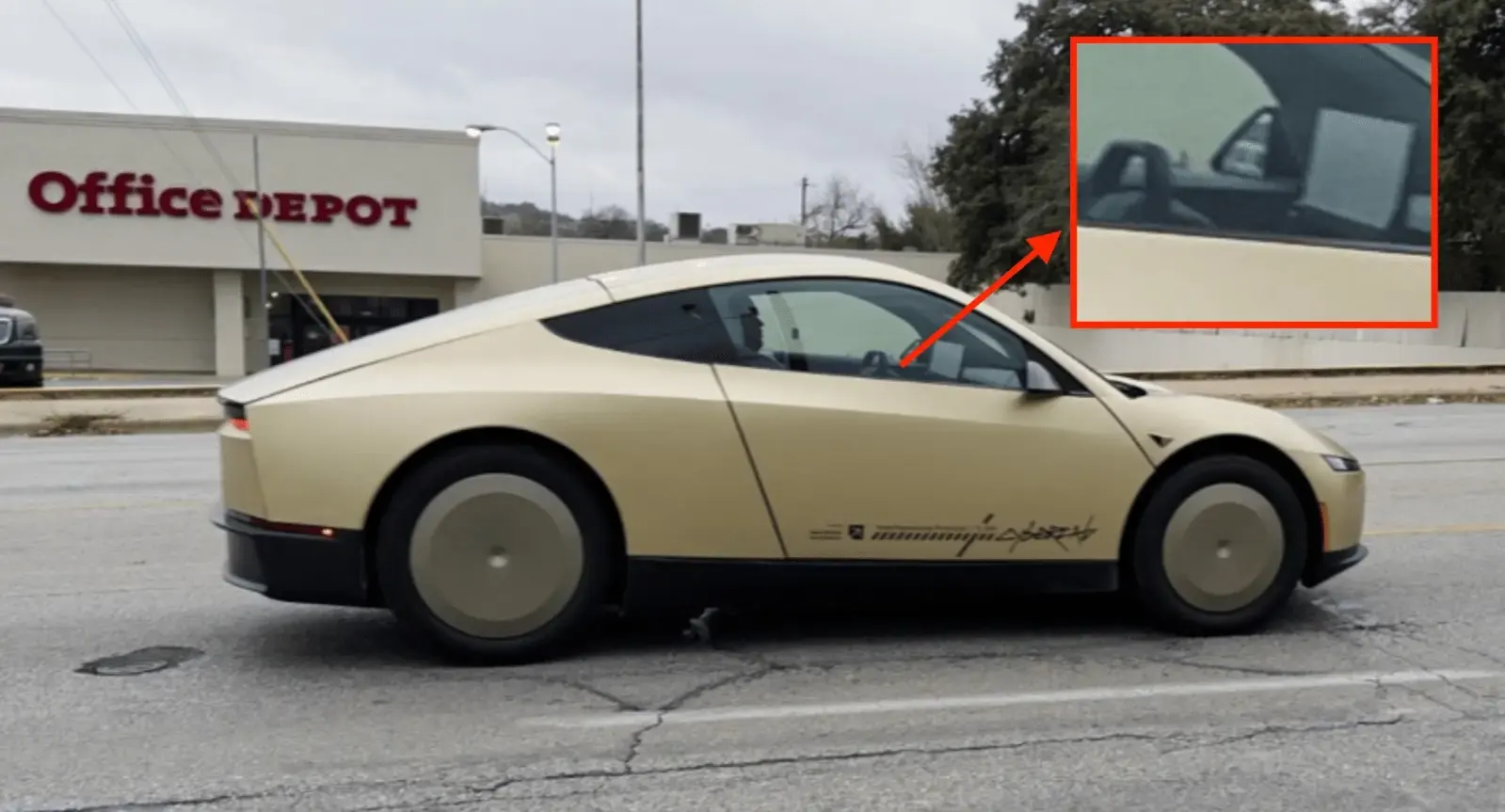
Over the past few days, numerous images and videos have surfaced on social media showing Tesla Cybercabs driving through the streets of Austin. These autonomous vehicles, with their futuristic look, seem almost lifted from a science-fiction movie as they blend into everyday traffic alongside completely ordinary cars.
The vehicles spotted already appear very close to their final production form. Inside, however, they still feature a removable steering wheel and side mirrors, and most importantly, a Tesla operator sits on board to monitor the journey and step in if needed. At this stage, every Cybercab circulating in Austin still relies on human supervision for safety reasons.
Tesla begins Cybercab testing ahead of its debut
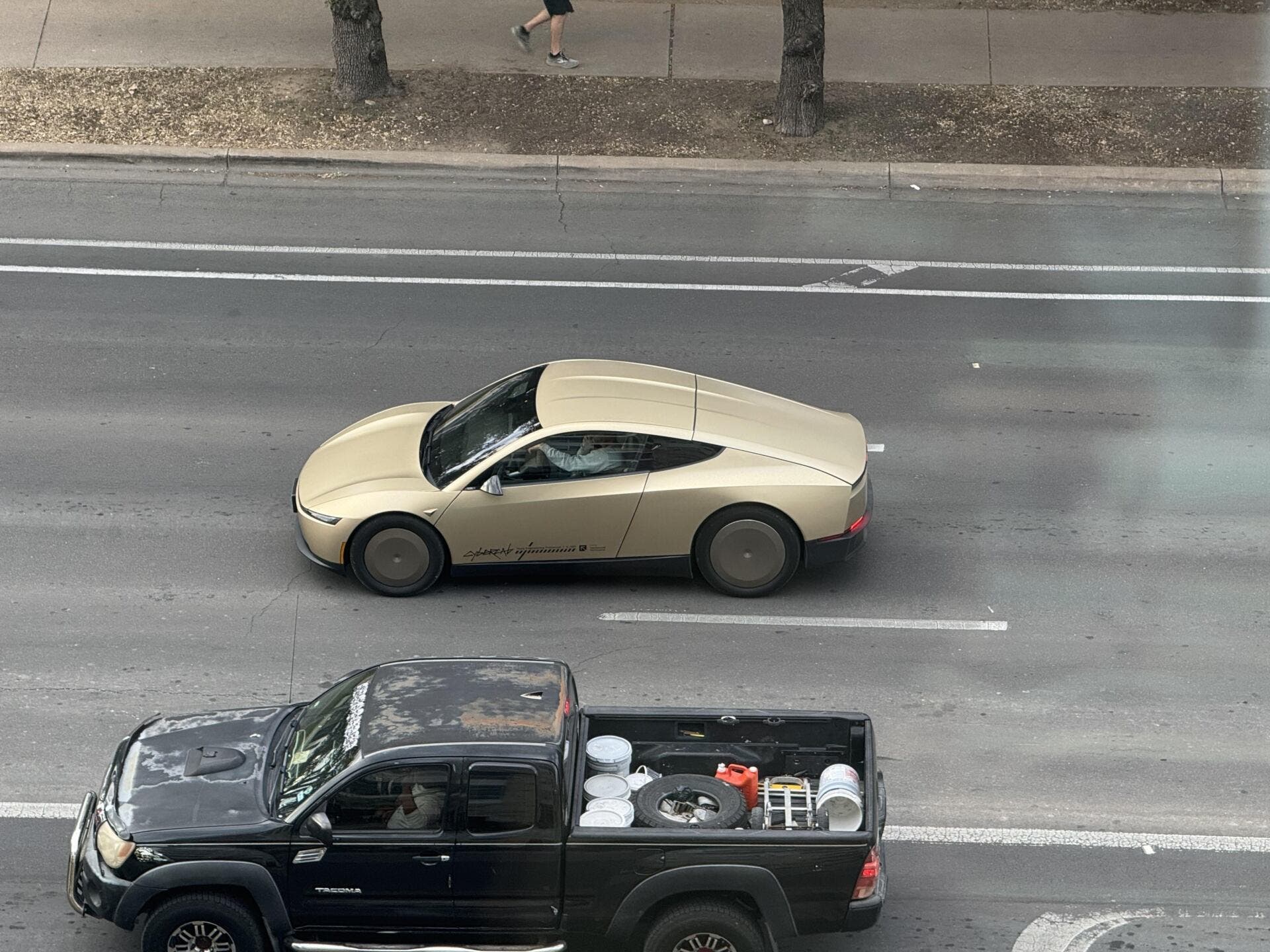
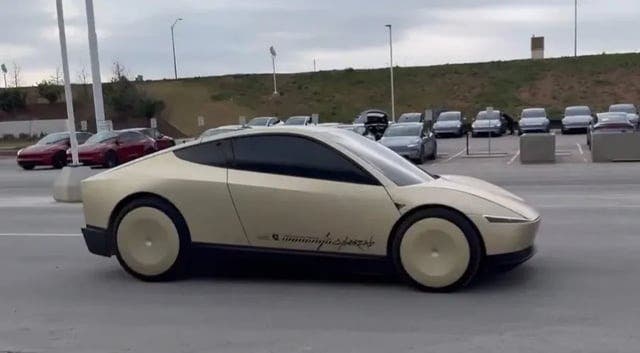
According to several Austin residents, these prototypes have become increasingly common on city streets. Texas is not the only testing ground, either. Similar sightings have also occurred in California, near Apple’s Visitor Center, as well as on the test track at Tesla’s Fremont factory. Together, these signs point to a clear intensification of real-world testing.
During Tesla’s 2025 shareholders’ meeting, Elon Musk identified April 2026 as a possible start date for Cybercab production. As often happens with Tesla’s CEO, the ambitions remain extremely high. Musk openly spoke about a near-science-fiction goal: producing one Cybercab every ten seconds. That target looks particularly ambitious in a context where competition, led by BYD, continues to grow more aggressive, while Tesla also allocates significant resources to robotics and artificial intelligence, as shown by the Optimus project.
Behind the striking images, however, the real situation remains far more complex. Videos of Cybercabs on public roads may suggest that Tesla’s robotaxi is almost ready, but major technological and, above all, regulatory hurdles still stand in the way. In the United States, Tesla has not yet secured approval to test fully autonomous vehicles without human supervision on public roads. For this reason, even the most advanced prototypes still carry a human operator.
The road toward full autonomy remains long and far from straightforward. Waymo, widely considered the industry benchmark today, has spent more than fifteen years in development and logged hundreds of millions of miles, yet it still operates only in limited areas and under controlled conditions. Regulatory scrutiny adds another layer of complexity, with the NHTSA currently investigating several incidents involving Teslas equipped with Full Self-Driving, including a fatal crash in 2023.
According to S&P Global Mobility, truly operational Level 5 autonomy will not arrive before 2035. Beyond technology, another major challenge remains: earning public trust, as many people still hesitate to ride in a vehicle with no steering wheel or pedals at all.