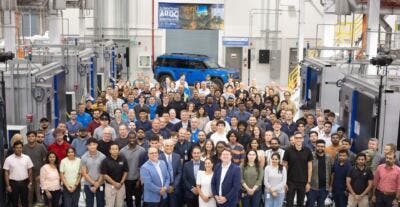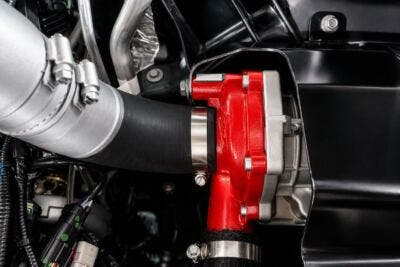
SRT has used a prototype powered by the 3.0-liter Hurricane High Output inline-six to demonstrate eBoost Air, a new electrically assisted forced-induction system designed to reduce turbo lag at low engine speeds. Stellantis has not identified which production vehicle could eventually receive the technology, nor has it announced horsepower figures or a launch date, leaving the project firmly in the experimental stage.
Stellantis SRT tests electric boost tech on the 3.0-liter Hurricane

Tim Kuniskis, head of American brands and marketing for Stellantis North America, said enthusiasts only care about technology when it produces a noticeable performance benefit. According to SRT, eBoost Air improves throttle response and brings the Hurricane’s behavior closer to that of the supercharged V8 engines previously used across Dodge, Ram and Jeep products.
The system uses an electrically driven compressor positioned in the intake tract ahead of the conventional turbochargers. Unlike an electric turbocharger, the unit does not rely on exhaust gases. When the driver demands torque before the main turbos have reached their operating speed, the e-compressor forces additional air into the intake and helps the turbochargers spool more quickly. Once the exhaust-driven turbos can provide the required boost on their own, the system returns airflow to the conventional path.
The technology addresses one of the main compromises associated with large turbochargers. Bigger units can support greater airflow and higher power at elevated engine speeds, but they generally take longer to build boost when exhaust flow remains low. That delay creates the familiar sensation of turbo lag.
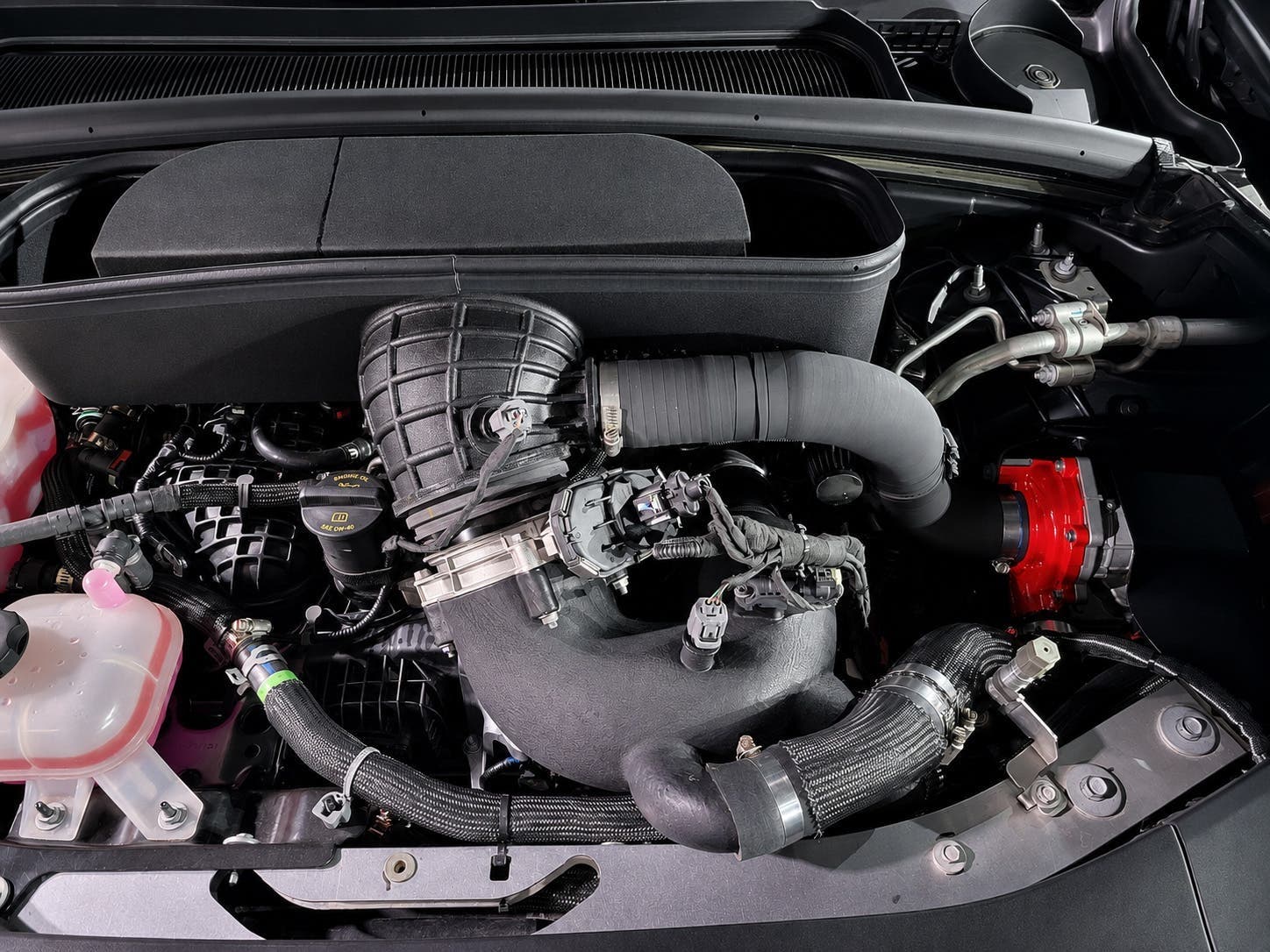
Manufacturers often reduce the problem with smaller turbochargers, twin-turbo layouts or electrically assisted systems. SRT’s solution instead adds a separate electric compressor that supports the existing turbos only when additional response is needed.
The concept could give Stellantis more freedom when developing future high-output Hurricane engines. If eBoost Air consistently improves low-rpm response, engineers could potentially use larger turbochargers without accepting the same penalty in drivability. That could help the inline-six deliver stronger top-end performance while preserving the immediate response associated with large supercharged V8s.
However, SRT has not released comparative torque curves, acceleration data, operating temperatures, energy consumption or durability results. Those figures will ultimately determine whether eBoost Air moves from a development prototype into a production vehicle.
The technology therefore remains a promising experiment rather than a confirmed future feature, but it shows how SRT intends to combine electrification with combustion engines instead of using electric technology only to replace them.