Stellantis is continuing its plan to transform the energy profile of its European production plants, with the aim of reducing dependence on the electricity grid, limiting exposure to price increases and making manufacturing less vulnerable to fluctuations in energy costs. The strategy relies on a set of complementary technologies, including solar power, battery storage systems, wind energy, geothermal energy and biomass. The goal is to generate clean energy directly at industrial sites, store it during periods of surplus production and use it during demand peaks.
Francesco Ciancia, Global Head of Manufacturing at Stellantis, described energy management as “a fundamental enabler of our decarbonization roadmap,” explaining that the expansion of on-site renewable solutions, combined with storage systems, allows the group to cut emissions, improve energy autonomy and strengthen industrial competitiveness.
Stellantis accelerates the energy transition of its European plants
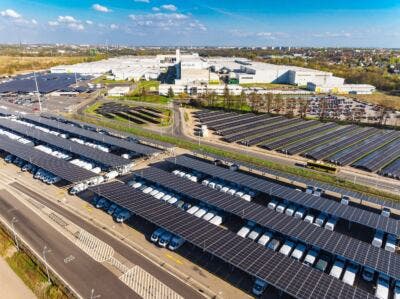
The solar plan represents the most visible part of the programme, with projects completed or under way at 27 European plants for a total capacity of more than 500 MW. Stellantis is installing panels on rooftops, parking canopies and available ground areas. Once fully operational, the infrastructure should avoid more than 100,000 tonnes of CO₂ emissions per year.
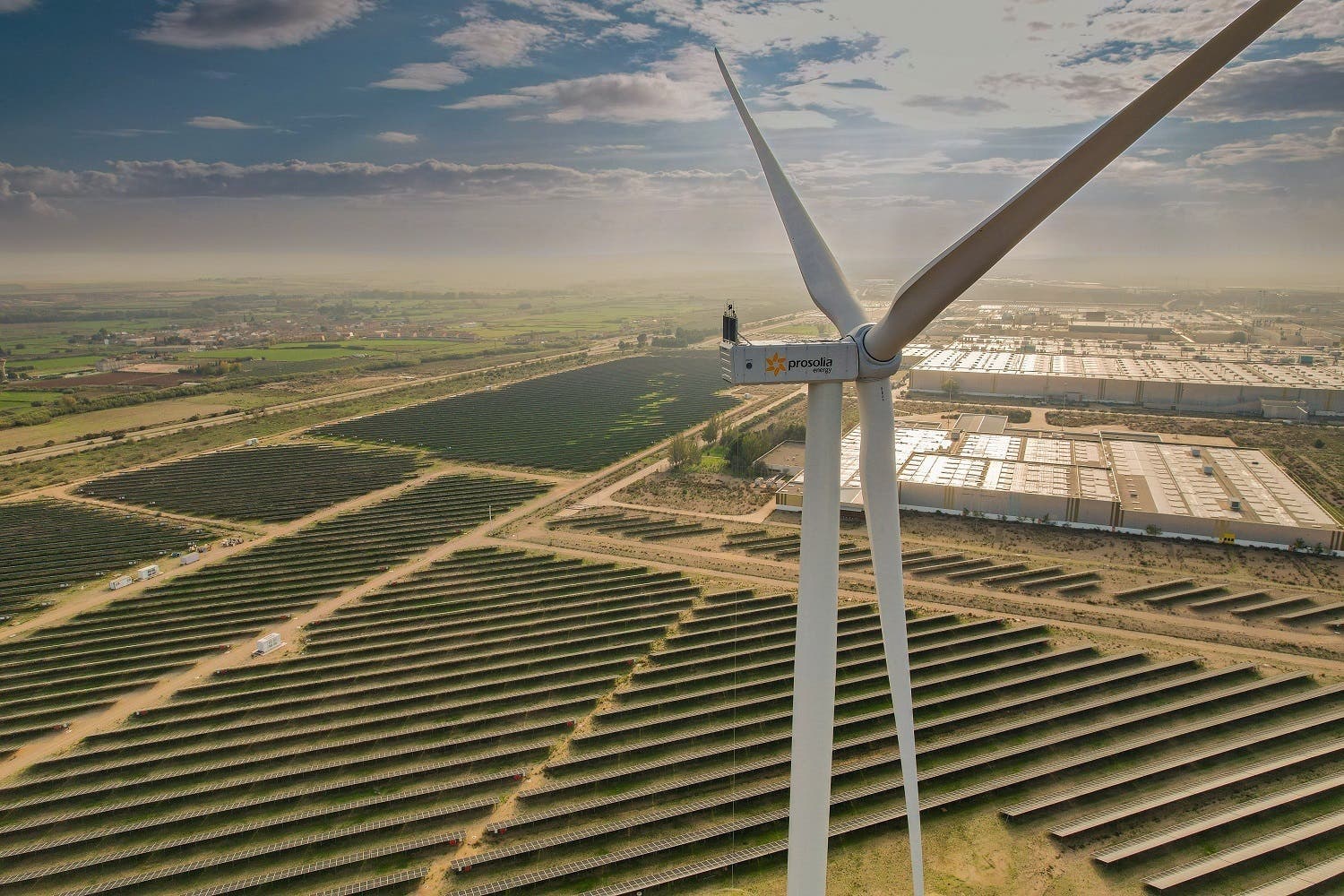
European plants currently cover 68% of their electricity needs with decarbonized energy. The group aims to reach 31% self-consumption by 2026 thanks to new on-site installations, with peaks of up to 80% at the most advanced sites, such as Zaragoza in Spain, where solar power works alongside wind energy.
The storage programme will involve 20 European industrial plants, with a total capacity of around 200 MWh, divided into two phases. Seven plants should come online by 2026, while the remaining 13 will follow over the next three years. This will allow Stellantis to store excess energy and reduce electricity purchases from the grid.
The Madrid plant, where a storage system is already operating, will serve as the reference model for extending the solution to other group facilities. Meanwhile, Tychy in Poland could reach around 60% self-consumption by the end of 2026.
Beyond solar energy, Stellantis has inaugurated a geothermal plant in Caen, France, allowing the site to cover around 30% of its energy needs independently. The system uses underground heat both for building heating and for some production processes. On the biomass front, Rennes launched a zero-emission heating network in 2025 based on locally sourced material, a solution already in use at Sochaux, Vesoul, Trnava and Kragujevac.
The transformation of Stellantis’ plants is moving in parallel with the group’s product plan. The objective is to turn factories from simple energy consumers into sites capable of producing, storing and managing energy independently, while reducing emissions, costs and vulnerability to external energy shocks.