

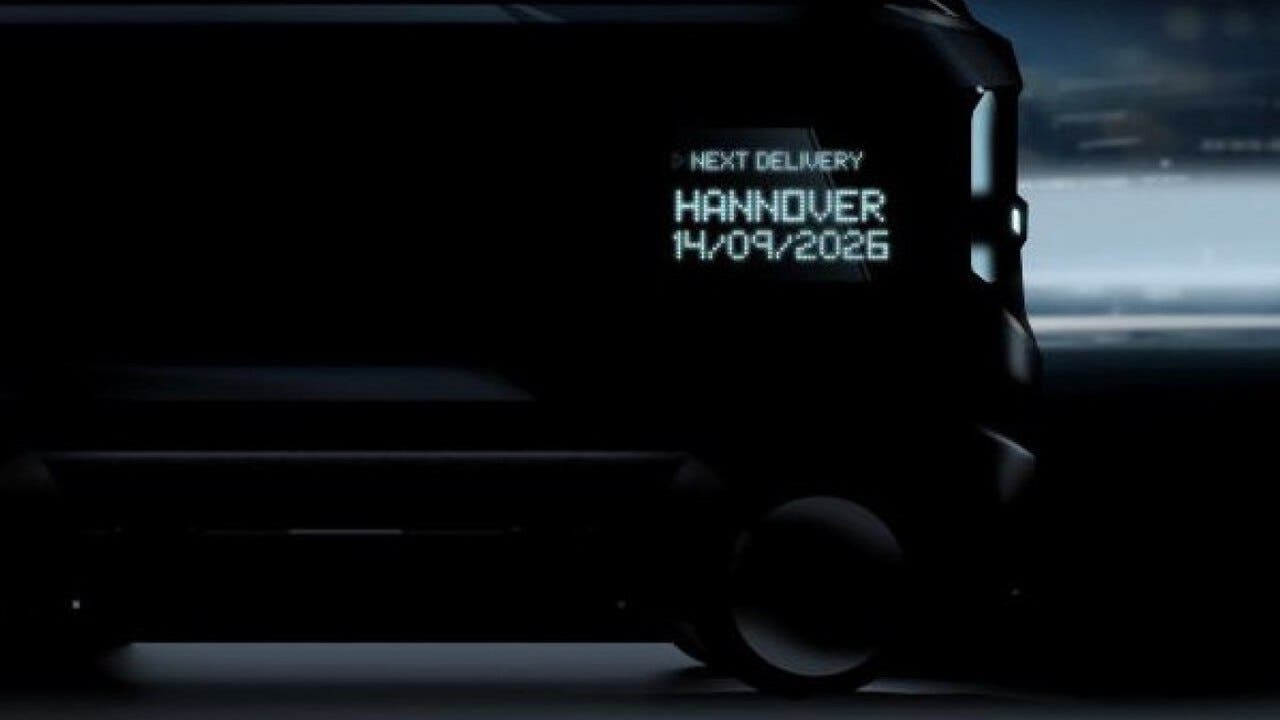
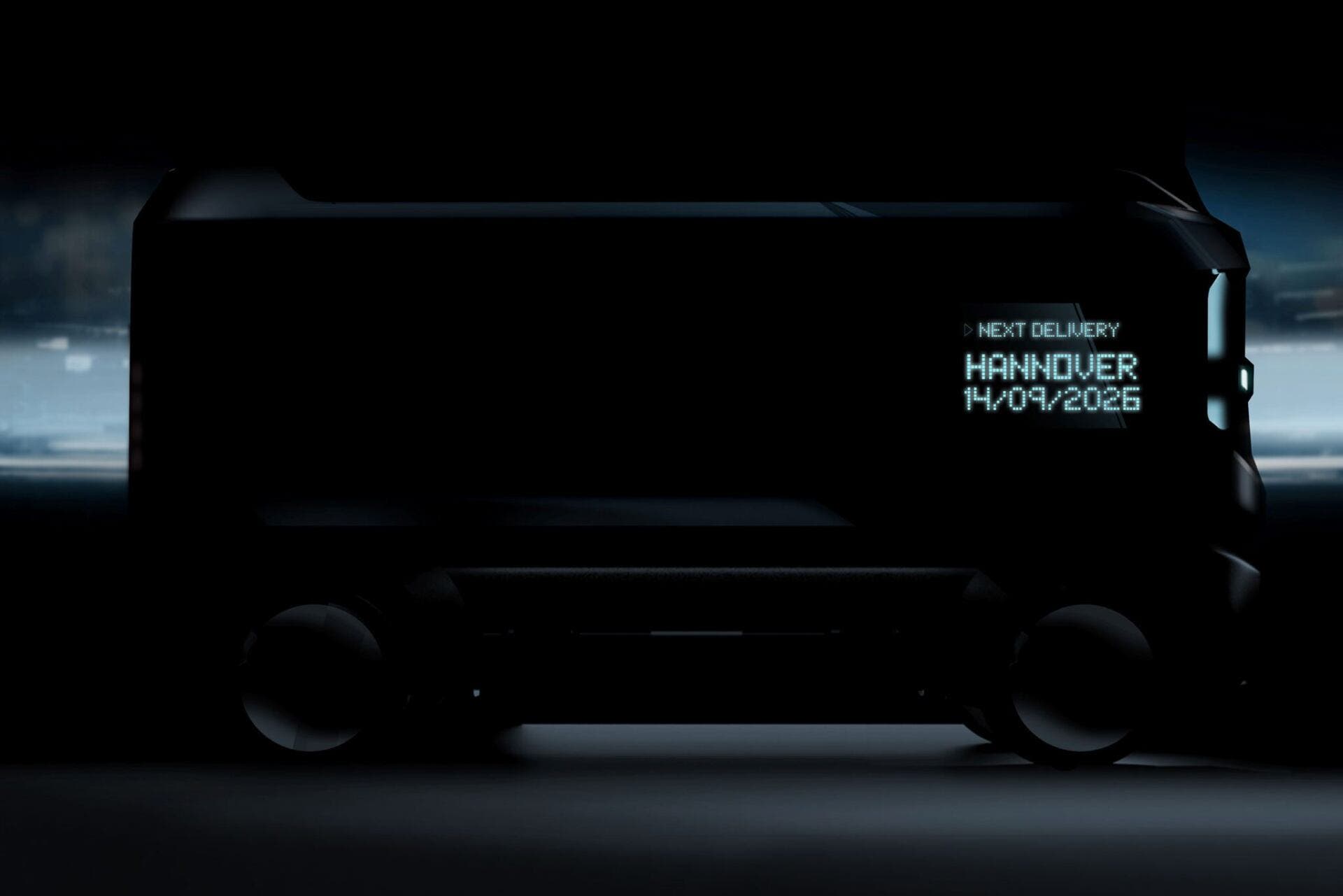
Feeling thoroughly left out at Stellantis’ recent financial showcase, the company’s commercial vehicle wing, Stellantis Pro One, decided it had enough of the snub. If Wall Street wouldn’t look at their current utilitarian lineup, they’d force them to look into the future with a literal, self-described “box on wheels” set to debut at the Hanover Motor Show this September.
Looking like a cross between a sci-fi transport pod and an aggressive skateboard platform, this autonomous concept features a prominent digital display and wheels pushed to the absolute outer edges. It is a zero-emission play designed to completely rethink last-mile delivery, promising to streamline operations and significantly slash running costs by taking human drivers entirely out of the equation.
But a futuristic autonomous toaster isn’t the only weapon in this corporate arsenal. To back up its grandiose claim of becoming the undisputed global leader in commercial vehicles by 2030, Stellantis Pro One announced an aggressive global offensive consisting of 11 new models. This includes a next-generation wave of mid-size and large vans engineered to offer an ideological buffet of powertrains, spanning battery-electric, internal combustion, and a very heavy emphasis on hybrid solutions. Naturally, the brand is promising best-in-class payload, maximum cargo volume, and effortless upfitting capabilities to win over pragmatic fleet managers.
For those who prefer an open bed over an enclosed cargo box, the rest of the 11-model product blitz leans heavily on pickup trucks. North American markets are scheduled to receive the long-rumored Dakota resurrection and the North American Rampage, alongside a sweeping overhaul of the existing light-duty and heavy-duty Ram truck lineups.
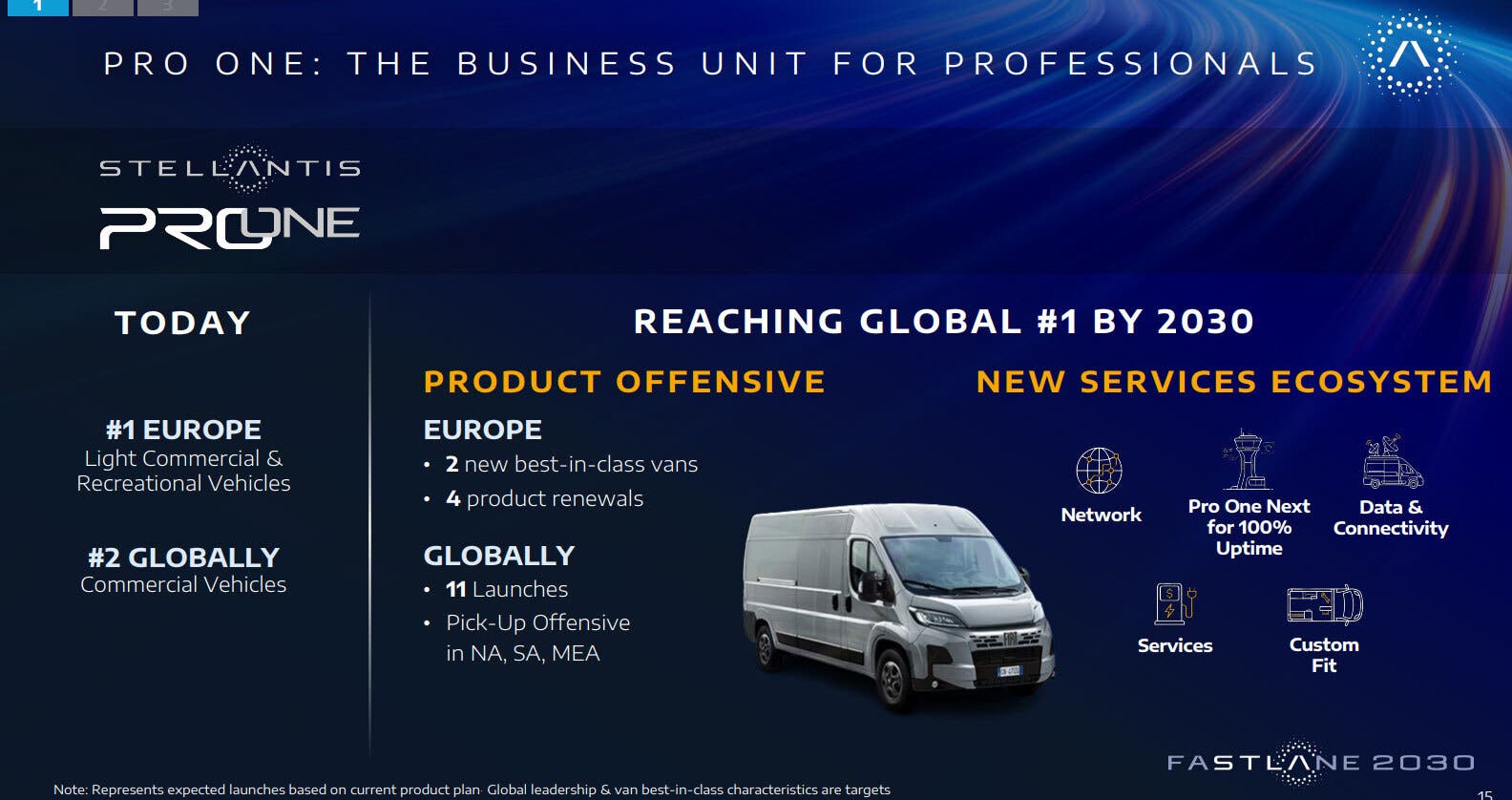
Meanwhile, across the equator, South American workhorses like the Fiat Strada and Fiat Toro are slated for much-needed refreshes. Even the unglamorous minivan segment is getting dragged into the modern era via a massive facelift for a global category leader and the introduction of two new electric variants. To keep prices competitive and range anxiety at bay, these haulers will deploy a dual-battery strategy utilizing both affordable LFP and energy-dense NMC chemistry.
Stellantis Pro One aims to boost its annual sales by 30% to hit roughly 2,145,000 units annually by 2030, proving that while V8s might grab the headlines, it’s the automated boxes that will actually fund the future.