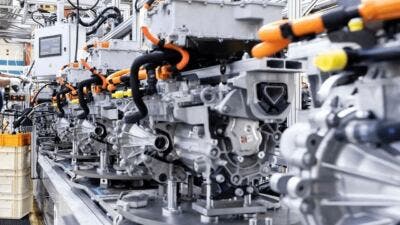
Stellantis’ electric strategy could be approaching a delicate turning point. According to Spanish website Motor.es, the group is evaluating the future of its collaboration with Nidec, the Japanese company specialized in electric motor production. Stellantis has not issued any official confirmation or definitive denial yet, but the issue carries weight, because Nidec has played anything but a secondary role in the group’s recent electrification history.
Stellantis and Nidec, rumours point to a possible rethink of the industrial partnership
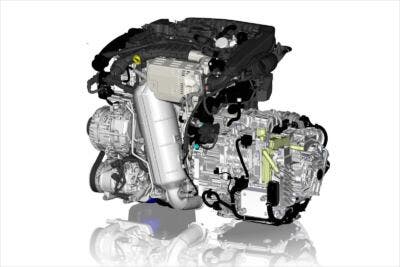
The agreement dates back to 2017, when the former PSA Group signed the deal with the aim of developing and producing electric motors for future zero-emission models. That agreement led to the creation of the Nidec PSA eMotors joint venture, which later became part of the Stellantis universe after the merger between PSA and FCA. The idea was to build a solid European supply chain for electric cars, combining PSA’s automotive expertise with Nidec’s technological know-how. It was a major operation, considering that the electric motor remains one of the pillars of a battery-powered vehicle, alongside cells, software and power electronics.
On the production side, the French plants in Trémery and Poissy played a crucial role. Trémery in particular became a symbol of the group’s industrial transformation, moving from traditional engines towards an increasingly electric vocation. The motors developed through the partnership reached several battery-electric models from Peugeot, Citroën, Opel, DS Automobiles, Fiat and Jeep. For this reason, any revision of the relationship with Nidec would inevitably have a significant industrial impact.
The internal situation at the Japanese company makes the picture more complex. Nidec has come under scrutiny over alleged accounting irregularities, governance issues and possible anomalies in quality controls. If confirmed, these issues could weaken trust between industrial partners, especially in a sector where production continuity, reliability and supply chain control matter decisively. This is the context behind the rumours of a possible rethink of the collaboration.
If Stellantis changes course, the group could strengthen internal development, revise part of its supply chain or look for new industrial solutions for the next generations of electric motors. Such a move would not have immediate consequences for models already on sale or for customers who currently own one of the group’s electric cars. The issue mainly concerns future platforms, strategic suppliers and the medium-term stability of the supply chain.
If the rumours gain confirmation, the Stellantis-Nidec dossier could become an important turning point for the group’s entire electric strategy. At a time when every carmaker wants to cut costs, improve efficiency and keep control of key technologies, supplier choices no longer represent a minor operational detail. They become real industrial decisions.