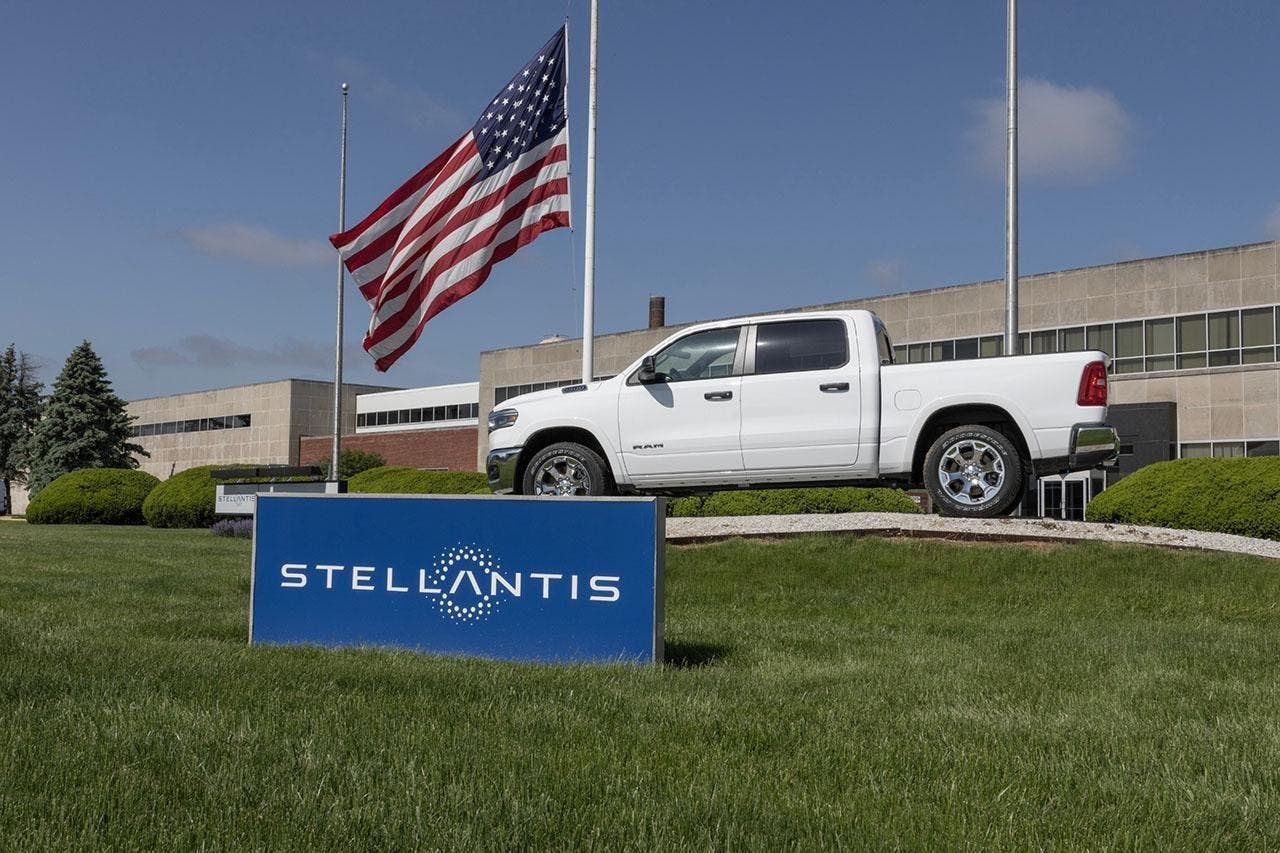
The future of hydrogen fuel cell technology just got brutally redefined, thanks to a harsh reality check delivered by Stellantis. Following months of uncertainty, the joint venture Symbio, equally owned by Michelin, Forvia, and Stellantis, has agreed to a drastic restructuring and refinancing package.
The urgency arose after Stellantis decided in July to completely scrap its hydrogen program, eliminating itself as the primary customer for the entire operation. Given that the automaker represented the 80% of Symbio’s business volume, this was less of a market shift and more of a corporate execution.

The leadership at Symbio minced no words, calling the restructuring essential for the company’s sheer survival. As CEO Jean-Baptiste Lucas stated, “The continuation of our activity requires a profound and difficult transformation”. This “profound transformation” involves a brutal reduction in workforce, cutting the company down to just 175 employees. Symbio now faces the challenge of adapting its strategy and organization to its drastically reduced scope of activity.
Despite the shocking reduction in size, Symbio is not surrendering its hydrogen ambitions. Instead, it is executing a sharp pivot away from passenger automotive applications (the market Stellantis just abandoned) toward heavier-duty and industrial uses. The company plans to maintain and develop its core hydrogen technologies, focusing on its 75 kW fuel cell system for applications in buses, coaches, and even, hilariously, data centers.
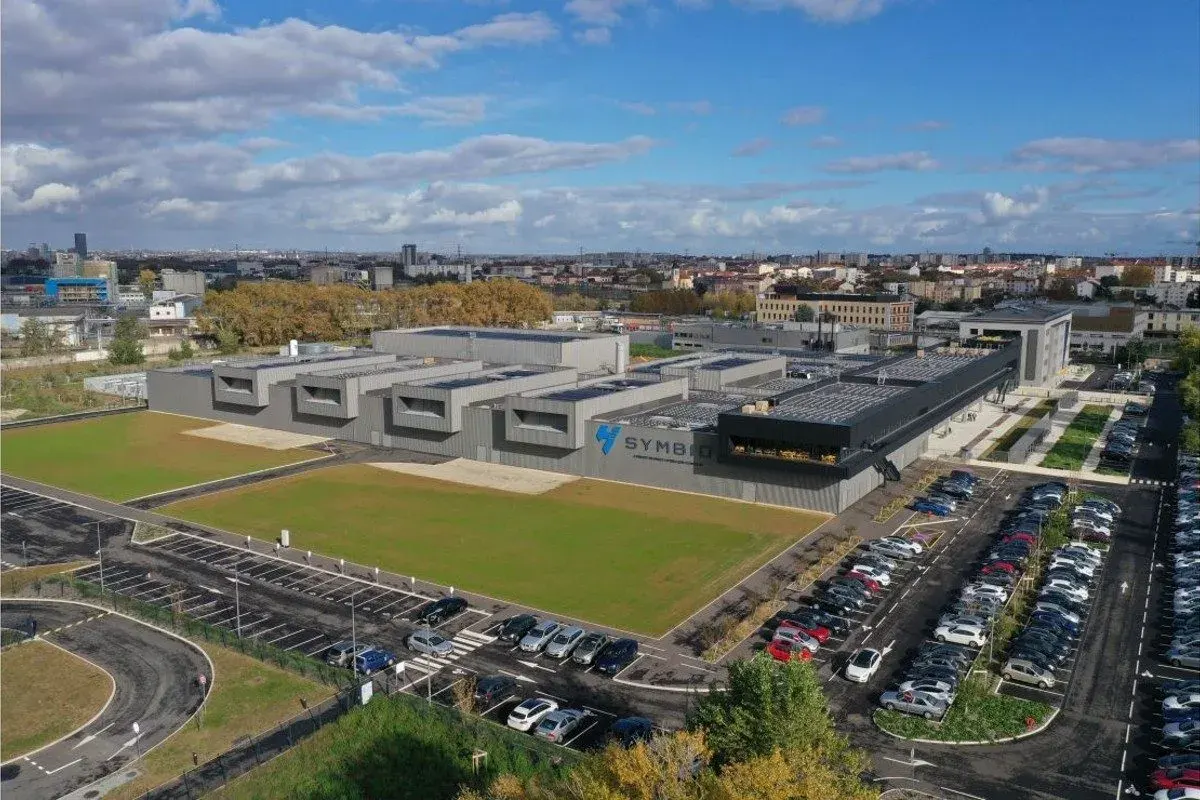
The gigafactory, dubbed SymphonHy in Saint-Fons, seems still scheduled to ramp up production, albeit likely at a slower pace initially. The revised goal is to hit an annual capacity of 10,000 systems between 2028 and 2030. Furthermore, the company is continuing R&D on a next-generation 150 kW fuel cell system designed specifically for heavy-duty vehicles, with a potential commercial launch penciled in for around 2030.
While the dream of hydrogen-powered cars may have temporarily faded in the face of Stellantis’ cold calculus, the technology still has a fighting chance in the world of big commercial vehicles.