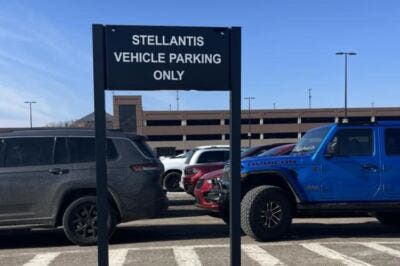
Stellantis has found itself at the center of an internal controversy in the United States over how it manages employee parking, after some workers complained about the strict enforcement of a policy that gives the best parking areas to vehicles from the group’s own brands. The issue had stayed mostly under the radar for a long time, helped by hybrid work. It appears to have flared up again with the return to in-person work five days a week, which has made pressure on available parking much more visible.
Stellantis faces backlash over employee parking rules in the U.S.
According to the accounts that have surfaced, security staff have been issuing warnings to employees who park in spaces reserved for Stellantis vehicles while driving cars from other automakers. The areas set aside for non-Stellantis vehicles appear to have shrunk, and with more employees returning to the office each day, those spaces fill up quickly. That leaves workers who drive rival-brand vehicles scrambling for less convenient alternatives.
Based on what affected employees have said, the enforcement system does not begin with an immediate fine but instead works through the accumulation of warnings. Once a driver passes a certain number of notices, the risk is that the car could be immobilized with a wheel clamp, the so-called boot, forcing the owner to contact a supervisor to have it removed. Beyond the practical inconvenience, the process can also create a fair amount of personal embarrassment.
When asked about the situation, Stellantis limited its response to a statement from a spokesperson saying that employees must follow internal signage and communications regarding parking use. The story, however, took on an almost absurd twist when one employee said security had issued a warning for parking an Eagle Talon, a model that in the 1990s belonged to a brand connected to the Chrysler world. That detail added fuel to the irony on social media, where many joked that those enforcing the rules might need a better grasp of automotive history.

Even if the issue seems minor on the surface, it fits into a broader context. Similar policies appear to exist at other major American automakers, with the goal of reinforcing company identity and encouraging employees to drive the products they help design, build, and sell. That logic makes sense at a symbolic level, but it can also create tension when it collides with personal choice and the everyday needs of employees.
Mandatory return-to-office policies have already reopened debate at many American companies over the relationship between employers and workers, and even something that might seem secondary, such as parking management, can quickly become another source of friction and frustration.