

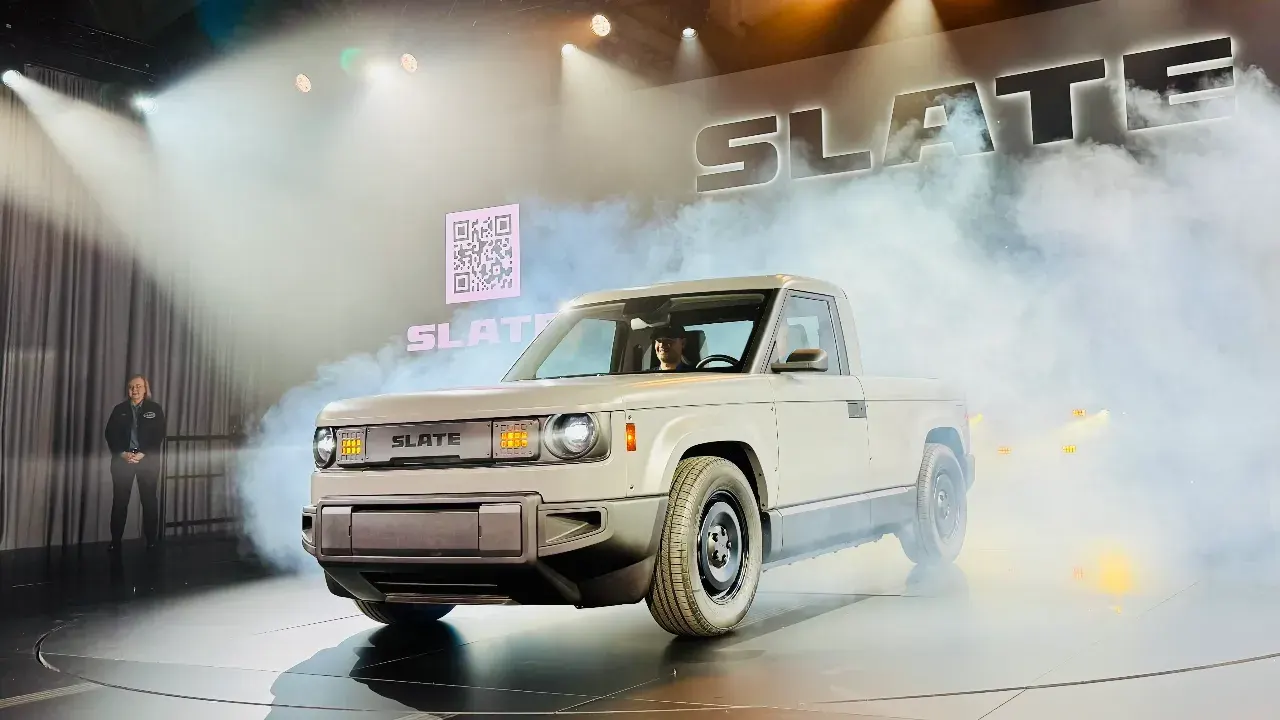
In an era where electric vehicles have become bloated cathedrals of over-engineering, dripping with silicon and unnecessary leather, a new contender has emerged from the shadows of a repurposed printing plant in Warsaw, Indiana. Slate Auto is launching a pickup, a manifesto written in unpainted plastic. While the industry giants scramble to figure out how many screens can fit on a dashboard, Slate has decided the answer is zero.
The numbers suggest that “The Amazon Way” has officially pivoted from cardboard boxes to electric ones. Having just secured a $650 million Series C round led by TWG Global, Slate’s war chest now sits at a formidable $1.4 billion. This isn’t just “startup luck”, it’s a calculated invasion led by Jeff Wilke and Peter Faricy, the men who helped build the Amazon empire.
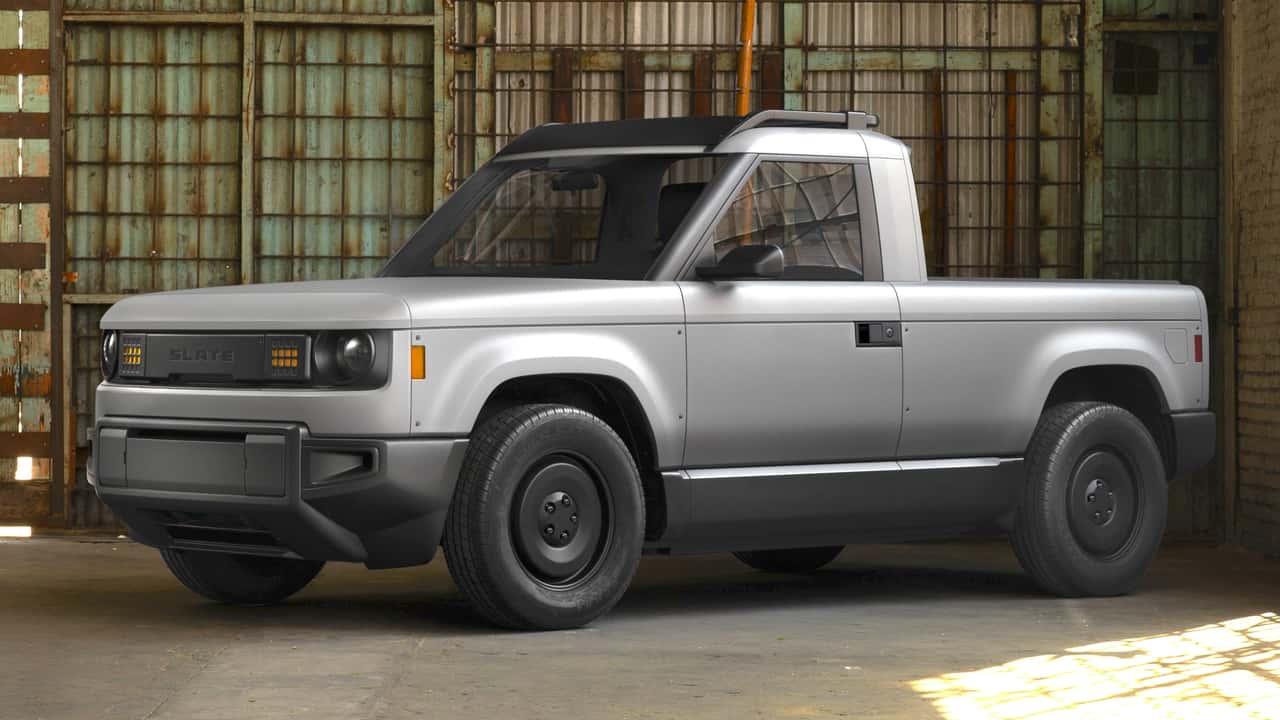
Even Jeff Bezos is placing his bets on this ascetic vision of mobility. The Slate pickup is a logistical dream, built from a mere 600 components, a fraction of the mechanical labyrinth found in a traditional EV. It arrives largely unfinished, sporting unpainted composite body panels that skip the billion-dollar “purgatory” of the paint shop entirely.
Forget the “infotainment” wars. Slate’s solution to the digital craze is your own pocket. The base model uses your smartphone for everything. It features manual windows and a modest 57.2 kWh battery offering 150 miles of range. If you’re feeling “lavish”, a larger juice box provides 240 miles. There’s even a $5,000 “Meccano” kit to turn your truck into an SUV by bolting on a safety cage and a bench seat.
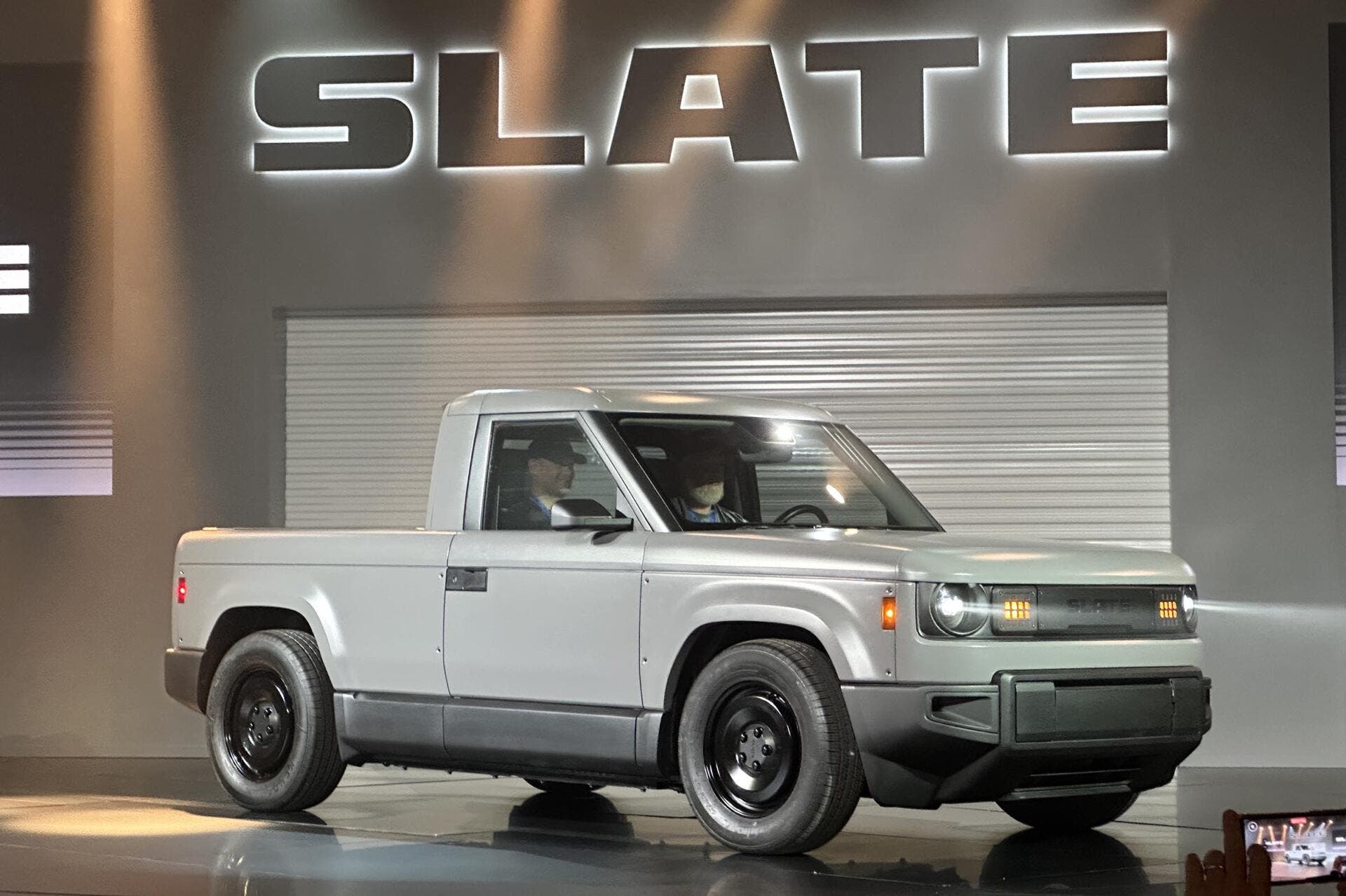
It’s gritty, it’s utilitarian, and at an estimated $25,000, it’s a direct response to a world where the Strait of Hormuz closure has turned gasoline into liquid gold. Although the death of federal tax credits pushed the price up from the initial $20,000 target, the 160,000 people holding reservations don’t seem to care. They aren’t buying a status symbol, they’re buying a survival tool for the electric age.
By outsourcing service to 4,000 independent shops and targeting 150,000 units a year, Slate is betting that we’re tired of the “smartphone on wheels” and ready for a truck that actually acts like one.