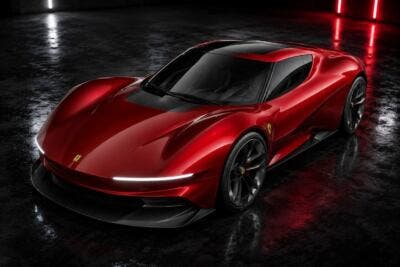
A smaller, lighter Ferrari focused on agility rather than extreme power sits at the center of a new render that revives the Dino name. The images show a modern mid-engine berlinetta inspired by the classic 206 GT and 246 GT.
Ferrari Dino returns in a striking digital concept
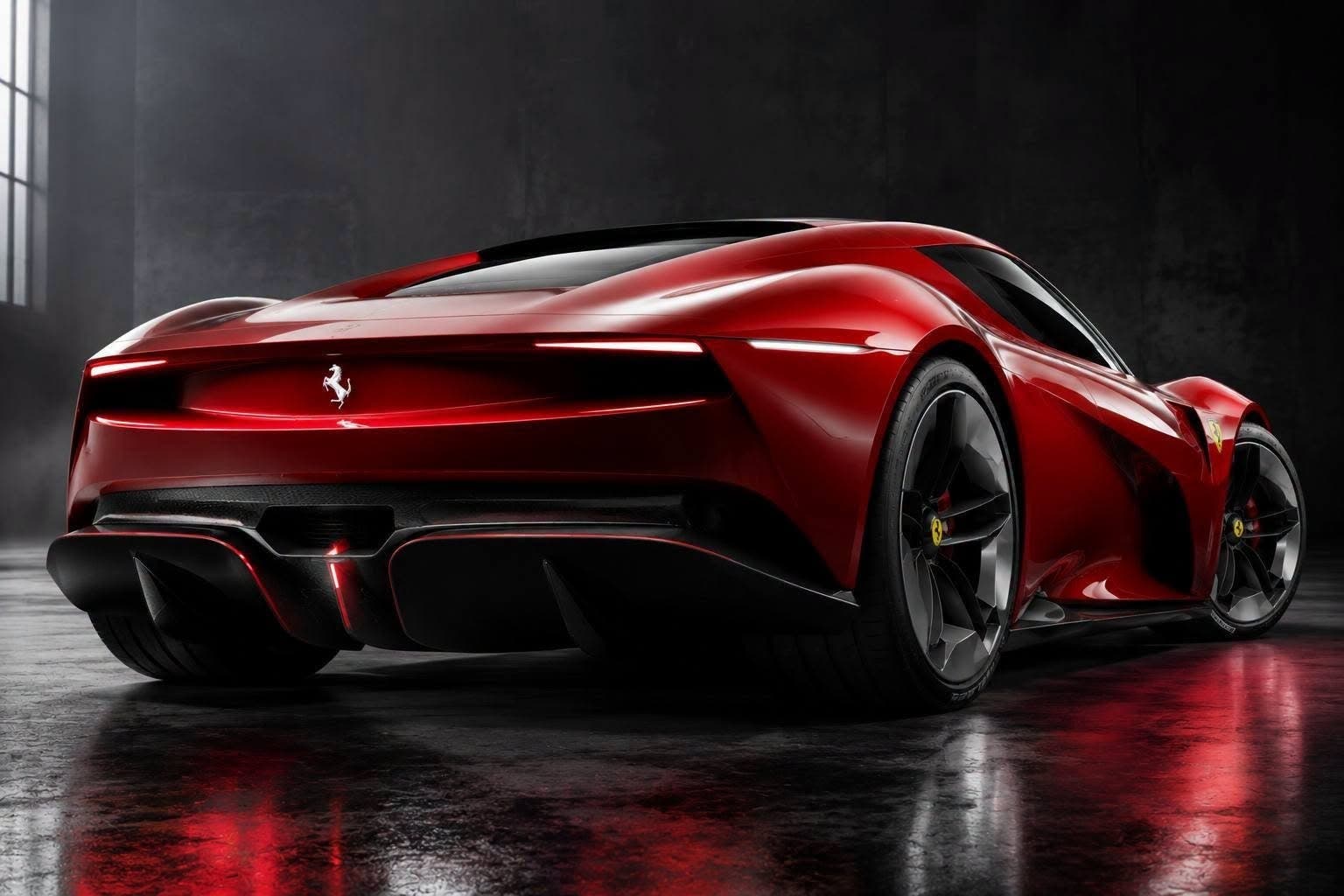
The body adopts far more aggressive proportions than the original cars, but it still keeps a compact layout and a forward-positioned cabin. A wide front end sits low to the ground and features a thin light bar, while pronounced fenders rise clearly from the body and guide the eye toward a black roof that wraps over the upper section of the car.
Along the sides, large openings visually direct airflow toward the rear and break up sculpted surfaces designed to change character depending on the light. The rear echoes the front’s horizontal theme with an almost continuous lighting signature, leaving the Prancing Horse at the center and concentrating a particularly large diffuser in the lower section.
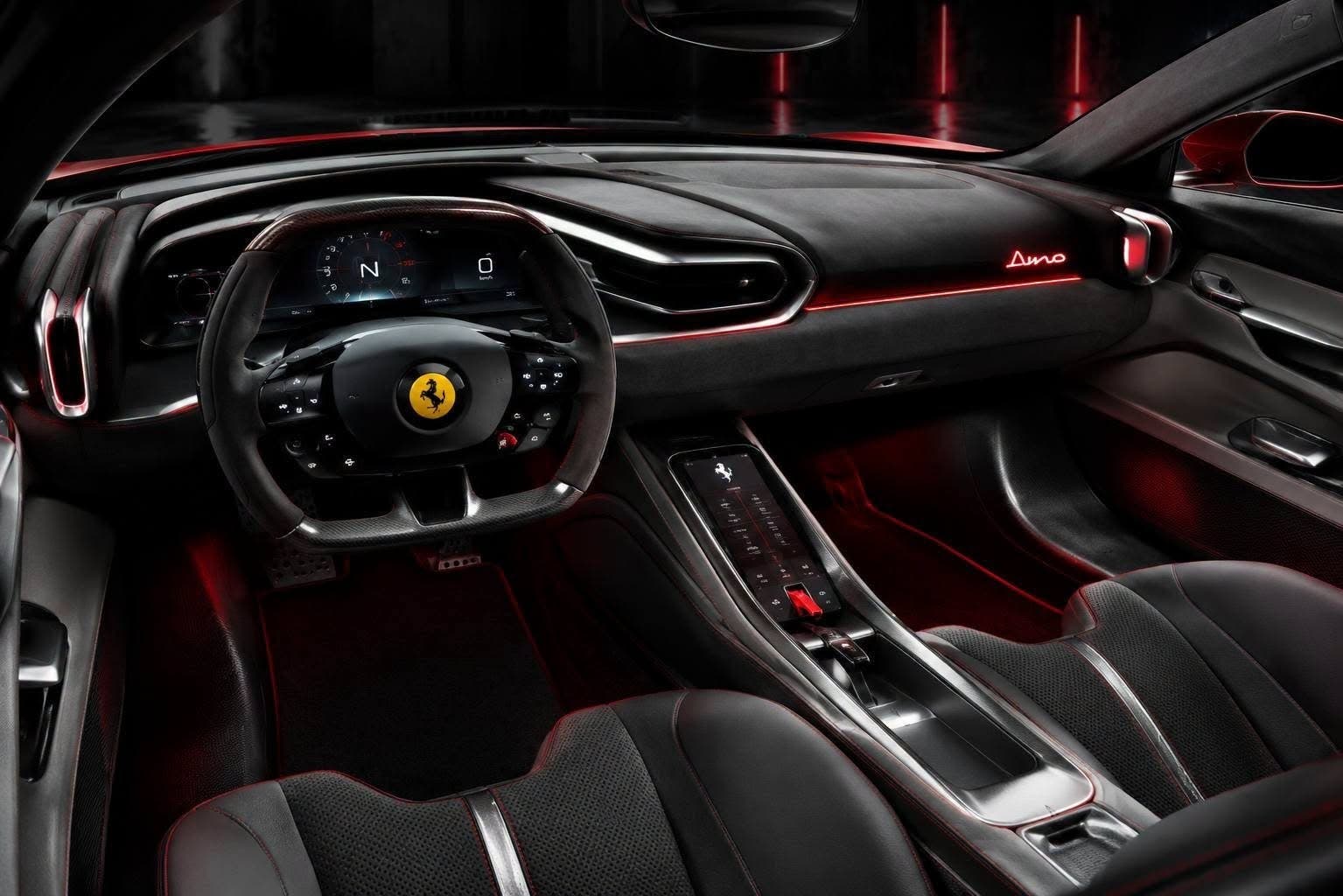
Inside, the driving position follows the same modern interpretation. A driver-focused dashboard and a tall center tunnel clearly separate the two seats. A digital instrument cluster sits behind a compact steering wheel, while dark finishes mix with carbon-fiber trim and red ambient lighting to reinforce the car’s sporty atmosphere.
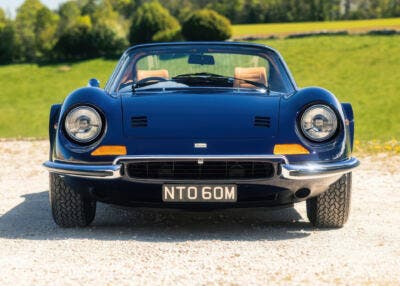
The Dino name comes from Alfredo Ferrari, Enzo Ferrari’s son, who died at a young age. Ferrari used the name for a family of cars that initially did not carry Ferrari badging on the hood. The 206 GT, introduced in 1967, used a 2.0-liter mid-mounted V6 with 180 horsepower and introduced a technical layout that would become increasingly important in Maranello’s road-going sports cars.
Ferrari followed it with the 246 GT in 1969, powered by a 2.4-liter V6 rated at 195 horsepower. The open-top 246 GTS arrived in 1972. Compact dimensions, relatively low weight and balanced weight distribution helped build the Dino’s reputation as a sports car celebrated more for its handling balance than outright speed.
Ferrari’s current lineup moves in a very different direction, as shown by the 849-horsepower plug-in hybrid Testarossa. By the end of 2026, the company also expects to begin deliveries of its first fully electric model, expanding the range of technologies used across the brand.
A Dino revival does not appear in Ferrari’s announced plans, and the render offers no clues about its engine, platform or a possible production future. Instead, the digital concept simply shows how Ferrari could reinterpret the idea of a smaller sports car today, without suggesting any official intent from the automaker.