


In the pages of The Times, Jeremy Clarkson delivered yet another provocation in his unmistakable style, this time focusing on an issue that touches the core of Italian national pride: Lancia. The British journalist argues that shutting down the brand for financial reasons would feel emotionally devastating for Italy, comparable to “demolishing the Colosseum to build a roundabout.”
Jeremy Clarkson praises Lancia’s historic impact on the auto industry
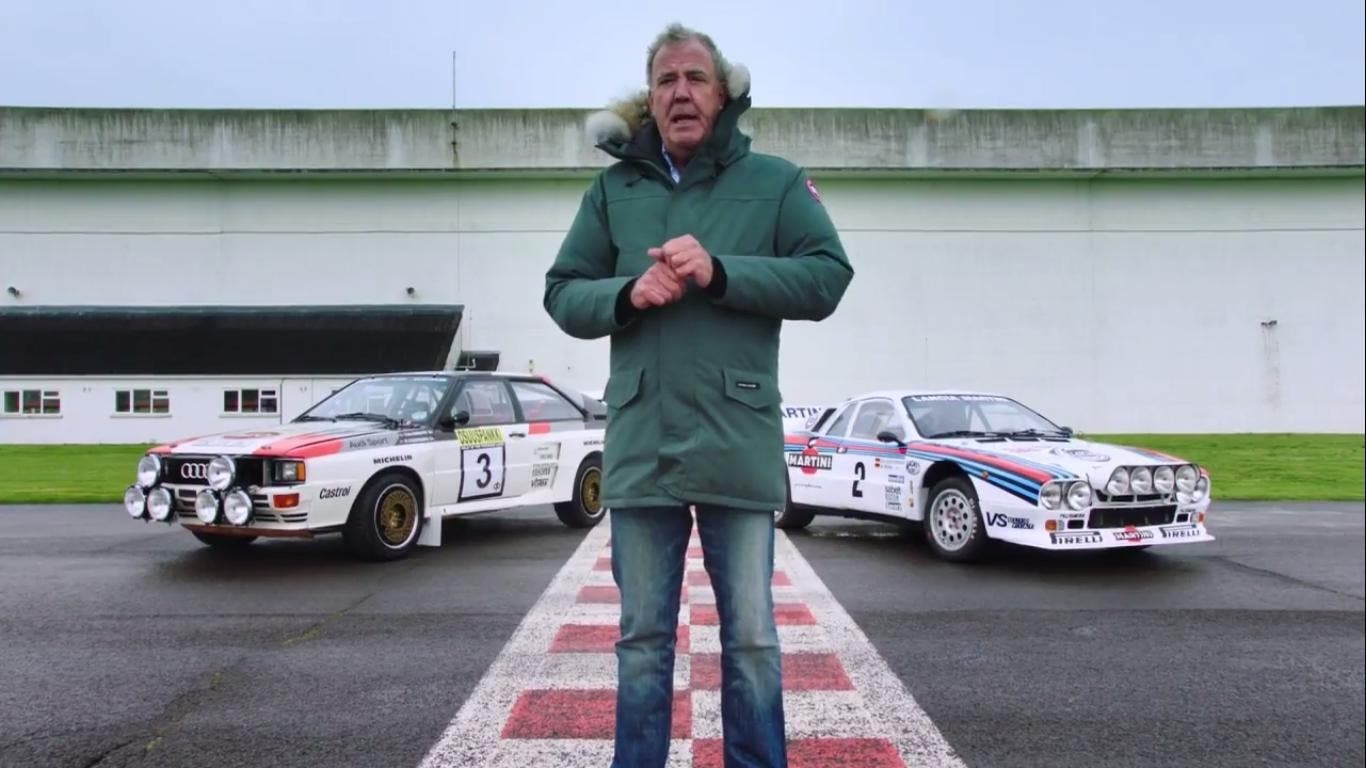
Clarkson bases his argument on a cultural observation: “In Italy, a car is a living being.” In his view, Italians relate to automobiles in a way that goes far beyond industrial logic and financial calculations. It is not about balance sheets or profit, but about identity and belonging. That, he says, makes the end of Lancia “simply unthinkable,” despite its commercial struggles.
Today, the Italian brand relies almost entirely on the Ypsilon while waiting for the new Gamma. Clarkson does not hold back. He claims the city car “makes no financial sense,” arguing that its limited sales would not justify the survival of the brand under purely corporate logic. He even suggests Stellantis may have considered drastic scenarios, only to face “the opposition of an army” of supporters who would never accept the loss of such a historic name.

Because history is exactly what defines Lancia. Clarkson acknowledges the brand’s extraordinary legacy, shaped by legendary models such as the Integrale, the 037, the Aprilia, and the Stratos. More importantly, he highlights innovations that transformed the automotive industry, including independent front suspension, the V6 engine, the five-speed gearbox, and the monocoque chassis. “Lancia was the first to truly design a car around aerodynamics,” Clarkson added. For the journalist, that heritage outweighs a few losses on the balance sheet.
His final remark turns toward his own country. “We did it, because we are not passionate about cars,” he admits, referring to the disappearance of historic British brands. According to Clarkson, this cultural difference explains why such a decision would be impossible in Italy.