Hyundai decided to drop some actual reality into the Milano Design Week mix. The message was shouted with the kind of confidence that makes legacy European brands nervous. Meet the IONIQ 3, the little sibling that has no intention of playing second fiddle to the IONIQ 5.
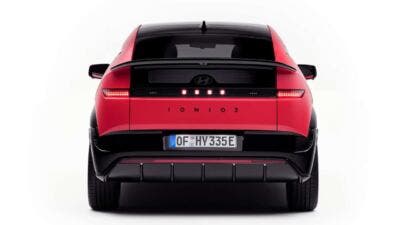
Hyundai calls the design language “Aero Hatch”, which sounds like a yoga pose for commuters but is actually a clever attempt to fix the original sin of compact EVs: the “boring box” syndrome. It’s a silhouette that tries to cheat the wind while squeezing every millimeter of space out of the interior.
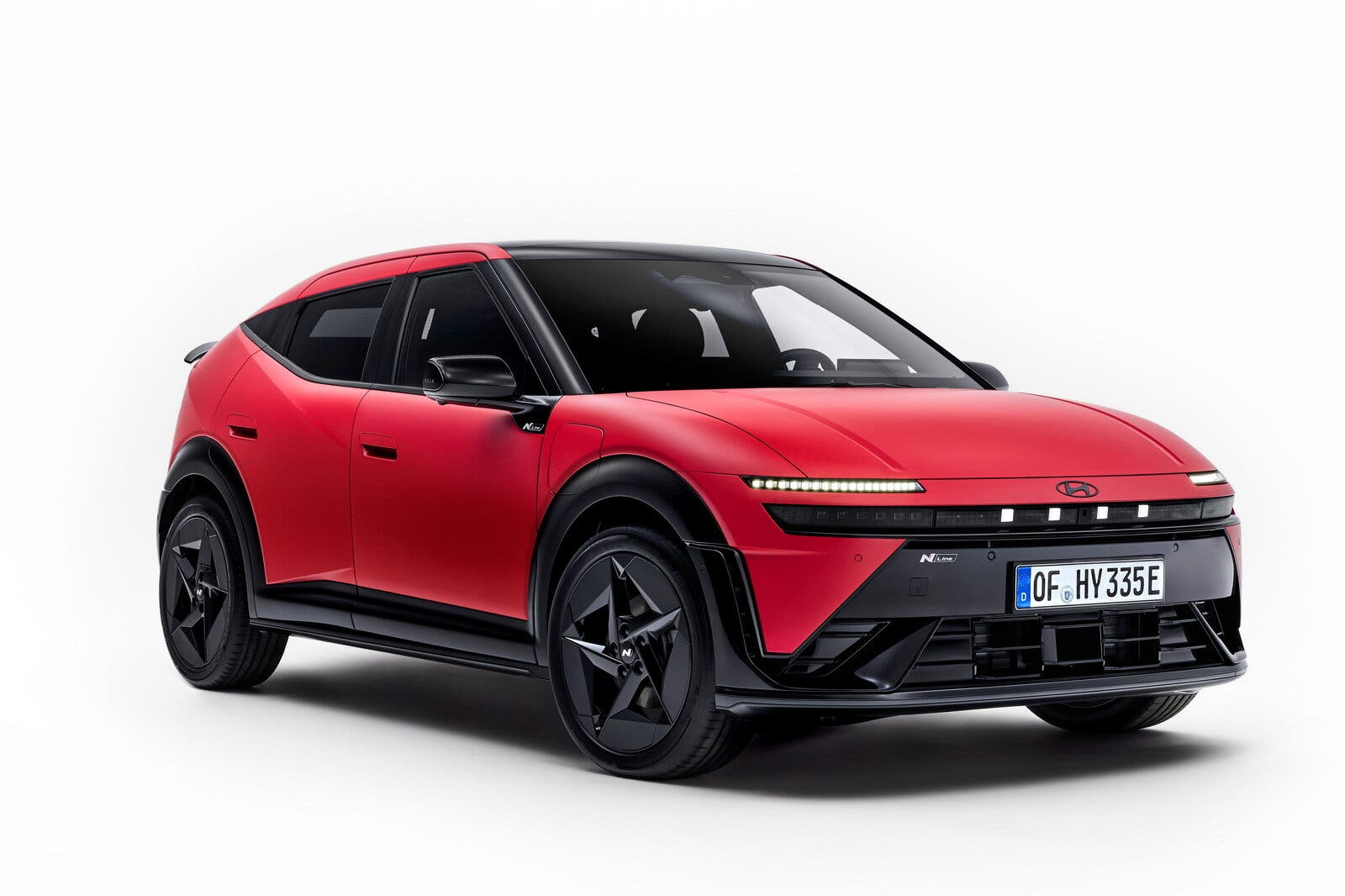
The signature pixel lights are still there, but the front end now features four dots representing the letter “H” in Morse code. It’s a detail for the nerds, the kind of subtle branding that you either appreciate or completely ignore while you’re fighting for a parking spot in a crowded city.
Underneath this “Aero” skin lies the E-GMP platform, the same architectural backbone that supports its larger, more expensive siblings. You get two battery flavors: a 42.2 kWh pack offering a modest 213 miles of range, or a 61 kWh long-range version that stretches things to a respectable 308 miles.
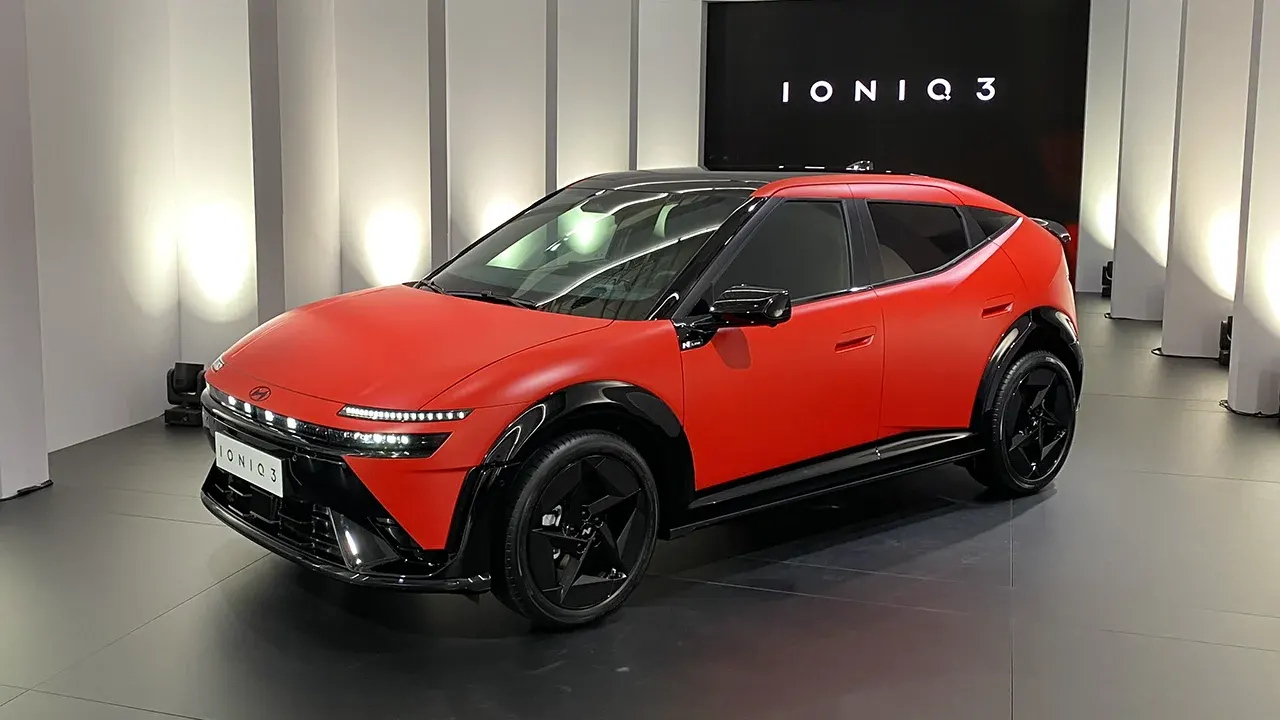
The single motor delivers 144 HP, a sobering, honest number that won’t win you any drag races against a Tesla, but it’s more than enough to handle the daily grind without a panic attack. And since it can juice up from 10% to 80% in 30 minutes, you barely have time to finish a mediocre espresso before hitting the road again.
Inside, Hyundai is betting big on the “smartphone on wheels” vibe with the new Pleos Connect system. Whether you opt for the 12.9-inch or the massive 14.6-inch screen, the goal is clear: make the car feel like your living room, just with more airbags. Speaking of safety, the SmartSense suite is packed with enough acronyms to satisfy a government agency, from Highway Driving Assist 2 to Remote Smart Parking.
Built in Turkey but designed with a European soul, the IONIQ 3 is targeting a price point around $30,000. Hyundai is not expected to bring this model to the US mainly due to the Trump administration’s tariffs. If Hyundai can actually hold that line, they’ve filled a void that the rest of the industry has been too distracted to notice.