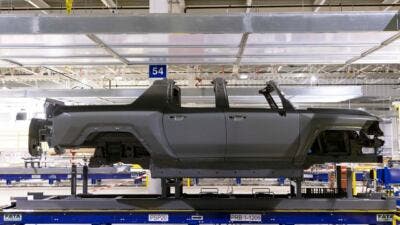
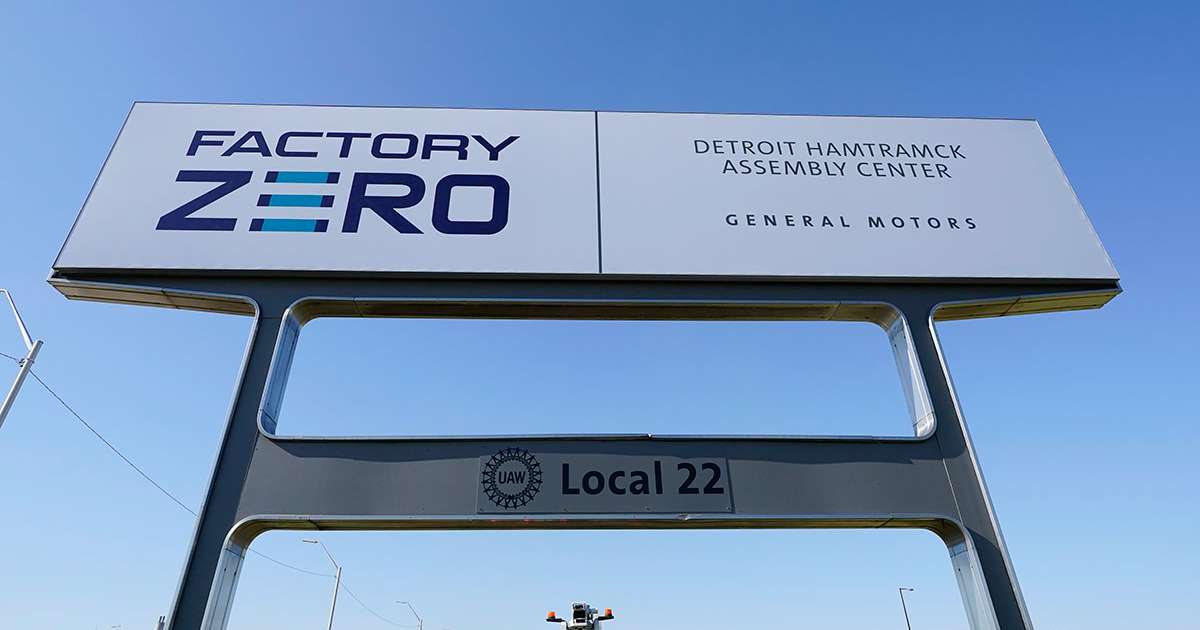
GM’s Factory Zero plant in Detroit-Hamtramck, which the company transformed in 2021 through an investment of about $2.2 billion at the center of its electric vehicle offensive, has stopped production and entered a temporary shutdown phase affecting about 1,300 workers. That move signals the weakness of battery-electric vehicle demand in the United States and is forcing the group to substantially revise its industrial plans. GM had conceived the plant as one of the pillars of its electric transition, but in recent months the facility had already gone through periods of slowdown and interruption. At the start of the year, it also lost an entire production shift, with heavy consequences for employment.
GM halts production at Factory Zero as demand for electric trucks weakens
In the market, models such as the Chevrolet Silverado EV, GMC Sierra EV, and Cadillac Escalade IQ are struggling to reach their expected sales volumes. GM officially describes the move as a production adjustment tied to real demand, but the gap between the original expectations and the actual results now looks difficult to hide. As EV momentum fades, internal-combustion vehicles are regaining ground in the group’s strategy.
At other production sites such as Orion Assembly, plans originally tied to expanding electric pickup output are giving way to a configuration more favorable to gasoline-powered models. In Flint, GM is increasing production rates to support traditional vehicles, a sign that the U.S. market continues to reward the most established formulas, especially in the full-size pickup and large SUV segments.
The new political backdrop has played an important role in changing the broader conditions, with reduced purchase incentives for electric vehicles and a relaxation of some emissions-related regulatory pressure. Those changes have weakened the institutional support that had helped sustain the EV sector over the past few years.
Without those incentives, price becomes the decisive factor again in buying decisions, and a large share of American customers continues to prefer internal-combustion power, especially in segments where attachment to traditional solutions remains deeply rooted.
Factory Zero offers a very clear picture of the phase the U.S. auto industry is now facing. EVs are not disappearing from the landscape, but they are losing the central role many expected them to take in the short term. At the same time, gasoline and diesel vehicles are reclaiming a broader space in the industrial strategies of Detroit’s major automakers, forcing a reset of priorities that would have seemed unlikely just a few years ago.