Ford Global Technologies has obtained a U.S. patent, filed on December 4, 2023 and published on May 5, 2026, describing a system that could allow a parked vehicle to move autonomously at very low speed when it detects an imminent collision risk. The document, titled “System for Detecting Moving Objects”, outlines an architecture designed to constantly monitor the surrounding environment and assess the probability that a moving object could hit the bodywork.
Ford patent could help parked cars avoid low-speed collisions
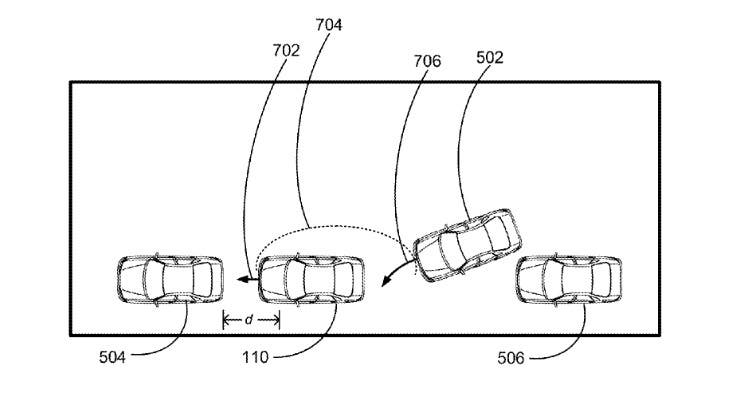
The system would rely on a combination of cameras, radar and ultrasonic sensors, technologies already common in modern driver-assistance packages. Ford would use them to create a virtual grid around the vehicle and track nearby objects in real time. A dedicated algorithm would calculate the threat level by analyzing the object’s path, the probability of impact and the remaining time before possible contact, in order to decide whether the system needs to intervene.
If the risk exceeds a preset threshold, the vehicle would not move immediately. The protocol first requires a visual or acoustic warning through the lights and horn. Only if no one reacts, and only after checking that the available space is sufficient and safe, would the car reposition itself autonomously. The patent also includes a function called “light impact detection” which would allow the vehicle to record images and data for documentation purposes if an impact cannot be avoided.
The idea fits into a development path that Ford has explored for some time. The American automaker already offers systems such as automatic emergency braking, Pre-Collision Assist, blind spot monitoring and Exit Warning, which checks the surroundings when the vehicle is stationary to help avoid incidents such as opening a door as a cyclist passes. In recent months, another patent also emerged for a technology that would allow a vehicle to reverse autonomously to free access to the trunk or frunk when the distance from an obstacle is too short.
Several questions remain, especially from a regulatory and insurance standpoint. The patent does not specify how much space the system would need to authorize movement, or how often it could activate in crowded or very tight environments. Liability also raises a delicate issue, since a parked car moving without a driver on board could hit another vehicle or surprise a pedestrian, creating scenarios that current automated-driving rules do not yet fully regulate.
As often happens with patents, there is no guarantee that Ford will actually implement this technology on a production model. Even so, the document confirms the brand’s interest in vehicles capable of acting proactively even when parked, protecting both the bodywork and the surrounding environment after the driver has already walked away.