

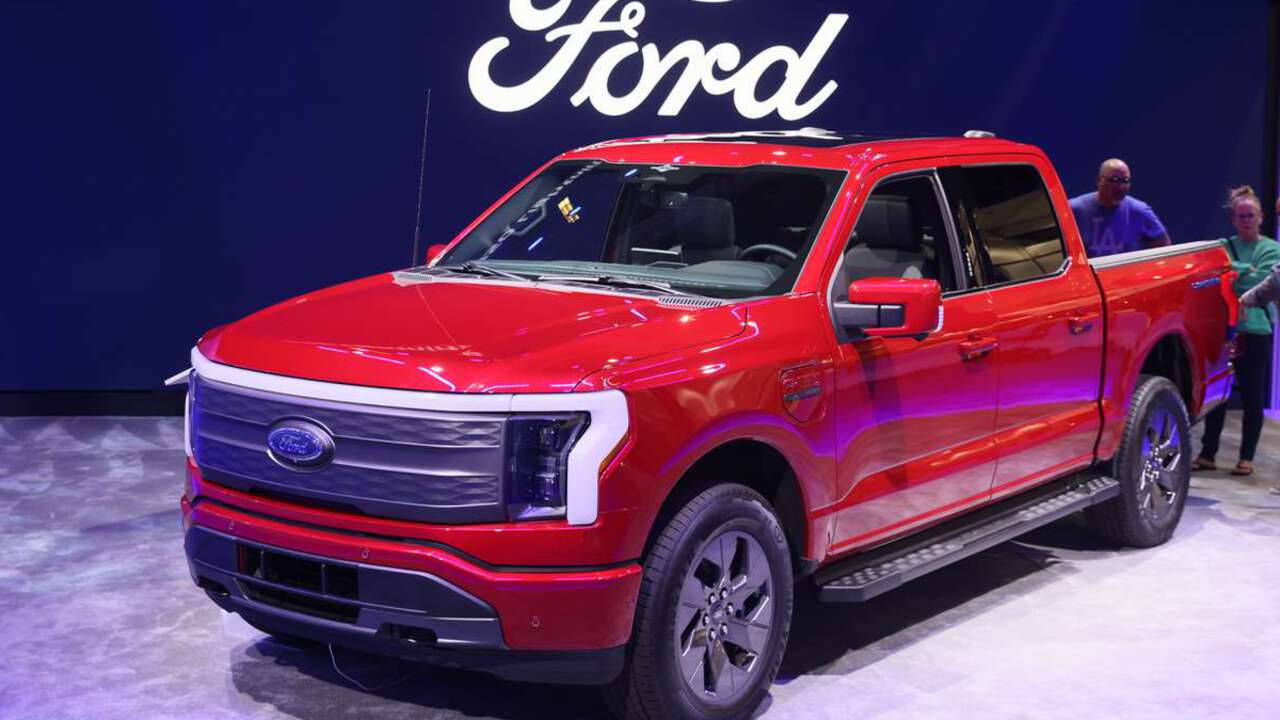
December brought Ford a sobering Christmas gift. A $19.5 billion write-down and the definitive end of F-150 Lightning production. The electric pickup, already on life support, finally got unplugged. But CEO Jim Farley had a plan brewing, one that didn’t involve convincing truck-loving Americans to go electric. Instead, Ford would pivot to selling batteries for stationary applications, data centers, energy grids, industrial facilities.
Enter Lisa Drake, a 30-year Ford veteran now tasked with leading Ford Energy. Drake previously oversaw the company’s EV platform technology programs and battery production strategy. Essentially, she watched the electric vehicle dream stall in real time. Now she’ll redirect that expertise toward a market that actually wants what Ford is selling. Big battery systems that sit still and store energy without demanding charging stations every 200 miles.

Drake’s appointment signals Ford’s recognition that its battery manufacturing capacity, built with grand EV ambitions, was gathering dust. John Lawler, Ford’s Vice President, praised her ability to scale complex industrial systems and secure critical supply chains.
The centerpiece of this strategic rethinking involves converting Ford’s Glendale, Kentucky battery plant, originally a joint venture with SK On, into a Battery Energy Storage System production facility. Rather than churning out cells for vehicles Americans weren’t purchasing, the plant will manufacture large-scale battery systems exceeding 5 MWh capacity. Ford plans to produce LFP prismatic cells, battery storage system modules, and 20-foot DC container systems targeting data centers, utilities, and major industrial customers.
Ford commits roughly $2 billion over the next two years to expand this business, with production expected within 18 months. The company aims to install at least 20 GWh of battery energy storage systems annually by late 2027. It’s an ambitious target, though notably more achievable than persuading American pickup buyers to abandon gasoline.

Drake framed the pivot optimistically: “Ford Energy allows us to maximize the value of our battery manufacturing capabilities”. If the trucks won’t move, at least the batteries can earn their keep standing perfectly still.