

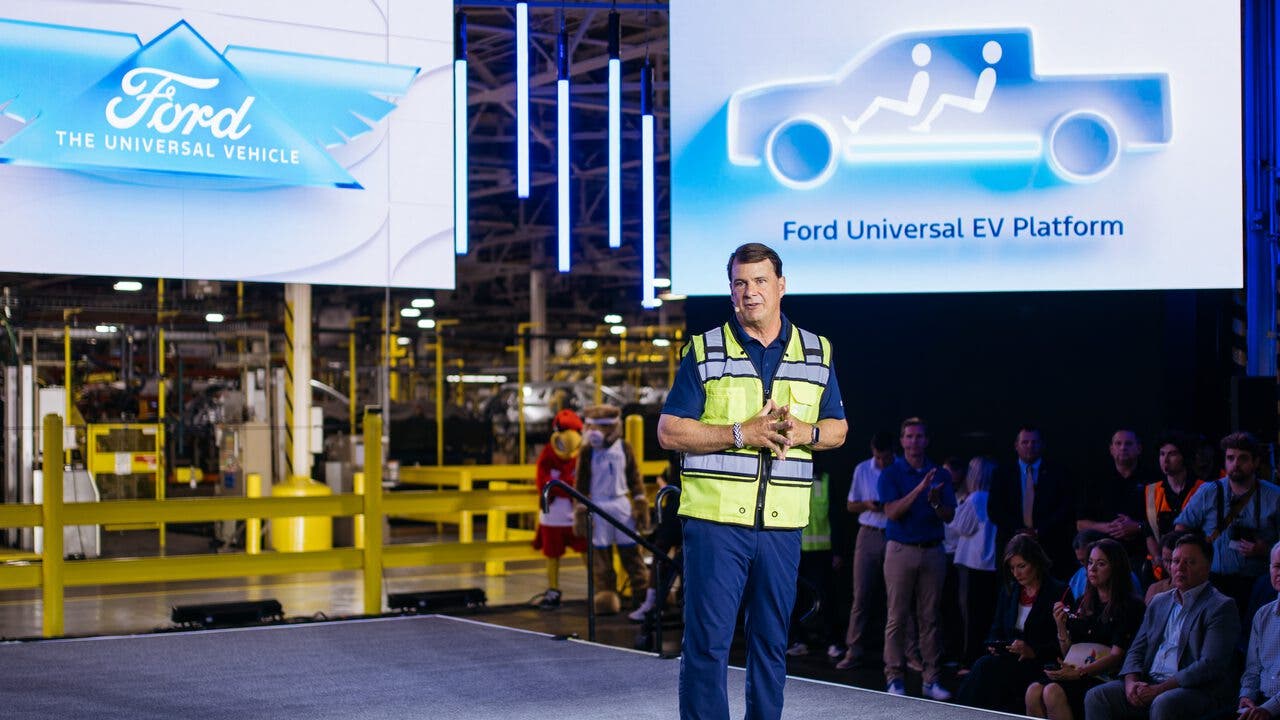
The Blue Oval is currently engaged in a spectacular U-turn. After years of preaching the gospel of a silent, plug-in salvation, Ford has hit the brakes on its “original sin”, the rush to abandon internal combustion, and is now pivoting back to the comforting embrace of hybrids.
The F-150 Lightning, once hailed as the electric messiah of the American workforce, has been unceremoniously sidelined, leaving Ford to perform a delicate organ transplant: taking the high-tech guts intended for its next-gen EVs and stuffing them into the old-school bodies of gasoline-powered cars.
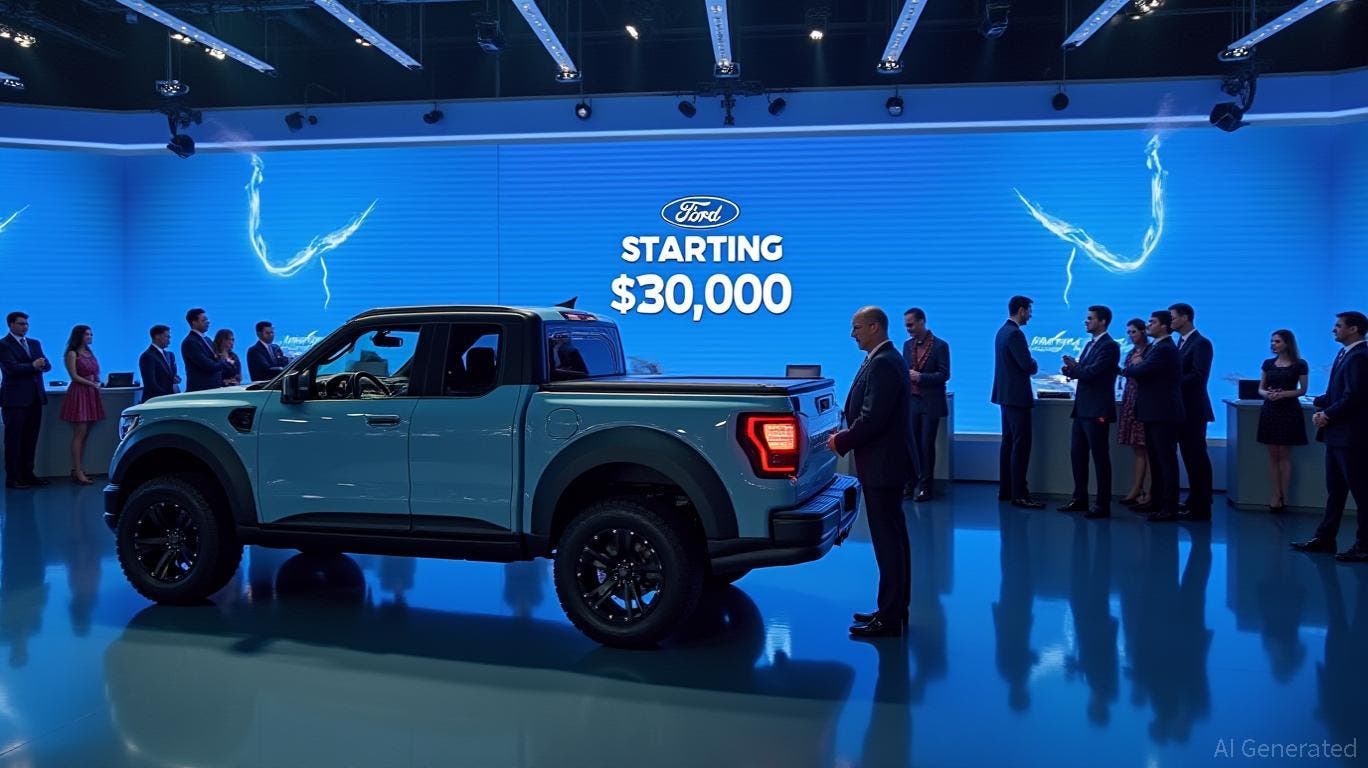
It’s a classic Detroit “waltz of uncertainty”. The much-hyped $30,000 electric pickup, meant to democratize the battery, has essentially become a high-priced donor. Its “Universal EV Platform” is no longer just a foundation for a quiet future. It’s being repurposed to create the most efficient “battery nannies” on the market. We’re talking about Extended Range Electric Vehicles (EREVs) where the engine isn’t the star of the show anymore, but a servant.
Then there’s the delicious irony of Jim Farley. Ford’s CEO recently went viral for admitting that his daily driver of choice is a Xiaomi SU7, an imported Chinese electric masterpiece he refuses to give up. It’s a moment of pure satire. The head of an American icon falling in love with the enemy’s homework while simultaneously calling for a total ban on Chinese imports. His argument? “It’s not a fair fight”. It’s the ultimate admission of an identity crisis.
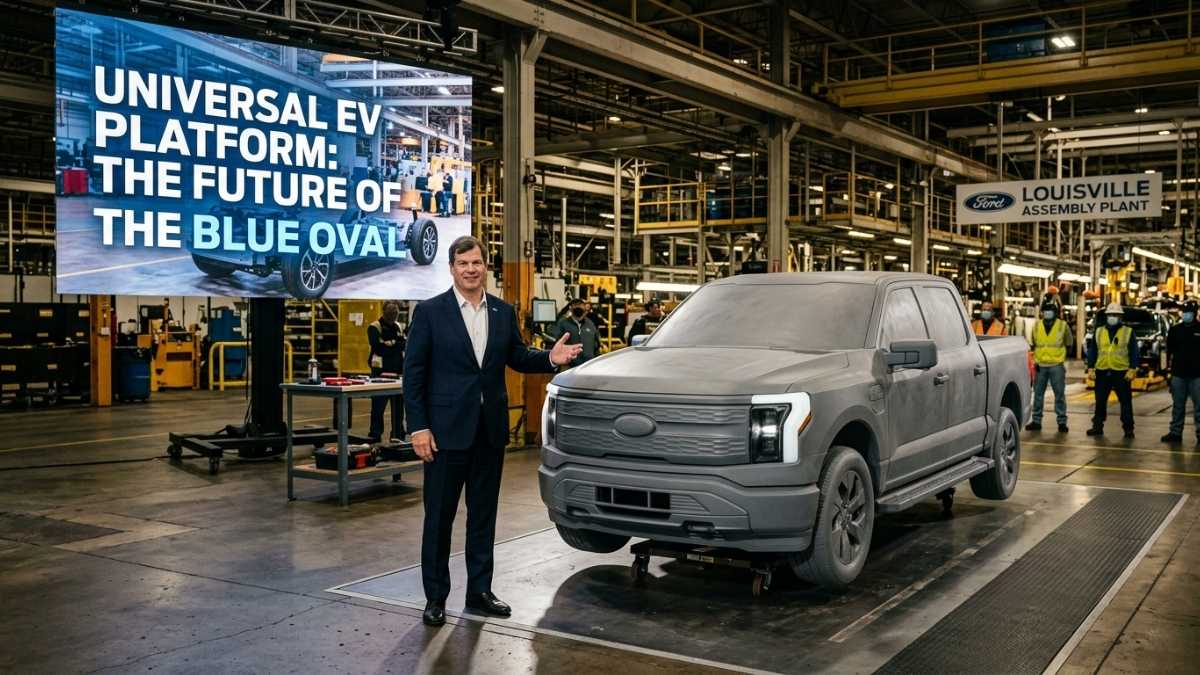
If Ford wants to remain relevant in this global theater of the absurd, it has to stop dreaming and start executing. By leveraging the cost-saving innovations of the UEV platform, Ford hopes to compete with the aggressive pricing of the East. But as the Blue Oval retreats into a hybrid fortress, one has to wonder: is this a brilliant strategic pivot, or just a sophisticated way of buying time while the “judgment day” of total electrification looms on the horizon?