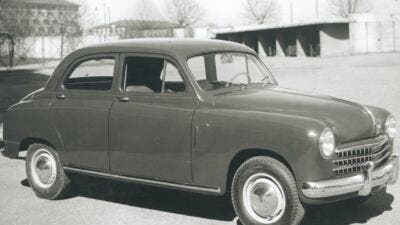
The immediate post-WWII era was chaotic for Fiat. A time marked by the removal of the Agnelli family, the death of founder Giovanni Agnelli, and the heavy atmosphere of collaboration accusations. Yet, financed by Marshall Plan dollars and led by Vittorio Valetta, this tumultuous environment produced a pivotal car for Italy’s reconstruction, the Fiat 1400 sedan.
Unveiled at the 1950 Geneva Motor Show, “Project 101” answered very specific needs. It had to survive Europe’s bombed-out roads, seat six occupants, deliver 10 km/L economy, and hit a blazing maximum speed of around 120 km/h. Designed by engineer Dante Giacosa, the 1400 was revolutionary for the company, being the first Fiat to feature monocoque construction, developed in partnership with the American Budd Company.
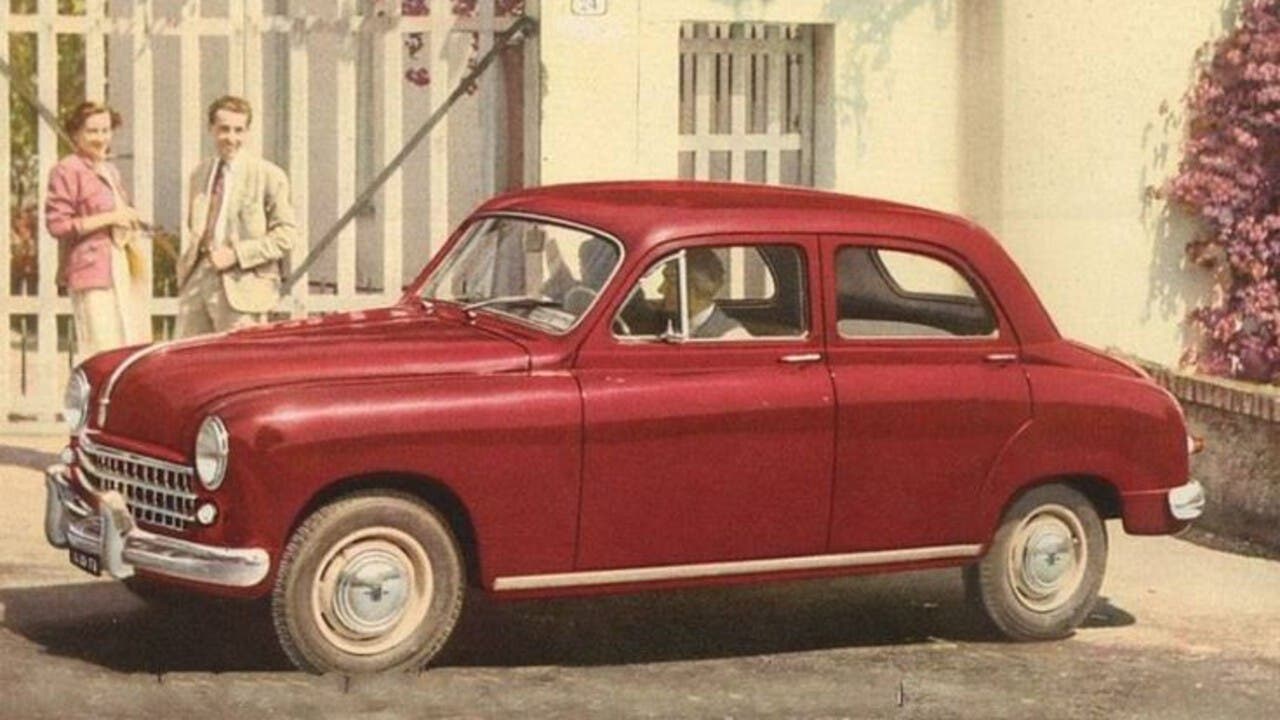
At 4.3 meters long and weighing 1,150 kg, the 1400 employed a conventional mechanical layout. Rear-wheel drive, a four-speed column-mounted shifter, and a 1.4-liter, 44 HP inline-four engine. Its character was defined by a stunning lack of urgency. In fact, reaching 100 km/h took almost 40 seconds. An eternity.
Stylistically, the car embraced a clear American influence, which became even more pronounced with the luxurious 1400 Cabriolet and, especially, the 1952 Granluce coupé, a pillar-less, so-called hardtop two-door.
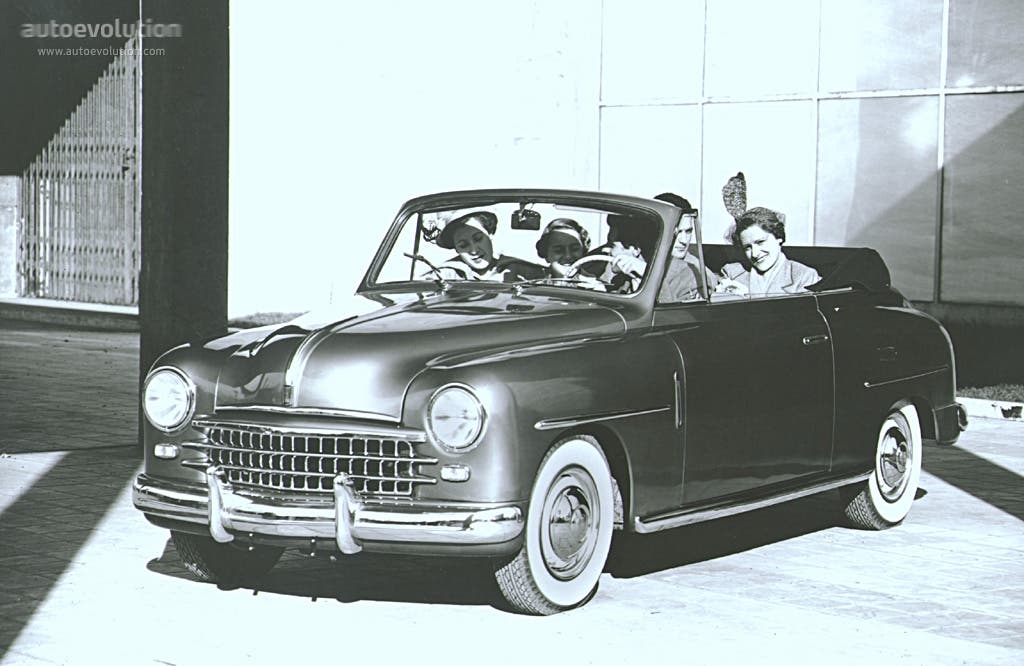
The peak of this early post-war luxury arrived with the 1952 Fiat 1900, a direct derivative of the 1400. Power was boosted to 58 hp, and it featured a five-speed transmission that ditched the clutch entirely in favor of a hydraulic torque converter. The 1900 also boasted refined interior finishes, a standard radio, and a Tachimedion on-board computer that analogically calculated average speed.
The 1400 also holds the unique title of being the first Italian passenger diesel car. Despite the 1.9-liter diesel engine being famously “expensive, weak, and loud”, it achieved surprising success in Germany, competing head-to-head with the Mercedes 180 D. Yes, Fiat once successfully poached customers from the esteemed German brand.
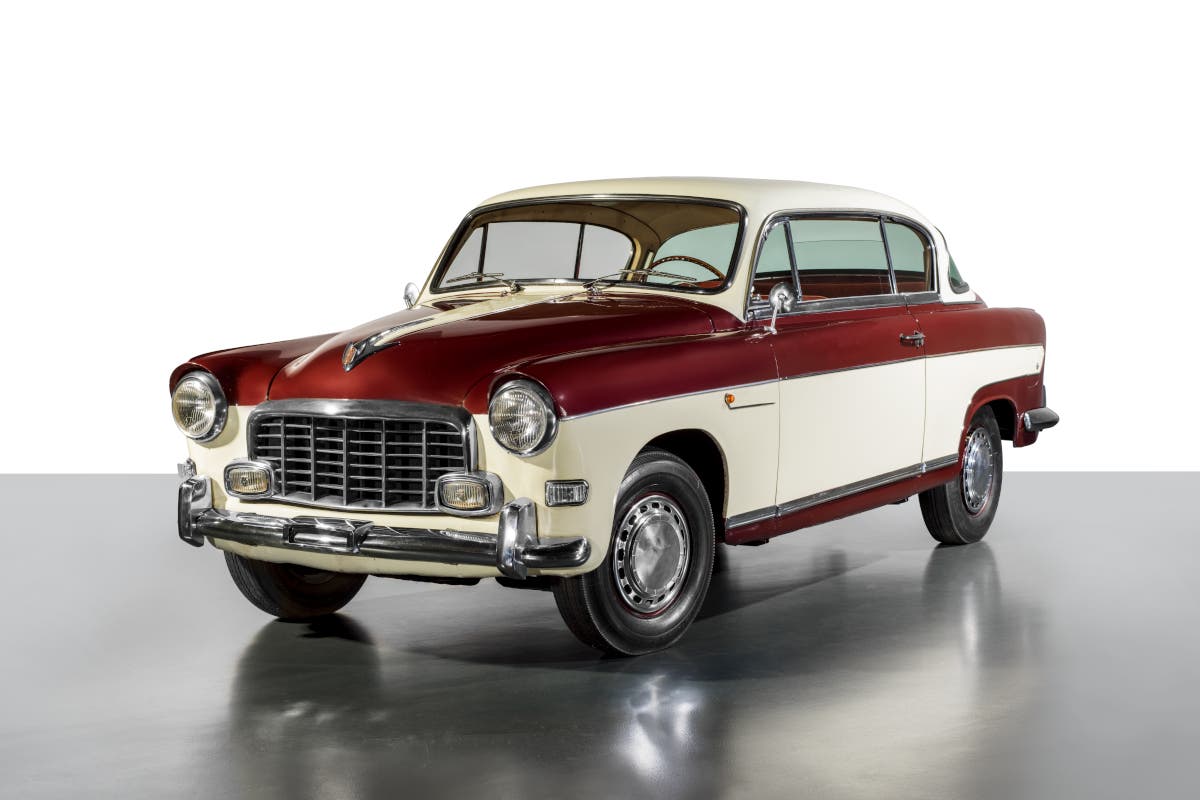
The final major updates in 1956 (1400B and 1900B) introduced a wrap-around rear window, two-tone paint schemes, and a single fog lamp centered in the grille. Production ceased in 1958, just as the economic miracle allowed for the return of six-cylinder engines.